Written and directed by Debbie Isitt, Christmas on Mistletoe Farm tells the story of a single dad’s journey of leaving his career in London behind and embracing the joys of being a farmer. In the West Midlands, no less.
As Matt needs to get a very important business pitch done by Christmas Eve, he reckons some fresh countryside air and being surrounded by the rolling hills is all he needs to get those creative juices going. Of course, all five children fall in love with the small village of Cobbleton after meeting farmhand Beano (Paige), who, for some reason, lives in the barn and the rest of the tight-knit, annoying, jolly community.
Among the quirky villagers is a veterinarian turned love interest, Miss Ashley (Drysdale), a useless school teacher, Miss Nerris (Sydney Isitt-Ager), Barry the Baker (who moonlights as the plumber and is played by David O’Leary), and the Father Christmas look-alike town crier (played by Steven Wickham).
Some villagers don’t even have names, and they’re simply referred to by Disney nicknames like Grumpy, Sneezy, and Happy, further hammering in how quirky this oasis of West Midlands happiness truly is.
Despite spending most of the film slowly falling in love with the charms of village life, Matt still decides to sell Mistletoe Farm to a group of evil developers offering him an undisclosed large sum of money.
No amount of baby goats, forced Christmas spirit, or even the sad faces on his five little children would convince him otherwise. However, when the big mean developers from London arrive to sell the farm, Beano gets the whole village to protest, throw rotten eggs at the two businessmen and even… gasp!… throw some mud at them.
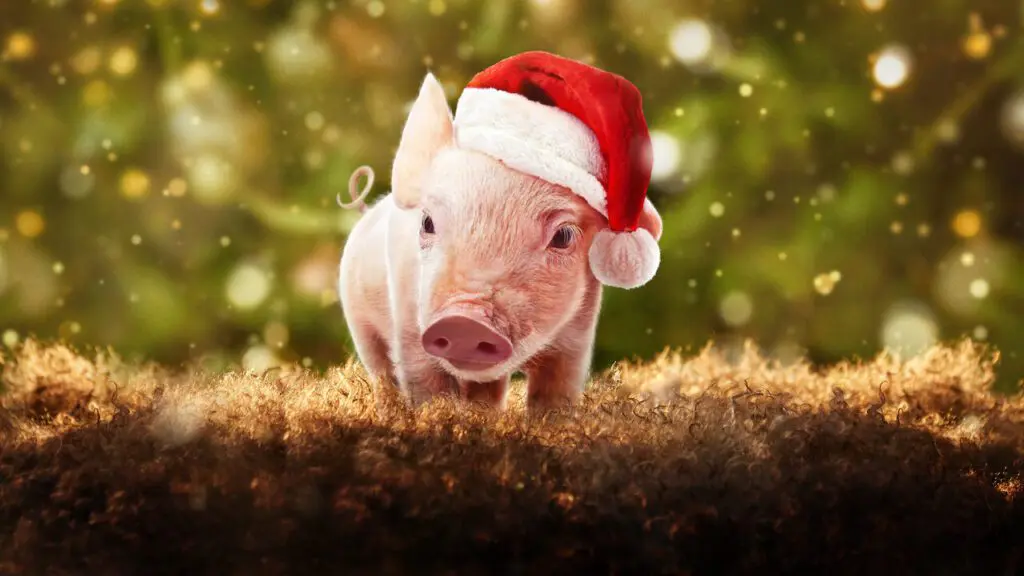
To make matters worse, after the developers back out of the deal, Matt’s evil, childless, soulless boss arrives at Gobbleton. And we need to emphasize how truly evil this woman is: up until her trip to the West Midlands farm, Miss Fletcher didn’t even know what sheep or pigs looked like. You read that right, a fully grown woman, likely in her 40s, had no idea what pigs looked like.
Of course, Miss Fletcher trips and falls, resulting in her getting caked in some good old-fashioned countryside mud. She angrily sacks poor Matt, who, in a fit of rage, sacks poor Beano for ruining his life.
In the final act, Matt changes his mind about selling the farm after the schoolteacher gives him a good talking to. Unfortunately, as he heads out to cut a Christmas tree, he leaves the gate unlocked and all the farm animals escape.
Meanwhile, Beano puts on a suit, goes to London, and reads the big pitch Matt wrote on paper to try to get his job back. The lovable farmhand also finds the two developers and tries to get the sale back on track.
Beano and the developers arrive back in Cobbleton and join the farm animal rescue mission. Of course, Matt has changed his mind about selling, but the evil developers already have his signature on the contract.
Not to fear, though, as Grumpy saves the day. As it turns out, Grumpy is not just a grumpy old man, but also a former solicitor who worked for Matt’s dad. He reveals that Matt’s inheritance of the farm has a clause forbidding him from ever selling the place.
It remains unclear how many generations of the Cunningham family are supposed to live at the magical farm before anyone is allowed to sell the place.
In a final attempt to pull at the heartstrings, Christmas on Mistletoe Farm delivers two more twists. We learn that Matt’s dad never wanted to abandon him. It was his mom’s fault that he never received the letters and presents his dad kept sending while growing up.
All is not lost, though, as the town crier finally reveals his true identity as Matt’s long-lost father. Matt learns that the whole village was in on the old man’s deceit. Why would he pretend to be dead and potentially put his widowed son, who’s struggling to raise five children on his own, through more trauma? Family.
Before the film’s final musical number, Matt is now happily dating his vet, he rejects Miss Fletcher’s offer to take his job back, and “comes out” as a farmer and village person (Yes, those exact words were used). The film concludes with all the villagers singing a parody of the Village People’s “YMCA.”