Summary
The three-part documentary is sure to spark online conversations among true crime enthusiasts. While it lacks real smoking guns, it effectively appeals to the emotional implications of the mystery and the hope that Amy Bradley will be found one day.
Amy Bradley Is Missing is undoubtedly a true crime title that leaps out – even if, ironically, it falls short of capturing the true essence of the issue. The three-part documentary, on Netflix, catches the viewer off guard, at least it did for me. What started as a typical missing person’s case turned into a conflicted head-scratcher, filled with a mix of unhelpful conspiracies.
One of the Most Mysterious Missing Person Cases of All Time
For context, in case you are unfamiliar with this case, on March 23, 1998, 23-year-old Amy Lynn Bradley suddenly disappeared from a cruise ship on which she was vacationing with her family. Thorough searches were carried out on the ship, and to add to the complications, the cruise had docked, as part of its itinerary for the customers, at the next port, Curaçao, allowing 2,400 passengers to explore the island.
Hours later, Amy Bradley is nowhere to be found; there’s panic, and the FBI is requested for support, despite the legal complications of operating in international waters.
While the Amy Bradley case shares some similarities with the Madeleine McCann case, such as both involving missing persons, it stands out due to different circumstances. Amy’s age, the isolated setting of a cruise ship, and the brief timeframe of her disappearance make this case distinct.
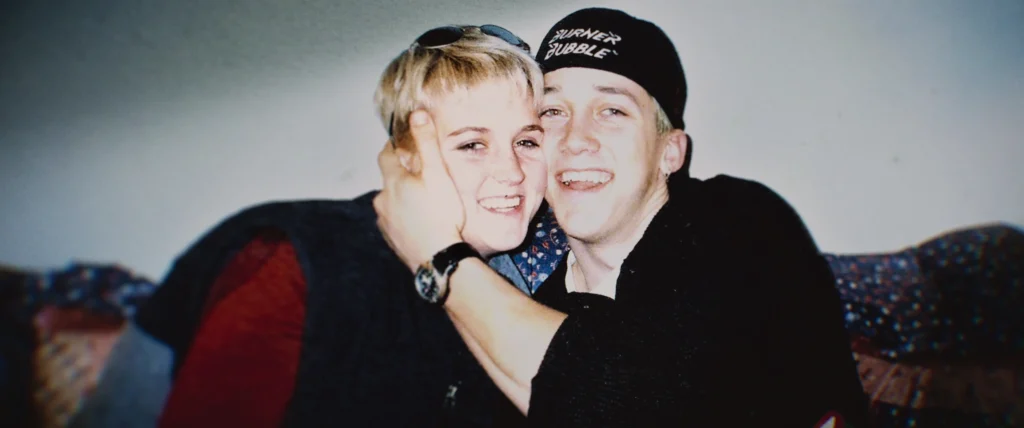
The three-part documentary revisits the Bradley family 27 years later, with them understandably still desperate for answers. The interviews are raw and unsettling, as Amy’s parents, Ron and Iva Bradley, alongside her brother, Brad, are still pondering the evidence and the potential events that took place, regardless of how strong or weak the propositions to the timeline are.
Amy Bradley Is Missing is more of an emotional appeal with noteworthy evidence on the side, which does not necessarily make the documentary weaker, as it feels somewhat offensive considering the case. Still, it did plant doubt in my mind that apart from raising awareness, whether this three-parter brings anything new to the missing person’s case.
The primary target (or suspect, by the way it is framed) is Alister “Yellow” Douglas, who was part of the cruise staff and was a leading band member for entertainment. Whether this is a connection or a terrible coincidence, he was seen flirting and dancing on the night Amy disappeared, and had an inconclusive polygraph test with the FBI, which did not help matters. The series also interviews witnesses, who claim to have seen Amy in various places in the Caribbean years later, with a sad indictment that she’s been swept into sex trafficking by a mafia group.
But despite the lack of compelling leads or hope that the family and authorities are any closer to finding Amy, this is a documentary series that immediately hooks. The first episode lures you into a false sense of security, dumbfounding you with the timeline of events that led to her disappearance – it strains your mind, wondering if, if it’s not suicide by jumping off the cruise, how on earth did she disappear and get off it? Admittedly, at one point, my mind, childishly, veered towards alien abduction.
But by Episode 2, more information is drip-fed, and the addition of witnesses, reliable or not, encourages the armchair detective inside of you to look into the case.
The three-part documentary is sure to spark online conversations among true crime enthusiasts. While it lacks real smoking guns, it effectively appeals to the emotional implications of the mystery and the hope that Amy Bradley will be found one day.
All We Have Is Theories But No Smoking Gun
Now, here are my thoughts on the investigation presented in Amy Bradley Is Missing from a perspective that does not lean towards TV criticism.
I couldn’t help but wonder how she could still be missing. There are at least four witnesses who came forward who were presented in this documentary, so if these witnesses are reliable, it appears Amy was attempting contact with civilians to be rescued; of course, there are potential circumstances (mafia groups are dangerous, after all), but these are the only witnesses we know of who encountered her in the scenario that she has been sex trafficked – there could be many more witnesses we do not know about.
And I can’t stop being stuck on the disappearance on the cruise – how, apparently, she somehow got off the cruise, unseen, despite her parents asking the staff to find her. But at the same time, there were 2,400 people – could it be possible that, as the series implies, she was attempting to score drugs on the island of Curaçao, with Yellow supporting her, which led to horrific outcomes where she was kidnapped. But why, then, would she sneak off onto the island and panic her parents when everyone was visiting the place anyway? I suppose, as the series hints, that her parents were not happy with her “coming out” as gay, so it is not impossible that this caused some secrecy in the way she handled certain matters.
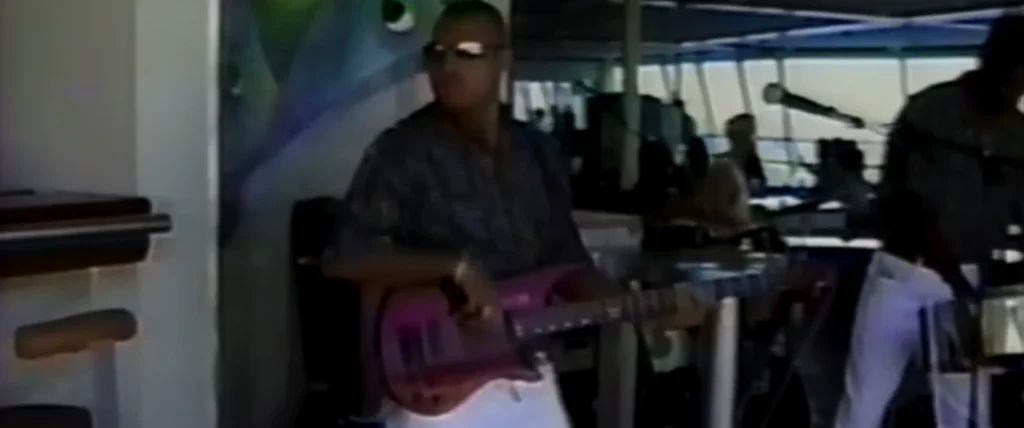
Alister Douglas aka Yellow (Photo: Netflix)
And maybe Yellow was compromised by the people he was dealing with, which is why his polygraph test was inconclusive, as he was not directly involved, but indirectly caused her downfall when he thought he was helping her get drugs on the island. With the threat of violence, it would make sense why Yellow was so emotional and anxious to respond to the FBI and anyone else who brought it up, including his daughter.
However, at the same time, I am not entirely comfortable with the angle against Alister “Yellow” Douglas – the Netflix series makes strong points against him, which can be deemed hearsay or circumstantial. In a sense, it felt wrong that the series attempts “trial by media.” The witnesses, as well, while convincing, could also just be hunches – as with the Madeline McCann case, there are many claims of seeing the young girl, but none of them have materialized as anything substantial.
Which, again, leads back to the question: if Amy Lynn Bradley had all the evidence mounting above, which is a lot more than many other missing people, you have to wonder: how is she still missing? The cruise director is much more bullish on the situation – he believes Amy’s disappearance was a result of suicide by jumping into the sea and simply puts it down to the family’s inability to move on.
By laying out my thoughts, I’ve proven one thing: the case of Amy Bradley is messy – each scenario has a logical connection, but it also requires a leap of faith to reach the landing. And I suppose in many ways, that’s what this documentary is trying to present.
I hope, in my heart, that Amy returns to the Bradley family one day – and if not, they find a way to find peace in their lives.