
Summary
The medical docuseries evokes a profound appreciation for what our public health service has to endure, and reveals the grim reality of the more emergency-based aspects of a hospital.
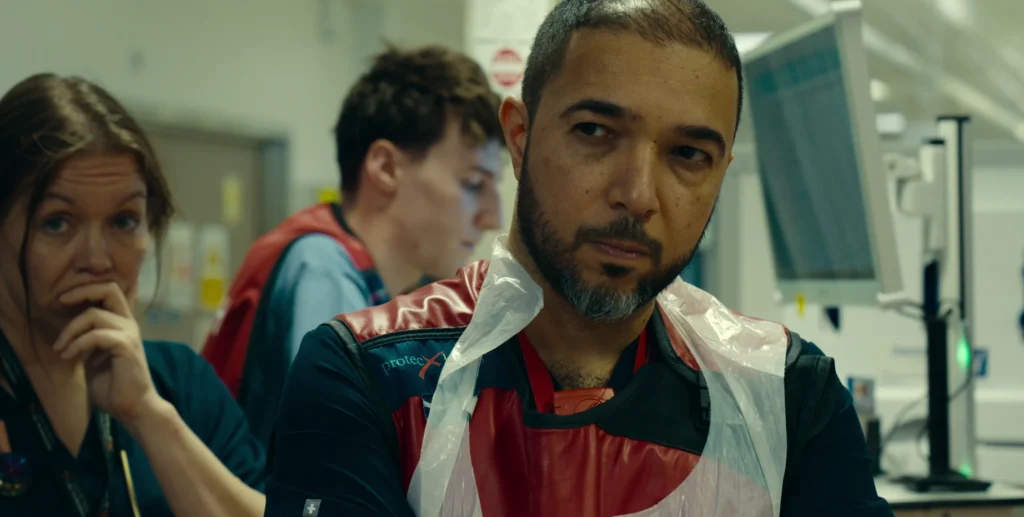
Critical: Between Life and Death is a fly-on-the-wall documentary series that follows the UK’s major trauma units, from intensive rehabilitation to life-or-death surgery. It’s a raw and honest portrayal of the most severely injured being treated in an emergency setting. This series is not for the faint of heart, but if you can handle the raw details, it’s an insightful journey into the world of major trauma units in hospitals.
On a positive note, this Netflix series fondly reminds me of the equally eye-opening Lenox Hill, which landed on Netflix, ironically, having produced all of its material pre-pandemic, requiring an additional special episode for Covid. Like Lenox Hill, Critical: Between Life and Death is an invasive production during pressure-cooker and highly personal medical moments, which, for the viewer, feels somewhat uncomfortable; however, it must be even more uneasy for the medical staff and impacted family members in front of the camera. I do wonder how or why these hospitals agree to allowing Netflix cameras through their doors, or how, though this seems like an impossible criterion, they pick the patients who will be part of the stories.
But in many ways, I am grateful for it. As I remain in the safety of my own job, these kinds of series humble and provide perspective on the less glamorous, yet life-dependent work that medical professionals have to endure (and consistently excel at). The series does not shy away from the details, both visually and descriptively, with real-time reactions, specific injury details, and disturbing descriptors. Due to the documentary’s subject matter, it evokes shock by default.
The first episode, for instance, dives into London’s Major Trauma System – a fairground ride has malfunctioned at Brockwell Park, and multiple patients are critically injured. The series explores how patients are coordinated to the appropriate unit and hospital via the ambulance service, and the various medical specialties that must collaborate to understand the extent of one’s injuries. There are also interviews with the patients’ family and friends, who were emotionally impacted by the ordeal. When I say “fly-on-the-wall,” I mean it – it feels like you are there, even from seeing the disassociation on a patient’s mother’s face when provided updates from a Trauma Consultant.
From here, Critical: Between Life and Death provides a breadth of life-threatening experiences across a rich six episodes; from a fatal motorcycle accident, polytrauma, construction incidents, personality alterations from trauma, and high-risk pelvic surgeries. The series offers a comprehensive glimpse into what happens behind the scenes in major trauma units, which we can only be aware of if we are unfortunate enough to be involved.
And like Lenox Hill, Critical: Between Life and Death is easily one of the best medical documentaries available. It’s sobering, and welcomingly honest and raw. It evokes a profound appreciation for what our public health service has to endure, and reveals the grim reality of the more emergency-based aspects of a hospital.
Nothing you learn from this docuseries is relatively new – I mean, we’ve had enough fictional medical dramas to get the point – but it gives context on a human level. It’s the norm for medical professionals, but the series emphasizes that they are still people, not robots, and they have emotions too. Critical: Between Life and Death highlights this in the rawest manner possible, making it a cautionary must-watch.