Summary
The objective was surely for audiences to connect with Supergirl as powerfully as her cousin, and ultimately, the film fails at that.
Supergirl is creative, no doubt whatsoever. It’s a DC film packed with ideas from director Craig Gillespie (Mike, Cruella, I, Tonya) carrying a clear rubber-stamp of approval from James Gunn. But I never felt settled while watching it. I was constantly waiting for the central idea behind the superhero to land – to extend beyond 2025’s Superman and provide a context worthy of the ticket price. Yet, I enjoyed it to some extent, simply because some of those ideas did land well, even if they felt like they belonged in a completely different act.
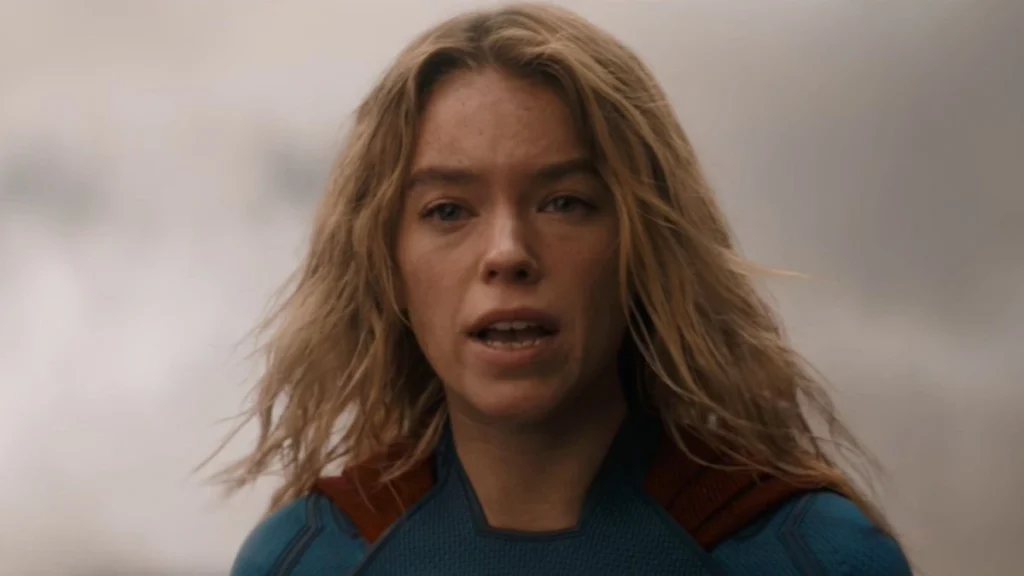
I guess you could say I’m frustrated. I wanted to like Supergirl (and I kind of did, sort of), but at the same time, it clearly did not meld together as intended. Milly Alcock (Sirens, House of the Dragon), who plays Kara (Supergirl), carries the lead role well but is let down by an oddly mistimed script in which the jokes and quips do not land at all. Not one (and that is no exaggeration). At this point in the story, Supergirl is hiding out in a Red Zone of the universe, where a red sun suppresses her powers, allowing her to indulge in a degenerate, alcohol-fuelled life. But her path soon crosses with Ruthye (Eve Ridley), a young girl whose parents have been murdered by the villain Krem (Matthias Schoenaerts; The Old Guard, Amsterdam, The Mustang). When Krem shockingly poisons Supergirl’s dog, Krypto, she reluctantly teams up with the revenge-driven Ruthye to hunt down the antidote.
Once the story reaches this junction, the key selling point isn’t actually Supergirl – it’s the dog. It was a brave directorial choice to show a dog take a dart to the neck and collapse, but it provides the true emotional pull of the film. You find yourself worrying about the dog far more than Supergirl or her sidekick, which highlights where the structural problem lies.
Alcock successfully sells a character who doesn’t know what home is and identifies with nowhere, using copious amounts of alcohol to dull the pain of her past. However, the film fluctuates wildly on whether it wants to be an origin story, making an emotional connection with Kara difficult. The narrative expects the audience to understand her trauma without elaborating on it early on, meaning she initially just comes across as a drunk trying to be funny.
It isn’t until the halfway mark that Supergirl finally embraces the origin format, revealing her past and the day her planet died. Many will roll their eyes at revisiting a scenario we all know because of Superman, but I found experiencing it from the Supergirl perspective to be unique and interesting. I completely understood the decision not to give David Corenswet’s Superman an origin story – audiences are far too accustomed to it, just like Batman or Spider-Man. But Supergirl is not as universally known. Tiptoeing around her background early on was a mistake; it chopped up the film’s arc, leaving the plot feeling disconnected. The objective was surely for audiences to connect with Supergirl as powerfully as her cousin, and ultimately, the film fails at that.
That disconnect is exactly why the viewing experience is so frustrating. There are so many noteworthy moments buried inside a disjointed narrative that it creates a constant push-and-pull; I didn’t know whether to lean in or pull away. The relationship between Supergirl and Ruthye lacks chemistry – it feels quite tame – but the dynamic of Kara stepping into a “big sister” role to warn Ruthye that revenge yields no rewards works beautifully in the film’s key moments. Kara’s evolution into the hero we expect is genuinely impressive when it finally arrives, especially since she spends most of the film out of costume. And the brief cameos from Superman himself are wholesome enough to conjure a smile – a sweet reminder of a cousin looking out for family.
The foundation of a great story was there, and the character development was exactly what the audience needed; it just required tighter direction. To prove the point, Jason Momoa pops up as the chaotic-neutral Lobo. The cameo is designed to provide comedic chaos, but it feels incredibly tame. Instead of landing jokes, it just feels like Momoa throwing his weight around and shouting his lines, with little consideration for comedic timing or whether the character fits the scene.
Enjoying a film while recognizing it isn’t great brings up a weird mix of feelings. I do want to see more of Supergirl, but after this installment, I wonder if it’s best to keep her within the broader Superman story for now – focusing purely on her relationship with her cousin. And her dog, of course. We cannot forget Krypto.
Read More: Supergirl Ending Explained