
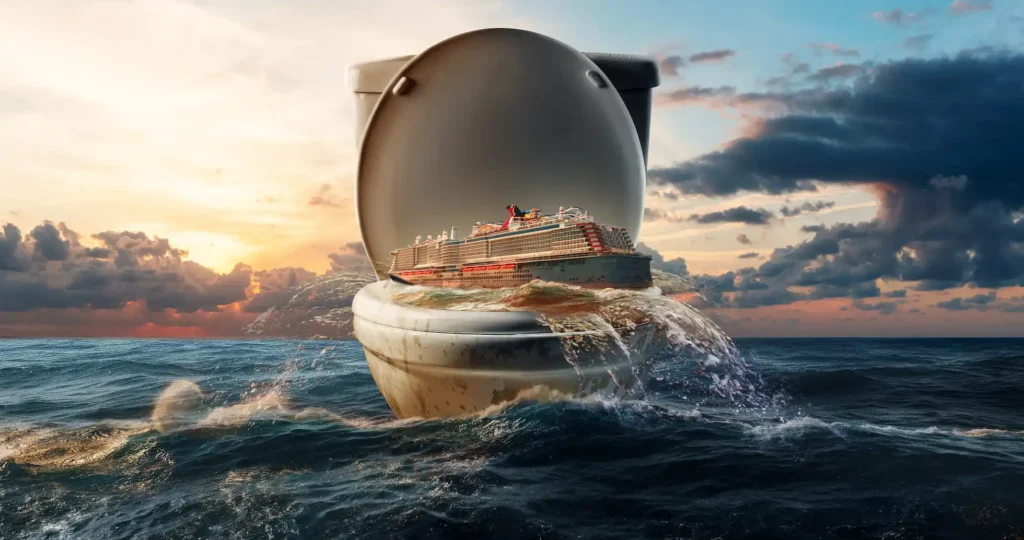
When the first of Netflix’s batch of Trainwreck documentaries debuted on June 10, 2025, it began an eight-week trend of the short films infiltrating the most-watched movies list. The Astroworld Tragedy spent two weeks in the Top 10 and was viewed 13.5 million times. That was about a semi-recent event that most people could remember, all the more so since it involved a globally famous musician, so it stood to reason that the popularity wasn’t indicative of a wider trend. But since then, at least one of the Trainwreck docs has been in the list every week. And by far the most popular installment wasn’t about a recent event, and had nothing to do with celebrities.
Trainwreck: Poop Cruise, about a 2013 luxury cruise liner that lost power in the Gulf of Mexico and became a giant, floating latrine, was viewed 28.2 million times in the first two weeks following its release, and also remained in the charts for two weeks. At the time of writing, Balloon Boy, which, for my money, is one of the better ones, is currently third in the global Top 10. All told, six of the eight releases charted for at least a week.
Seeing the Funny Side
These numbers tell us something: People like watching stuff go wrong, but they especially like it when they’re allowed to laugh at stuff going wrong. There’s a complicated formula behind that, and granted, not all of the Trainwreck docs adhere to it — you can’t, for instance, laugh at the fatal crush at Travis Scott’s Astroworld concert, because it was deeply awful and people died. But you can laugh at a bachelorette party having a close brush with dysentery because, ultimately, they can laugh about it themselves. And this is the tone that most of these Trainwreck documentaries have shared.
Sometimes what’s funny is absurdity, or ambiguity, or some combination of the two. People don’t want to laugh at genuine misfortune, not if it had lasting consequences, but misfortune born of stupidity, ignorance, or bad personal decision-making is fair game. Mayor of Mayhem is quite a serious story about an elected official trial-running the populist anti-media rubric that Donald Trump followed to the Oval Office over two separate campaigns, one of them as a convicted criminal. But at its core, it’s about a deeply eccentric character getting away with stuff he shouldn’t have been doing, including smoking crack with gun runners. There’s a fundamental silliness to it all that keeps conscience at arm’s length.
Balloon Boy works similarly. It begins as a worrying accident waiting to happen, with a six-year-old boy supposedly being trapped inside a homemade UFO. But once that danger has passed, it becomes about a family of scientific eccentrics potentially having fabricated the whole thing for clout. And it’s better for that transition. There’s nothing funny about a little kid falling to their death, but the little kid having been asleep in a hiding place the whole time, only emerging to repeatedly imply in live interviews that the whole thing was a hoax to kick-start a reality TV career after a Wife Swap appearance failed, is hilarious. We’re off the hook.
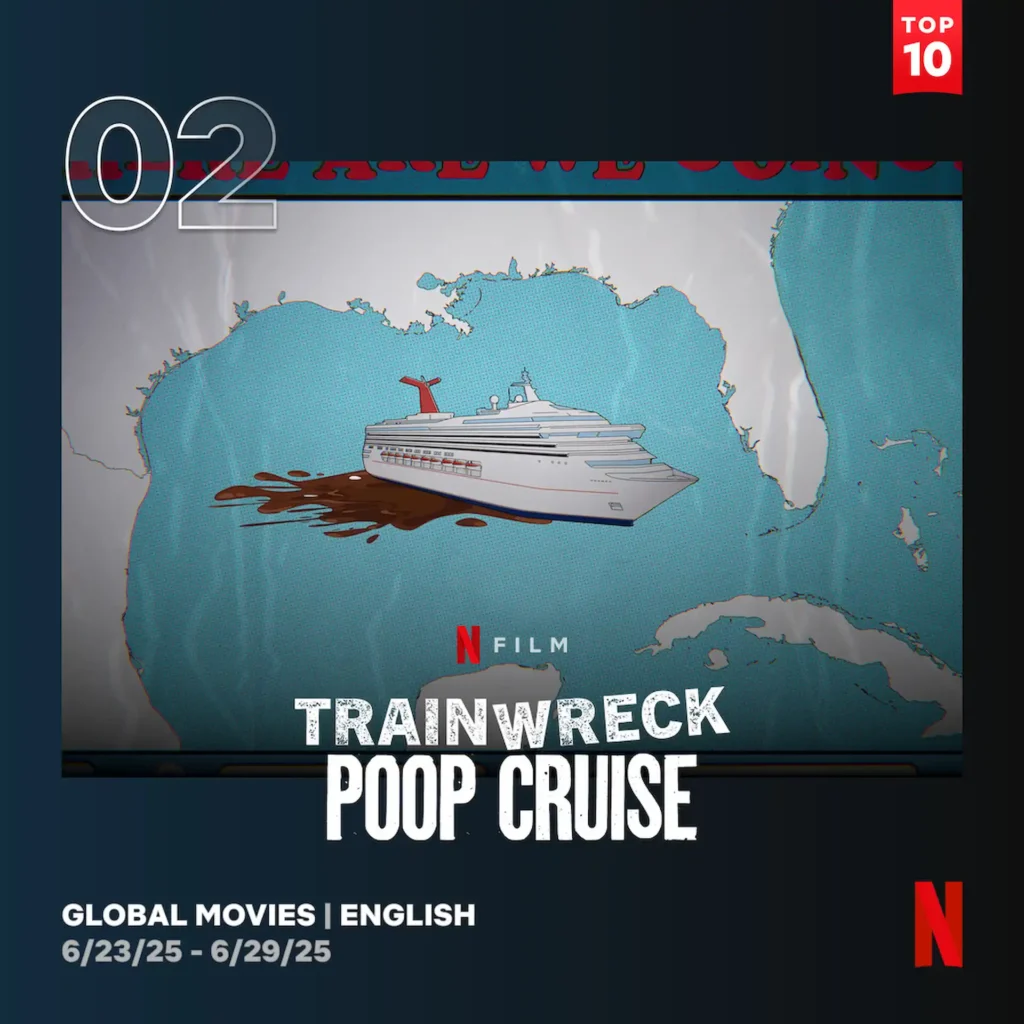
Trainwreck: Poop Cruise made it to #2 on the Global Top 10 chart | Image via Netflix
Trainwreck Trojan Horse
There must have been a sense that Netflix knew all this in advance. You can tell by the selection of subjects, and in many cases by the structuring and tone of the documentaries themselves. Even some of the more serious ones don’t give away the severity of their claims until an audience has already bought a ticket for the ride.
The Cult of American Apparel is like this. It tells the story of a cult-like culture at a booming fashion brand and pokes obvious fun at the absurdity of it all throughout, until the closing five minutes share searingly relevant victim testimony that casts the whole thing in a completely different light. That’s deliberate. It plays on the audience’s desire for comfortable voyeurism and told-you-so moral positioning, and then hits them with a bombshell that, in some ways, makes them complicit in downplaying the real underlying horrors.
P.I. Moms is the same way. The stranger-than-fiction story of a Lifetime reality series leading to a drug-running bust involving corrupt cops and narcissist one-time TV stars has a soapy quality that it’s easy to laugh at, but snuck in beneath it all is a deeply sad tale of women’s stories being hijacked by men. Again, the conclusion is deeply miserable. It’s funny until it isn’t.
Jokes Are Only Funny For So Long
The eighth and final installment in the series, Trainwreck: Storm Area 51, finds the collection reaching the end of the road. It builds to an obvious punchline that plays out like the final boss of the series’ thematic underpinnings, the most extreme versions of social media virality, logistical nightmares, and mob mentality all coming together in a fake charge at the gates of Area 51. It’s played for laughs, and the joke is that it is a joke, one that everyone was in on.
The fact that Storm Area 51, which is extended across two episodes, is one of the weaker installments — beaten to this honour only by The Real Project X, which had similar issues — should be telling. The joke isn’t enough, at least not over time. The best of these documentaries used their audience’s innate desire to laugh at the misfortune of others as a way to sneak in commentary on more serious issues. When the ultimate revelation is that there is no ultimate revelation, the point becomes a little jumbled.
You can read what you want out of all this. The fact that people in their millions have an urge to observe things going very badly wrong doesn’t, I suspect, speak highly of us. But the fact that people will seek a license to do it is a bit more reassuring. If nobody died, and everything turned out okay in the end, what’s the harm? If the bad actors got their deserved comeuppance, why not chuckle at their fates? And, failing all this, if it turns out the whole story isn’t as funny as it seemed, then at least there’s something to be gleaned from it. We’re much more inclined to care about the severity of something if we were tricked into laughing at it first. Guilt is a good motivator.
But there has to be something. The funny side is only funny if there’s another side that isn’t. The best of this collection highlighted that admirably and reaped the rewards. Hopefully, other filmmakers can learn from what worked — there are many more disasters for us to gawp at.