Summary
Episode 1 of Alien: Earth is largely an introduction to the essential questions driving Noah Hawley’s series, but it’s steeped in effective atmosphere and superb craft.
It’s amazing that there hasn’t been an Alien TV show until now. It seems so obvious. The horrifying corporatised future depicted in the margins of the original creature-feature was always ripe for an exploration that went beyond the confines of a single monster on a single ship, and while the franchise expanded, crossing over with other franchises and becoming increasingly overfamiliar and ridiculous, it never really delved into its own premise. Enter, then, Noah Hawley, of Fargo and Legion fame, who in Alien: Earth, airing on FX and streaming on Hulu, delivers what is quite clearly the claustrophobic horror-thriller you were expecting, conjoined to the prestige corporatocracy critique you might not have been.
Alien has always dabbled in these ideas, of course, but relocating the action to Earth – the clue’s in the title, folks – gives us the hostility of a spacefaring future without its remoteness. Here in Episode 1, titled “Neverland” for reasons that quickly become clear, we get to see first-hand the feudalist heave-ho of multi-trillion dollar companies striving for corporate hegemony through immoral meddling in the natural order. There’s a Xenomorph in this, and tellingly, it’s the least horrifying part of the premiere.
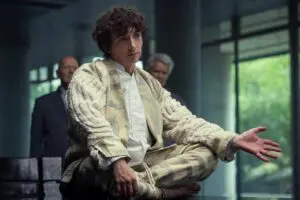
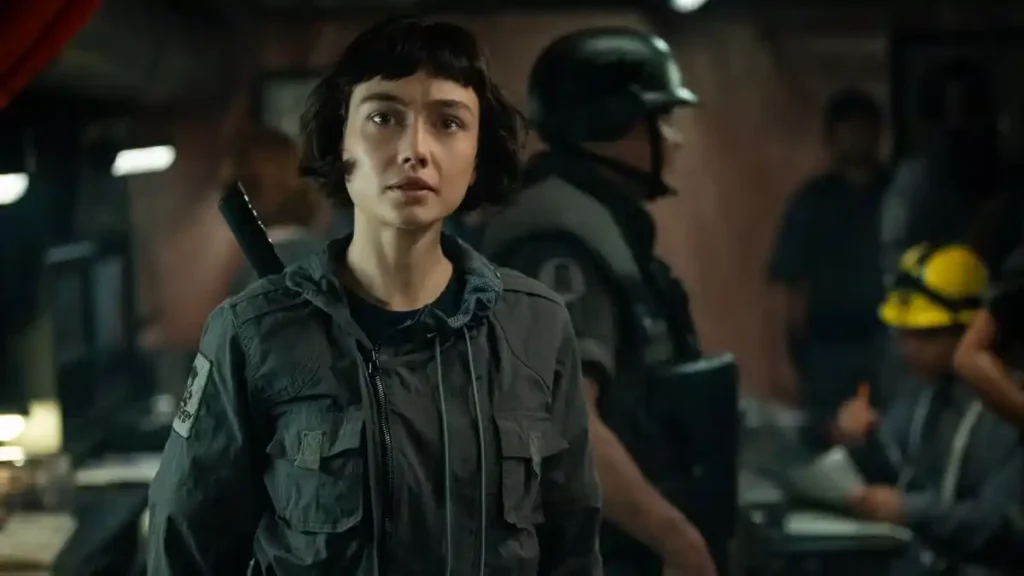
It’s the Peter Pan stuff that’s creepy. One of the companies in this far-flung future is Prodigy, headed by the youthful gazillionaire and ridiculously named Boy Kavalier, and Prodigy has developed a program dubbed “The Lost Boys” that transfers the consciousnesses of children dying of cancer into the synthetic bodies of superpowered androids. One of these is Wendy, our point-of-view character in this deeply immoral experimental hellscape, where Peter Pan streaming on the ceiling of a mad science lab – presumably through Disney+ – implies we’re probably not as far removed from this future as we’d like to think.
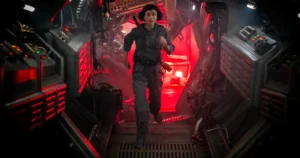
Wendy’s going to be important, of that there’s little doubt, but she doesn’t get a great deal to do in Episode 1 of Alien: Earth since it’s largely about setup for later. A key component of that setup is the USCSS Maginot, a Weyland-Yutani deep space research vessel – what else? – that crash-lands on Earth after a Xenomorph runs the crew ragged. It’s clever, this, since the premiere’s cold open introduces the ship’s crew in the manner of a typical Alien film, especially Ridley Scott’s original, as though this is what the show’s going to be about. The next thing we know, everyone’s dead, the titular alien is on the loose, and the only survivor is Morrow, one of those typical Weyland-Yutani cyborg security officers who always has a secret mission he didn’t bother to tell the rest of the crew about. Hawley’s getting the best of both worlds here, delivering the expected claustrophobic sci-fi monster horror the franchise is famous for, but also contorting its familiar iconography to remind us that we’re watching something different.
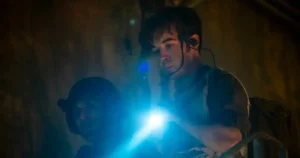
The reason this matters to Wendy is because when the Maginot crash-lands in Thailand, her brother – that’d be the brother of her cancer-ridden original incarnation, the brother of her consciousness, not the brother of the pixie-like avatar she’s currently piloting – becomes part of the search-and-rescue efforts. The brother, Joe, believes his sister is dead, which is understandable, so she’s going to have some explaining to do when she reveals herself as a superhuman adult robot woman. But one step at a time. Either way, Wendy convinces Boy to let her and the other Lost Boys, all kids in similarly grown-up synthetic shells, to assist in the rescue mission, shepherded by Boy’s pet android Kirsh.
You’ll have noticed that this isn’t a great deal of plot to say that “Neverland” runs for an hour, but plot doesn’t seem to be the point of Alien: Earth. It’s difficult to me to articulate how steeped in atmosphere all this is, and it’s clear the premiere is steadily getting all of the pieces in play for its later sequences, which revisit the now-wrecked interior of the Maginot with the new context of a Xeno on the loose, Morrow on a mission, the Lost Boys inbound, and the security forces in enormous jeopardy. It’s expertly directed with the nostalgic enthusiasm of someone who cut their teeth on the original movie, but also boasts the playful quality of a new, modern interpretation.
As far as first impressions go, it’s hard to argue that Hawley isn’t onto another winner here.
RELATED: