Summary
Twelve continues to do a good job of establishing its premise and characters in Episode 2, bolstered by an uncharacteristically rapid pace.
Twelve has a superpower of its own, and while it isn’t animal-themed, it’s undeniably extremely effective – pace. Uncharacteristically for a K-drama, which tend to run too long more often than not, Twelve moves along at quite the clip. It’s only Episode 2, but we’ve already got a great sense of the core ensemble, the vital aspects of the mythology, and the threat of the villain, whose menacing presence is felt even if his backstory and motivations remain elusive. The eagerness is refreshing.
It’s obvious Disney felt they were onto a winner here. A lot of money has evidently been spent on the cast and production, which is constantly reiterated through impressive visuals and framing, but again, all this would be for naught if the show didn’t move at such a clip. The eight-episode season – again, unusually brief by K-Drama standards – is already a quarter of the way done, and the snappy writing has kept us engaged.
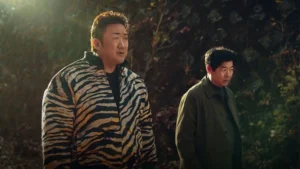
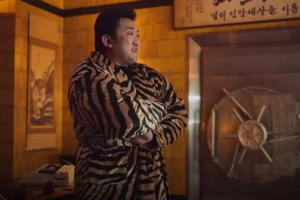
First: Backstory. With Tae-san feeling reflective after the events of the premiere, we take a quick trip to the Joseon period for some explanatory backstory about his relationship with Mir and, indeed, with humankind, since we as a race predictably make angelic intervention more trouble than it needs to be. One minute, Tae-san and Mir are helpfully intervening in a local dispute, and the next, the villagers are trying to kill Mir on account of mistrust over the very powers she used to save them. Such is the way of things, but you can quite clearly see how Tae-san would have become a little disillusioned with humanity over time.
You can see this manifest. The angels live on the periphery, keeping their already reduced powers pretty low-key. At one point, Mal-sook and Kan-ji have to remind Do-ni not to draw attention to himself by, say, reading the minds of random dogs and alerting their owners. At another, Mir knocks out a couple of dudes who won’t leave her alone. Getting by unmolested means keeping their heads down, which raises the obvious quandary of how they’re going to sneakily battle back a demon invasion without painting targets on their backs.
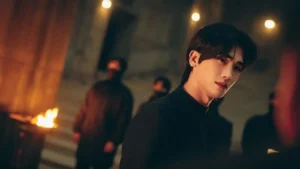
And there is a demon invasion afoot. O-gwi and the angels are circling each other figuratively and indeed literally. With the angels having lost their powers and the demons having lost theirs, it’s a relatively even footing, with O-gwi being the obvious wildcard. As explained to him on a rooftop by the high priest Samin, his ability to sense Hae-tae’s energy should make it easy for him to discover three hidden soul stones that can be used to re-energise the shared energy channel between angels and demons. Samin can’t be trusted, but the idea of getting Hae-tae’s powers is compelling, so it is what it is.
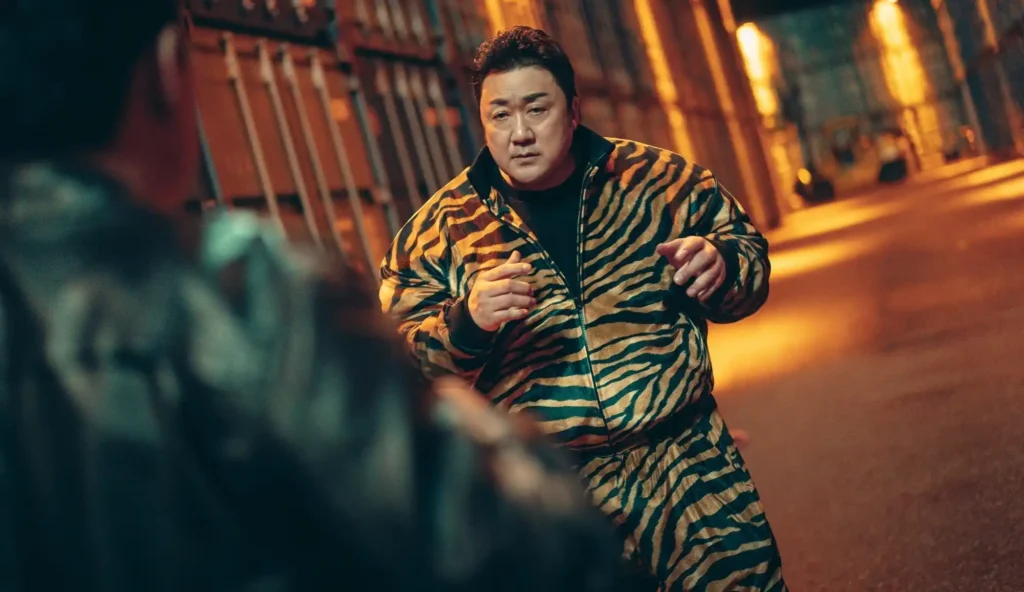
In the premiere, I mentioned that the relative simplicity of Twelve’s premise helps it to rattle along nicely, and that’s true in Episode 2 also. There’s nothing overly complex or fanciful here. The stakes are really clear. The tension comes from the inevitable collision course that both factions are on, and the fact that the angels are woefully underpowered for the battle to come. When the demons start making moves and the angels are alerted through their necklaces, that fear of being outmatched is very prevalent in their response. It also doesn’t help that Tae-san misses the call because he’s asleep in his therapist’s office, and Mir does too because she’s busy at work. That just takes blending in to a whole new level.
But the point is made and the stage is set pretty capably. Mir is jumped and overpowered, the other angels quickly following her. Tae-san is elsewhere. O-gwi is watching menacingly on. It’s a great place to leave things, since it isn’t immediately clear what our heroes can do in the short term to remedy the disadvantage they find themselves in. The threat feels big and serious, and the conflict is easy to grasp. Given all the other upsides this show has, I’m pleased to report that it hasn’t forgotten how important storytelling fundamentals can be.
RELATED: