Summary
Chief of War does a good job of widening its scope in “The Splintered Paddle”, lending focus to underserved supporting characters without losing sight of the core conflicts.
War is coming, of that there can be no doubt. I suppose Chief of War would be a bad title if it weren’t. But the biggest question raised by Episode 6, “The Splintered Paddle”, is precisely which direction the war is coming from. Will it be a splintered kingdom warring with itself? A rivalrous kingdom storming another’s shores? Or will the threat come from further afield, greedy foreigners arriving by boat to conquer the islands with terrifying weapons of fire? It could even be all of the above, which is how the Apple TV+ show manages to sustain so much tension with, if you really think about it, so little actually happening.
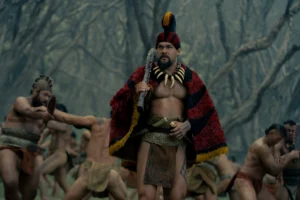
Case in point: Keoua burning several buildings results not in retaliation but in an entire episode of deliberation. There are two broad schools of thought. One is the idea of peace. Kupuohi wants to entreat with Keoua, and both Ka’ahumanu and Kamehameha agree with her. The only way to repel Kahekili’s inevitable invasion will be with a united Hawai’i, and Kupuohi is a cousin of Keoua, having grown up as a chieftess in his lands.
Ka’iana doesn’t see it like this. He thinks Keoua is a man of war who will never see reason, and he believes pretending otherwise will take up too much valuable time. To be fair to him, he’s also coming from the unique perspective of having seen the wider world and the godless men who inhabit it; he knows that those men will be coming to these shores sooner rather than later, and that Kahekili is only the most pressing of a laundry list of problems. The only way to secure long-term peace is with short-term conflict, and he’s sure of it.
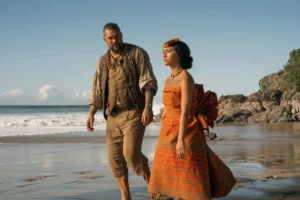
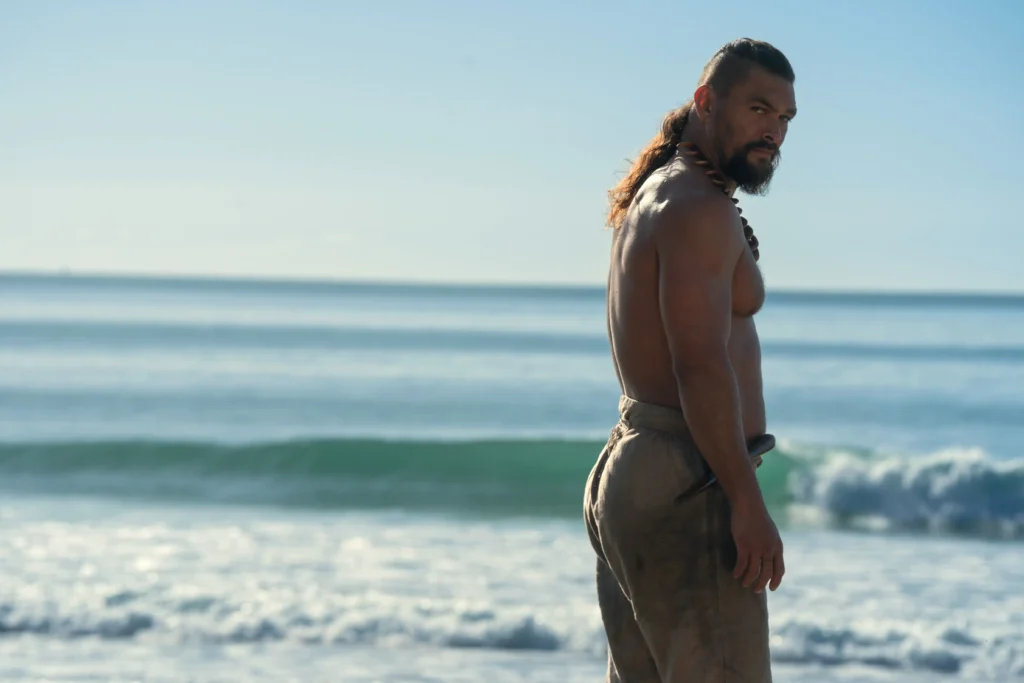
This only creates a further divide between Ka’iana and Kupuohi. It’s not immediately apparent whether Ka’iana suspects her affair with Namake — who isn’t seen in Chief of War Episode 6 — or is simply now too different for them to pick up where they left off, but the outcome is the same either way. Ka’iana wears pants, occasionally slips into spoken English, and carries a pistol with him. He’s fighting for his people, but he also runs the risk of becoming too far removed from them to see their point of view.
It’s hard to say whether Ka’iana’s attitude causes negotiations with Keoua to break down — it certainly doesn’t help — or if he was simply right all along. Keoua is unflinchingly adamant that he will never bend the knee to Kamehameha, despite it being his father’s wish that he inherit the God of War, and his palpable disgust at Ka’iana’s increasing Westernization only makes him more resolute. There will be no peace. But Keoua’s resident soothsayer also assures him that there will be no victory, and that his only path is to seek out the enemy of his enemy. In other words, he has to grovel to Kahekili.
Speaking of Kahekili, his reign is already looking sketchy. What he has sold as prophecy is increasingly looking like outright madness, and people aren’t just talking about it but actively planning to replace him with Kupule. It certainly isn’t a bad idea in theory, but it’s pretty difficult to pull off, since Kahekili has a habit of torturing to death anyone who disagrees with him (and eating dogs?!). Kupule is clearly aware that his dad has lost the plot, but he’s also reluctant to turn against him, either out of fear or respect. But that time is coming, I feel sure.
In the meantime, Keoua grovels. He asks Kahekili for men in exchange for Hawai’i looking the other way as he does whatever he likes to the remaining kingdoms, since Mau’i has never been able to defeat a united Hawai’i, and Kahekili agrees to send his best battalion under the command of his pet nutcase warmonger, which is quite an obvious clue that he doesn’t intend to stick to the arrangement. Kupule can clearly see this too, but Keoua, crucially, cannot.
And yet still Kamehameha promises peace. Episode 6 of Chief of War takes its title from a new law he implements, stemming from a story about when he paddled to a neighboring village and found himself being attacked on suspicion of being a threat. This is the culture of war that the former chiefs have propagated, where every visitor is perceived as an invader. That’s the culture he wants to change at its most fundamental level, so he outlaws killing for any reason other than necessity. Everyone, from royal to commoner, is protected by this law, including Keoua — it’s lightly implied that he’s formalizing the law at least in part to prevent Ka’iana from taking matters into his own hands and killing Keoua himself.
Maybe it wouldn’t be the worst thing. As Ka’ahumanu says to Moku, Kamehameha is Hawai’i’s heart, but Ka’iana is its fist, and the islands will need both of them for what’s to come. Hopefully, they can stay on the same page, but I strongly take leave to doubt it.
RELATED: