Summary
Chief of War increases its body count in Episode 8, but the tragedies beget a compelling depiction of sensitivity and compromise that gives this show its unique thematic texture.
I’ve been thinking about Chief of War quite a bit recently, trying to figure out what I find so compelling about it. I’ve seen loads of epic historical dramas, so it isn’t just the scope and detail of the production, or even the authentic use of a native language that hardly anyone speaks anymore. In Episode 8, “The Sacred Niu Grove”, which is the penultimate outing before everything presumably kicks off good and proper in the finale, I realised the unlikely source of my interest. It’s sensitivity.
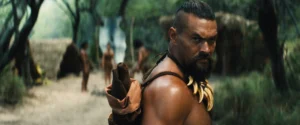
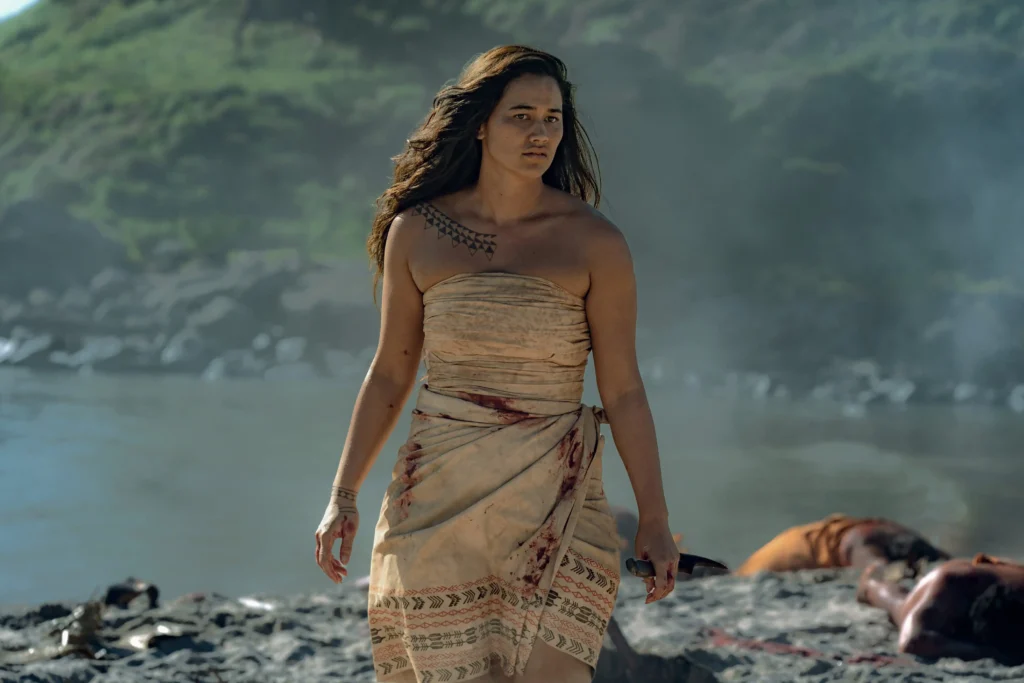
This feels weird to say about a show in which giant manly men beat each other to death in loincloths. Sure, there are beautiful women too, but they’ll kill you just the same, so the point still stands. It’s called Chief of War, “war” being the operative word. And yet the most striking scenes in this episode are of Jason Momoa, a contemporary icon of fuzzy outdoorsman masculinity, breaking down in tears over profound personal losses. This show’s rich sense of cultural understanding and appreciation is built on an unshakeable bedrock of human connection and brotherhood. Its big fist-pumping climactic moment is two rivals coming to an agreement and seeing each other’s point of view.
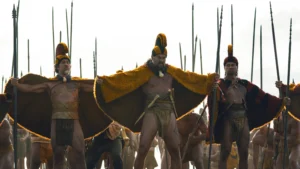
With our current times being more hopelessly divided than ever, it’s hard to understate the value of this viewpoint. Sure, there’s a lot of grief and compromise in this episode because several characters get brutally killed in it, but that’s not really the point I’m making. Thoughtfulness and understanding are explicitly posited as the right, “heroic” attitudes. The “villains” – namely Kahekili and Keoua, now in open allegiance – aren’t just the most violent, but also the most rigid in their thinking, the least willing to compromise on their ideas. The name of Kamehameha – helped along by Dragon Ball Z, granted – rings out through history because of forward-thinking leadership. Going toe-to-toe with your enemies might be the traditional thing, but sometimes, you just have to shoot dudes to make a progressive point.
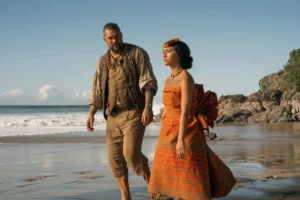
But I’m getting ahead of myself. Kamehameha’s last-minute embrace of “red-mouthed weapons” is the culmination of several awful events, the first being the aftermath of the European attack that capped off the previous episode. This is where we first see a devastated Ka’iana breaking down in tears when he discovers Vai’s children sobbing over her mangled remains. His first instinct is to direct his fury at Kamehameha, who arrives to survey the massacre he partly contributed to by not listening to Ka’iana’s warnings that the colonisers wouldn’t take no for an answer. But he’s talked out of acting rashly by Kupuohi, a moment of clear-headedness that will be beneficial to everyone later.
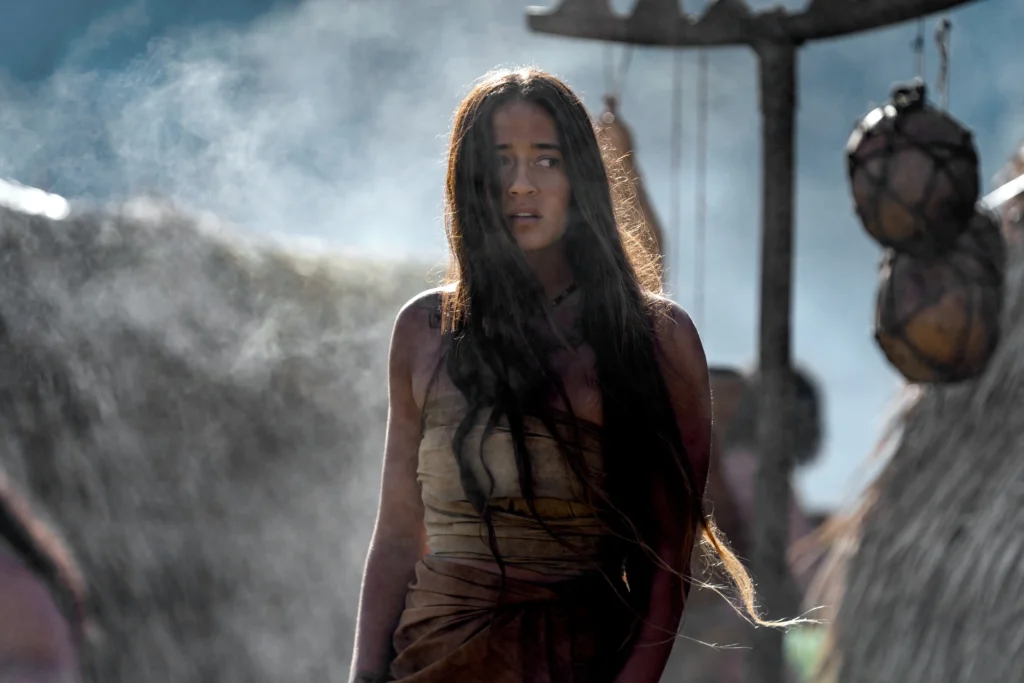
Mainei Kinimaka in Chief of War | Image via Apple TV+
Metcalfe’s attack proves Ka’iana right about this specific incident, but that’s a hard thing for a king, even a reasonably even-handed one like Kamehameha, to admit. Ka’iana remains unwelcome in the council, largely thanks to Moku’s tirelessly regressive ideology, and Kamehameha still clings to some fanciful idea that he’s going to be able to get away with pacifism throughout his entire tenure. Maybe the Europeans won’t return. Maybe Keoua will decide to embrace him with open arms. Needless to say, none of this happens; the opposite, in fact. But it’s important to understand how strongly Kamehameha wants this to be true, so that we understand what it means for him to later realise that it isn’t.
In Chief of War Episode 8, it’s Keoua who forces this change in Kamehameha’s thinking. With Kahekili’s backing, he’s bringing war to Hawai’i, and by sheer chance, Nahi and Heke, both of whom are displeased with Ka’iana’s intention to take his family back to Kaua’i in the hope of avoiding the inevitable war to come, run right into him. True to his personal brand, Keoua is desecrating the titular sacred Niu grove. He and Kahekili’s personal deranged attack dog, ‘Opunui, see an opportunity in Nahi and Heke. Keoua brutally kills the former in hand-to-hand combat, while ‘Opunui allows the latter to go free to deliver a message, alive but, sadly, not unharmed. We’re mercifully spared whatever happened to Heke at ‘Opunui’s hands, but it isn’t difficult to figure out, given the clues.
Needless to say, a Kahekili-backed Keoua will be an obstacle almost impossible to surmount in a conventional battle, and another deeply personal loss suffered by Ka’iana on the back of Kamehameha’s decision-making doesn’t go unnoticed. This is what I was saying at the top. Nahi’s death is brutal and tragic, and the first instinct of the audience, like Ka’iana, is to see it avenged in blood. And I’m sure it will be. But instead, we spend a while mourning Nahi, seeing a devastated Ka’iana carry his bleached bones to a mountaintop and sob his heart out. And we see Kamehameha, subtly counselled by Ka’ahumanu and then more openly by Kupuohi, realise that he has made a mistake. Hawai’i is being besieged on all sides, and indeed from within, and the choice he’s facing is paying the price for tradition in the blood of his people, or embracing the ideas and indeed weapons of his enemies rather than be destroyed by them.
He chooses the latter. Ka’iana’s knowledge of Western ways, far from being mocked and mistrusted, are now the most valuable line of defence against Keoua’s coming onslaught, fierily portended by an erupting volcano. It’s a great moment because it feels so earned, having been arrived at so organically. There’s only one episode left, and it’ll undoubtedly be a brutal one, but at least we know we’re rooting for the dudes who can admit they’re wrong and aren’t afraid to shed a tear or two.
RELATED: