Another day, another true-crime docuseries on a streaming platform. You could set your watch by it. Unless you’re an ardent amateur sleuth, your eyes are liable to glaze over. You’re likely to skim by. But some crimes suit the true-crime zeitgeist more than others, and the case of Ellen Greenberg, as explored in ABC News Studios’ Death in Apartment 603: What Happened to Ellen Greenberg?, is one of them.
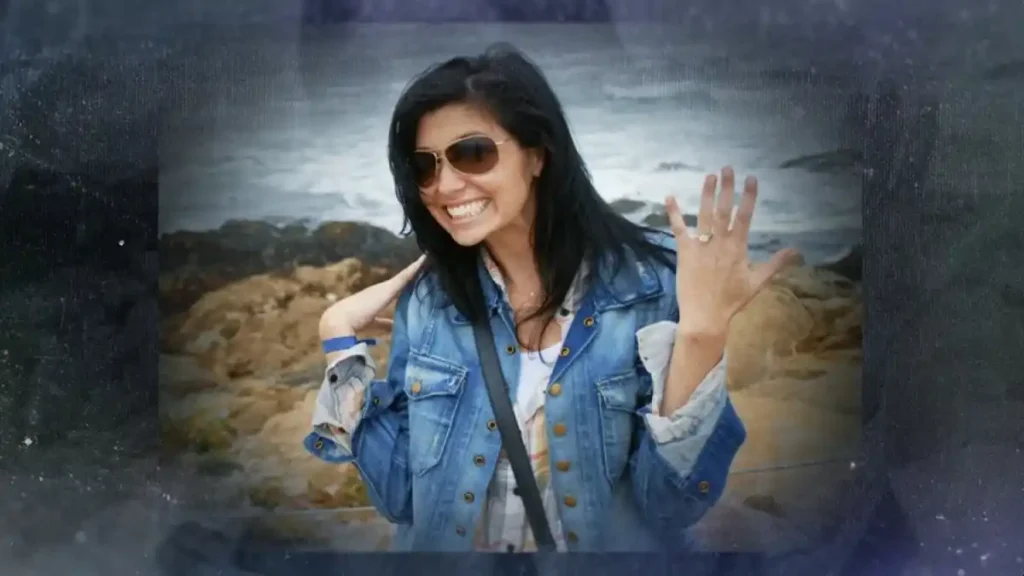
In 2011, Ellen Greenberg, a 27-year-old first-grade teacher, was found dead on the kitchen floor of her apartment by her fiancé, Samuel Goldberg. She had 20 knife wounds, several on her back and the back of her head, as well as unexplained bruises in various stages of healing, and yet, despite this, her death was immediately ruled a suicide. Then it was considered a homicide. And then, suddenly and mysteriously, it was declared a suicide again, and the city of Philadelphia shut the case without any further investigation.
So, it’s a locked-room mystery, a conspiracy, and a damning indictment of law enforcement and other legal and judicial systems all at once. And it remains unsolved, in a sense, despite the official ruling. Ellen’s parents, Sandee Greenberg, 69, a retired dental hygienist, and Josh, 75, a retired periodontist, have spent the last 14 years trying to figure out what happened, hiring experts, generating publicity, and filing lawsuits. In February, Sandee and Josh settled lawsuits they filed in 2019, against the Philadelphia Medical Examiner’s Office and then-assistant medical examiner Dr. Marlon Osbourne, and in 2022, against the City of Philadelphia, former Chief Medical Examiner Sam Gulino, and others, for a modest monetary fee and the agreement that city officials would reevaluate the manner of Ellen’s death.
In January, as part of the settlement, Osbourne, who had ruled Ellen’s death a suicide in the first place, signed a sworn statement saying he now believes her cause of death to have been “something other than suicide”. There aren’t a great many options for what that could be.
Death in Apartment 603: What Happened to Ellen Greenberg? isn’t so much a recounting of the crime itself as everything that followed it, with particular focus on Ellen’s parents, wider family, friends, colleagues, and several experts in an impressive line-up of talking heads who are all pushing the same idea – that the investigation was so badly botched from the very beginning that, as the family’s attorney Joe Podraza alleged during the lawsuits, it was tantamount to a deliberate cover-up.
The three-part docuseries, streaming on Hulu and Disney+, makes it very difficult to argue anything else. There’s nothing unusual about its presentation, mixing the talking heads with the usual array of crime scene photos, CCTV footage, brief and tasteful dramatic re-enactments, and text message chains superimposed on the screen. But the case itself is fascinating in the precise way that gross injustices and examples of incompetence tend to be. The ambiguity is what’s gripping; not the twists and turns of the case, but the unanswered questions that still swirl around it, some so obvious that it beggars belief how nobody in a position to answer them ever bothered to ask.
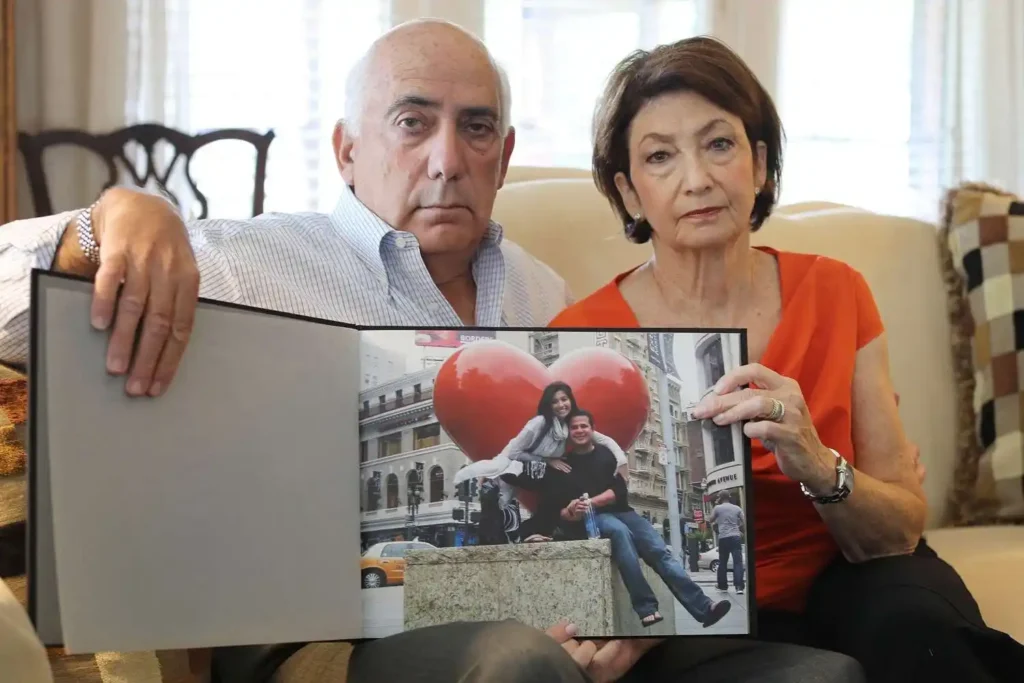
Josh and Sandee Greenberg holding a picture of daughter Ellen Greenberg and her fiance | Image via David Swanson/Philadelphia Inquirer
Produced by Dakota and Elle Fanning’s production company Lewellen Pictures and directed by Nancy Schwartzman, who directed Netflix’s aggravating Victim/Suspect, the quality is there, but it’s beside the point. It’s obvious from the first episode, and heavily reiterated in the second and third, that Ellen’s case was shockingly mishandled. And it should have been obvious! Who stabs themselves in the back? Ellen’s history of anxiety was deemed grounds to not only declare her death a suicide without proper investigation, but to also clean the scene – through a literal crime scene cleaning company, a detail I could scarcely believe – and remove several of her electronic devices and belongings. The latter seems an especially important detail, since they were removed by a relative of Ellen’s fiancé, who, it’s worth mentioning, is not a suspect and has never been treated as such, though I found his communications with Ellen in the form of the presented text messages to be… let’s just say curiously hostile.
Either way, something’s up. Dr. Cyril Wecht, a forensic pathologist hired by Ellen’s parents, concluded that Ellen’s wounds were not self-inflicted, and Dr. Wayne Ross, a similarly retained forensic neuropathologist, found evidence of strangulation. He believes Ellen’s death was staged. I’d argue badly, given the obviousness of third-party involvement, despite how consistently – and arguably willingly – that element was overlooked by authorities.
It took 168,513 signatures on a Change.org petition to convince the officials to reopen the case. The release of this docuseries feels, in its way, like the latest wave of these efforts to drum up publicity and get eyes on the blatant injustice of Ellen’s death and the lacklustre investigation following it, not to mention the bizarre efforts of the City of Philadelphia to prevent Ellen’s parents from seeking justice through litigation tactics. The Chester County District Attorney’s Office, to whom the family’s request was referred, hired a single expert to review the facts of the case – an expert in entomology (the study of insects), with no medical school training.
This whole case feels, at least to me, uniquely suited to our current true crime moment, with legions of determined amateur sleuths ready and able to dig into every aspect of Ellen’s life and death with a fine-toothed comb. Making A Murderer, which arguably ushered in our ongoing obsession with true crime and certainly helped to damage the ever-eroding barrier between real-life cases and the viewing public’s ability to influence them through collective efforts, had some of the same qualities as a publicity exercise as well as just a docuseries. In essence, Ellen’s parents have retained a global team of experts and enthusiasts to argue their case for them. Hopefully, they will finally get some answers.