Summary
An action-packed ending leaves Last Samurai Standing with little narrative payoff, but it sets up Season 2 well and overdelivers on exciting action set-pieces.
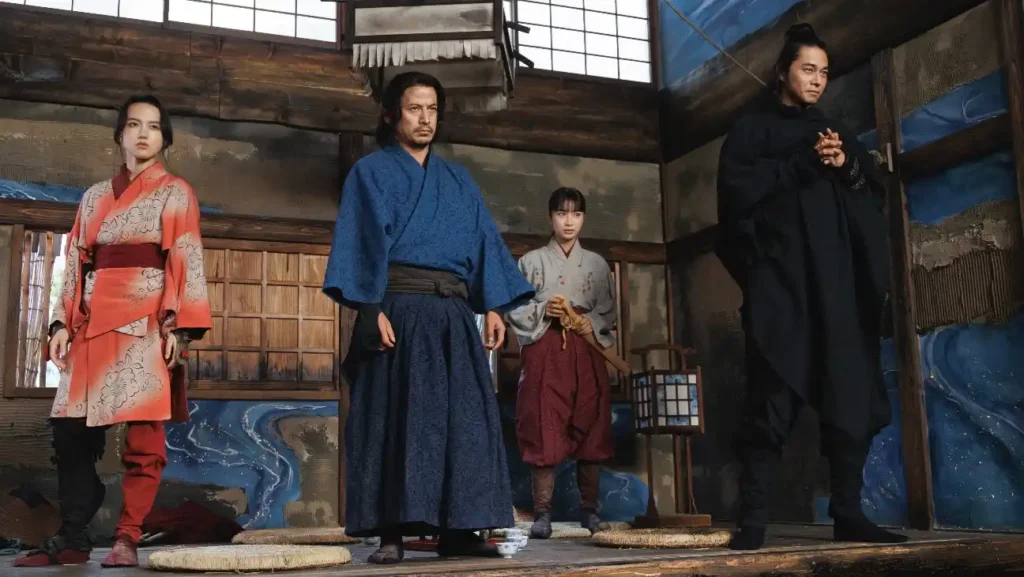
Nowhere are the intentions of Last Samurai Standing – Netflix’s fusion of Squid Game and Shogun – clearer than in its ending, which completely abandons the idea of narrative payoff in favour of an almost continuous run of action and a tease for Season 2, where it might all work out. Ordinarily, this would be annoying. But in a show that boasts impeccable samurai action first and foremost, it’s nice that the finale commits to that idea more than any of the previous episodes.
And besides, there are still plenty of twists and turns here. Sure, most are in service of that elusive second season, designed to complicate dynamics down the line rather than make much difference in the short term, but at least they’re here. This is a show that feels not only deserving of a sequel but that it might really benefit from one, especially based on the events of Episode 6, fittingly titled “Mortal Combat”.
Times Are Changing
Last Samurai Standing takes place in the late 19th century, during the Meiji era, and it’s a period defined by change. The once-noble samurai class has fallen out of favour, stripped of their previous ranks and privileges by the imperial government, and the traditional way of doing things – including waging war – that they represented is steadily being replaced by the march of industrialisation and militarisation.
At the forefront of this change is the Superintendent-General of Japan’s police service, Kawaji, who is the organizer of Kodoku, the battle royale tournament at the heart of the show. Our protagonist, Shujiro, is one of the last holdovers of a bygone era of stoic honour-bound traditionalism. He and those remaining like him are a significant threat to Kawaji’s new world order, because they’re definitionally resistant to change and deadly enough for that resistance to be a real problem.
Hence, Kodoku, which promises an outlandish cash prize for the survivor who can make it all the way to Tokyo. Since the samurai had already been politically and socially disenfranchised, it was obvious that they would be lured by the promise of wealth, or just by the excuse to once again use their well-honed steel and skills. Kawaji used the game to pit 292 samurai against each other while appeasing his rich benefactors by allowing them to bet on the outcome. In other words, the whole thing’s a way for Kawaji to consolidate power and eliminate any potential threat to that power.
Shujiro vs Bukotsu
There are multiple parallels made between the opening scene of Last Samurai Standing, a pitched battle in which Shujiro is a participant, and its ending. In that battle, Shujiro and his men were rained on by cannons and rifles, a stark warning of the more technically advanced future Kawaji is trying to usher in. In the same battle, he also duelled psychotic fellow samurai Bukotsu and defeated him, albeit leaving him alive.
After that, Bukotsu was imprisoned and went steadily more insane through his desire for revenge until he was eventually set free by one of Kawaji’s enforcers. He spends the entirety of Season 1 trying to hunt down Shujiro, and in the finale, he eventually catches up with him.
The duel between Shujiro and Bukotsu, in a tiny hut full of fireworks that are sequentially set off during the fight, is one of the better action sequences in the entire show. After the hut explodes, setting both men on fire, they sprint to a nearby lake to douse themselves, and Shujiro finally finishes off Bukotsu for good.
Gentosai vs Iroha (and others)
Gentosai, an elderly samurai with an oddly horror-adjacent contour, is intimately connected to Shujiro’s past. When he was young, he and his adopted “siblings”, including Iroha, were all part of a secretive martial arts school, the master of which was associated with Gentosai. When that dynamic turned sinister and the students were supposed to wipe each other out under threat of Gentosai hunting them down, Shujiro facilitated their escape, but Gentosai kept up his mission.
Gentosai catches up with Iroha and the others in the finale of Last Samurai Standing, but he isn’t able to have his way with them. Despite being wounded, he survives, but the siblings escape from him once again. However, they all know that they’ll never be free from him as long as he lives.
The more exciting aspect of all this is that the ending reveals Gentosai to be working with Kyojin, who apparently gave him the location of the siblings and mocks him for once again failing to finish the job of killing them. Kyojin has presented himself as an ally to the others throughout Season 1, so this twist redefines who can be trusted as Kodoku continues and the remaining “players” get closer to Tokyo.
How the Ending of Last Samurai Standing Sets Up Season 2
The ongoing Kodoku is, naturally, the most obvious framework for a second season, since the games are still very much underway and there’s a promise that they’re only going to get more dramatic as the survivors near their destination of Tokyo. With Kawaji having pulled off a coup in the government, he’s going to have more power to wield, even though Shujiro, through his own contact, has a bit of an awareness of what’s going on behind the scenes.
Beyond this, we also now have to wonder about Kyojin’s real motivations. It’s clear he’s not the ally that he initially presented himself as. But it’s unclear whether he has a specific connection to Gentosai or whether the old man is just one of several pawns, implying that Kyojin has many more connections than he’s letting on. This would make sense, since all throughout the season, he knew things that he wouldn’t be able to without some insider information.
Most of the characters are still alive, of course, with Shujiro and Futaba still on the way to Tokyo, and Iroha and the other siblings regrouping after their encounter with Gentosai. With all these pieces in place, there’s plenty of scope for Last Samurai Standing to return with a bigger, more ambitious second season, especially if it proves as popular as Netflix would like it to.