Summary
Hijack Season 2 comes up with a fairly novel way of the same sh*t happening to the same guy twice, but it’s ultimately too self-serious and hemmed in by familiarity to really work.
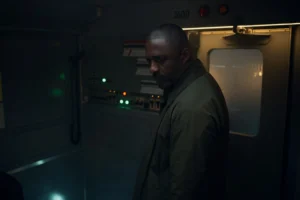
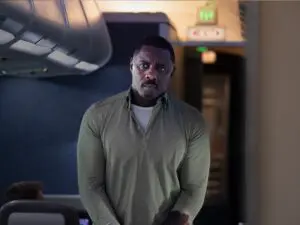
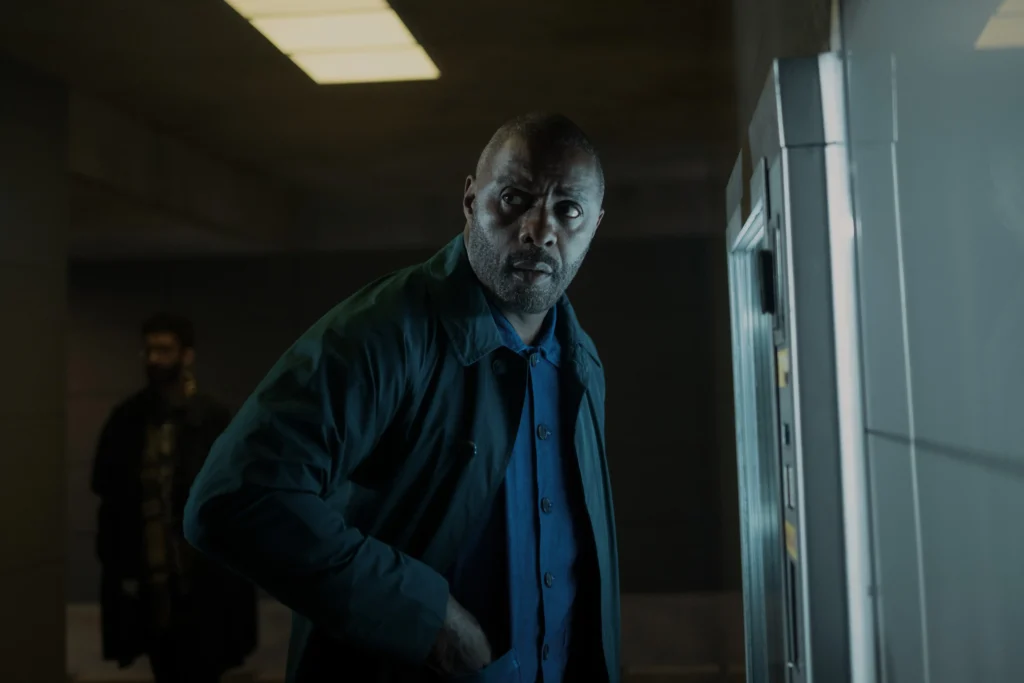
You might be thinking it’s a bit of a stretch for the same guy to be caught up in two separate hijackings. And you’d be right, of course, which is a concern that Season 2 of Hijack has at the very least considered. Merely two years after finding himself stuck in a hostage situation on a plane, business negotiator Sam Nelson (Idris Elba, A House of Dynamite) finds himself stuck in a hostage situation on a subway train. It’s quite the coincidence. Except, of course, it isn’t, since both hijackings are intimately connected, and the premise of this latest one is a deliberate inversion to keep things fresh.
But I’ll let you in on a secret. When an original streaming series proves to be a straight-up banger, as Hijack was for Apple TV+, there’s no such thing as coincidence. There’s another hijacking because the show is called Hijack, and Sam is caught up in it because Elba’s the lead. There’s really nothing more that needs to be understood than that.
This vein of cynicism pulses with a lot of distracting energy. The whole thing’s slickly produced again, sure, and Elba is committed to what’s being asked of him, but you can’t really escape the sense that this is a run of episodes that didn’t need to exist, and is ultimately imitating the first batch in a clear case of diminishing returns. Cautionary tales about the fates of unnecessary sequels based around vehicular thrillers – Speed, Under Siege, etc. – must have surely been swapped around the writer’s room, but nobody was dissuaded enough not to give it a go anyway. Money talks.
What’s unavoidable is that, despite some similarities, a German subway train is just flat-out not as interesting a setting as a plane. There are various reasons for this. Planes are in the air, so almost everything that happens aboard them comes with a very particular sense of peril. Planes are also divided into multiple sections, most of which are never seen by passengers. There’s a class stratification process to planes – first class, business, economy, and so on – that fits quite well with the idea of a man stranded aboard one and having to pass messages back and forth.
And a lot of people are afraid of flying. Almost everyone is afraid of falling.
A subway train has a nice sense of claustrophobia, but it doesn’t have any of these unique qualities, and doesn’t play on the same innate terrors. An increasingly paranoid contemporary culture that has suffered its share of transport-targeted terror can relate to the nervous energy that radiates through a rattling carriage full of strangers, but it’s not the same thing as an air hijacking. And since most people aren’t as well-versed in trains, a good amount of Hijack Season 2, especially in the early going, is devoted to explaining the key elements that are going to be necessary to understand as the episodes – eight of them – tick by.
But what this manifests as is mostly exposition and a lot of very similar-looking carriages occasionally pulling into a lot of very similar-looking stations. There are tons of passengers crammed inside, but painfully few who make any real impact, and the journey is a stuttering one from the second the journey begins. Nobody seems happy to be there, including Idris Elba, who has been asked to play Sam as much more haunted and fed up, which isn’t exactly conducive to the audience’s entertainment.
Elba isn’t alone, since most of the first season cast also return, and there are some fun new additions, including Toby Jones as a British intelligence agent and Lisa Vicari as a subway control room operator, who fit right in. But the contradiction at the season’s core is that it’s trying to subvert the first season’s premise in as many creative ways as possible while also weaving the plots together, meaning it doesn’t quite feel like a new thing or an outgrowth of the old thing but a weird hybrid of both, which I’m not sure entirely works.
It’s fine, and still has its share of highlights. But the much too-serious tone, repetitive premise, heavy-handed script, and overriding sense of existing only because it wouldn’t be financially savvy not to all conspire to hamstring it relative to the great first outing. A shame, but not altogether unexpected. Perhaps this is why the Germans are always complaining about trains.
RELATED: