Summary
A Knight of the Seven Kingdoms returns to Westeros with a much lighter tone, a much breezier pace, and a pair of morally uncomplicated heroes it’s impossible not to root for.
It’s difficult to tell whether A Knight of the Seven Kingdoms is for Game of Thrones fans who are still smarting about how badly it ended or people who never liked it in the first place. Either way works. There’s a lovely vibe to this show that is totally antithetical to the haughty self-seriousness that defines Thrones and House of the Dragon. It almost rejoices in the idea that all the things that are most commonly associated with A Song of Ice and Fire – dragons, kings, supernatural threats from a frozen north – are nothing to do with it.
This doesn’t mean A Knight of the Seven Kingdoms is designed to alienate franchise fans, which I think is probably its masterstroke. It works both ways. It’s set in the same fantasy world of George R. R. Martin’s most notable works, fleshes out the feudal system of the continent of Westeros, and includes a few notable figures and families who, for long-time fans of the material, will be recognisable. But it isn’t adapting the epics. Instead, it’s adapting the first of three much lighter novellas, which many consider to be the best things Martin has written, at least in part because they don’t have the time or space to indulge his worst storytelling impulses.
You can tell by the credits. There’s no sprawling map here, or complicated family trees extending out in gnarled branches. The story is set during a period of Westerosi history where the Targaryens are still nominally in charge, but dragons are nowhere to be seen. There isn’t a war going on. There have been wars going on, though, and their spectre can sometimes be glimpsed in the hardscrabble lives of smallfolk toiling in the corners of the kingdom that the big shows never deigned to visit. But the word “epic” wouldn’t apply to A Knight of the Seven Kingdoms, and it’s all the better for it.
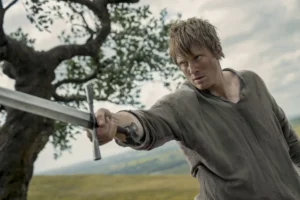
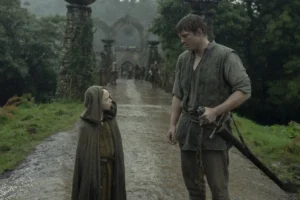
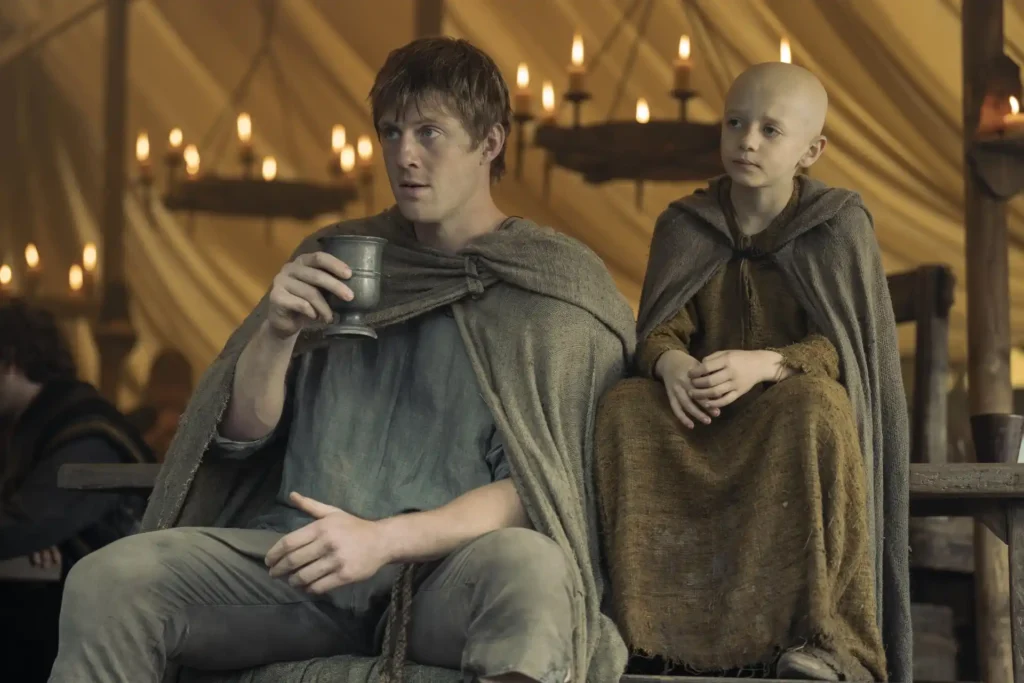
This, let’s be clear, is a comedy first and foremost. It’s about a hedge knight named Dunk (Peter Claffey, Bad Sisters) and his squire, Egg (Dexter Sol Ansell), trying to make their way in a rough world that keeps trying to kill them. It’s still very much for adults – there’s full-frontal male nudity and the violence, when it happens, is brutal and grounded – but it’s playful and pacey in a way Game of Thrones never was, and it appeals to the most fundamental impulse of the audience to root for the clear underdog.
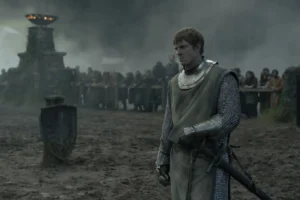
And Dunk is an underdog. He’s big, a bit of a dope, and has only the humble aspirations of being a knight, not for any kind of personal glory but really just to honour the name of Ser Arlan (Danny Webb, Pennyworth), the old alcoholic knight of no real skill or renown who nonetheless raised him and instilled in him the desire to be a good man and help people. The series opens with Dunk burying the old man and resolving to enter a tourney at Ashford Meadow, and it’s there that the season remains for its entire runtime.
And that runtime! At only six episodes, each only thirty-ish minutes long, A Knight of the Seven Kingdoms rockets along with such breezy energy that it’s impossible not to get invested in. It strikes me as one of the few shows that would have probably benefitted from being released all at once, since it’s an ideal binge-watch, but there’s no way HBO would be willing to let this kind of viewership get away with blasting through its trademark IP in one evening. But whatever. The length, combined with the lighter tone, the clear moral and emotional stakes, and the grounding in the perspective of a commoner instead of a rich noble or storied warrior, all conspire to give this show its very distinct, relatable contour. There’s no doubt in my mind that many fans of the franchise will consider this their new favourite part of it. And rightly so.
RELATED: