Summary
WWE: Unreal still can’t escape its most core contradictions in Season 2, but it’s a better, more personal package overall.
WWE: Unreal was a cynical marketing ploy when it debuted, and most people – wrestling fans most of all – didn’t especially care for it. It’s still a cynical marketing ploy now it’s back for Season 2, a five-part follow-up in the same vein but with a slightly shifted focus, but I’m not going to bother repeating myself too much since at this point, everyone knows the score. And besides, I think this season is a bit better, even if it’s beset by many of the same issues.
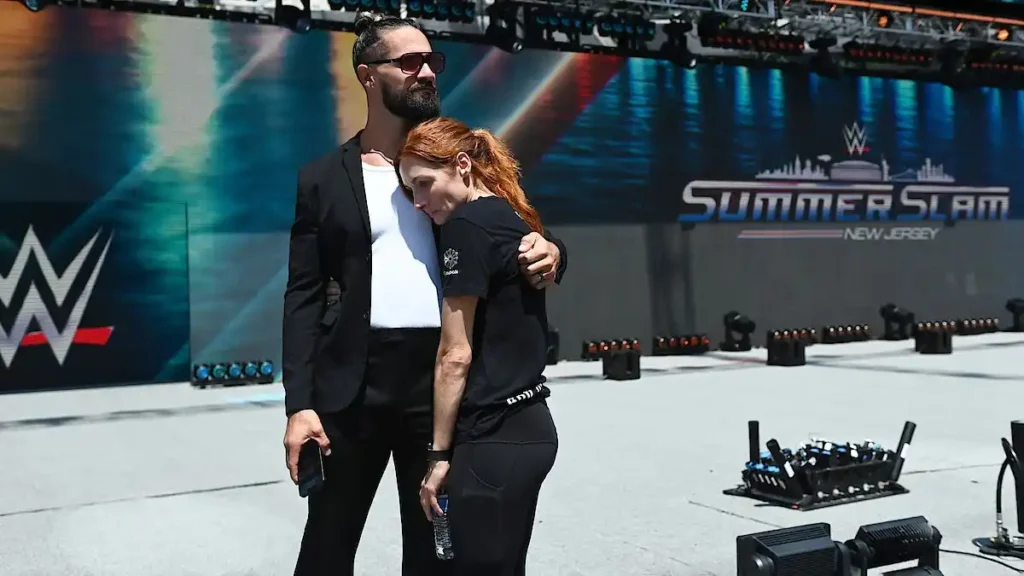
Usefully, WWE’s creative chronology creates the ideal entry point for Season 2. The first season climaxed at WrestleMania 41, the sport’s de facto Super Bowl of the PPV events calendar, but the unique appeal of pro-wrestling storytelling is that it goes on forever, so the next batch picks up right after, as the creative team and the stars begin to work their way to SummerSlam. This gives Season 2 a natural excuse to settle on the new storylines emerging in the run-up, with a particular, useful focus on Seth Rollins, Becky Lynch, and Lyra Valkyria.
Some of this stuff I really like. Rollins and Lynch are married in real life, which is a nice approximation of the line-blurring that is supposed to be the selling point of this series, and they’re both cool characters who are necessarily involved in a lot of big matches and moments. But the focus being on them doesn’t have the easy titillating quality of a focus on, say, Rhea Ripley or John Cena. The most familiar faces are still here in varying degrees, but there’s a definite new blood focus that certainly helps things along.
There’s also a curious non-wrestling celebrity focus that I like less. There’s a big chunk of time devoted to Pat McAfee and Jelly Roll that will presumably be of interest to fans of Pat McAfee and Jelly Roll but isn’t especially illuminating for long-time wrestling fans, since the idea of someone totally new to the industry being coached into a basic match is just fundamentally less interesting than how the veteran talents and creative personnel shape the product week in and week out. I got much more out of an argument between Triple H and Road Dogg about how to book R-Truth’s loss to John Cena during his heel retirement run, or the sudden on-the-fly improvisation after Becky Lynch’s brutal attack on Lyra Valkyria resulted in cheers rather than boos, than I did seeing Jelly Roll on a treadmill.
This might be a horses for courses situation. But the celebrity stuff feels like it’s killing time in a series like this that purports to be a peek behind the curtain but still has to maintain the illusion of kayfabe, so can’t ever really be “open” in the way it pretends. Because celebrities exist outside the very insular world of weekly pro-wrestling storytelling, they don’t have to worry about sustaining any character development or dynamics long term. You can clearly see the difference in how these segments are handled relative to those about people who famously don’t enjoy being involved in this show – like Paul Heyman and Rollins himself – and that’s where you can see the seams.
Rollins, for instance, never interacts backstage with CM Punk to preserve their kayfabe hatred, even though the most intriguing angle for a documentary is to let us see that. But then again, the stuff about his faked injury is pretty well handled and does provide unique insight into how those kinds of creative decisions bleed into the real lives of the talent. It’s the same with R-Truth’s contract dispute mishap and the organic outpouring of support for him after he was “released”, even if I’m not sure I necessarily buy Triple H’s explanation of how it happened.
But this is the kind of stuff that WWE: Unreal Season 2 gets right. It just sits uncomfortably close to the things it also gets wrong. Naomi’s sudden exit from the company, eventual return, and sharp left-turn character gimmick gets some appreciated focus but it’s cut short pretty early, and the determination with which nobody involved will say the words “Sasha Banks” out loud is embarrassing and is a reminder of how much this is a carefully cultivated PR play, however much it likes to claim otherwise.
It’s still undeniably entertaining, though, almost in spite of itself, and Season 2 has, at least in my view, some moments of authenticity and genuine sentiment that outstrip anything in Season 1. R-Truth and Road Dogg’s relationship is really lovely, and everything involving Lyra is pretty welcome. Pushing the biggest names out of the talking head segments was a smart play, since the heights of pro-wrestling are built on the backs of its mid-card talent, not perennial main eventers. Unreal benefits from being more personal instead of more sensationalised. It can’t escape those fundamental contradictions at its core, but there might be some real utility in it as a vehicle for the stories that get swept under the canvas of the product itself.