Summary
Cross hasn’t suddenly become a remarkable streaming standout in Season 2, but it’s still a very solid crime thriller bolstered by another great Aldis Hodge performance.
This is pretty reductive to say, and I’ll obviously expand on it, but the truth about Cross Season 2 is essentially this – if you liked Season 1, you’ll like this as well. There’s more to it, and we’ll get to that stuff, but the gist is that it remains a very dependable but ultimately unremarkable show bolstered by another great Aldis Hodge performance, and it slips rather neatly into Prime Video’s “surprisingly good dad-friendly genre fare” catalogue, alongside Reacher and The Terminal List and that solid spin-off from The Terminal List that nobody but me seems to have watched.
All of this, you’ll notice, applied equally to Season 1. That was helped along by name value, since the series is an adaptation of the reasonably well-liked James Patterson novels, and luckily, most other adaptations of that franchise – especially the one starring Tyler Perry and Matthew Fox – have been rubbish. Season 2 is helped along by Season 1 having been better than people expected, so it’s all pretty cyclical when you think about it. But the confidence was there from the start, since Season 2 had already been filmed before Season 1 even debuted.
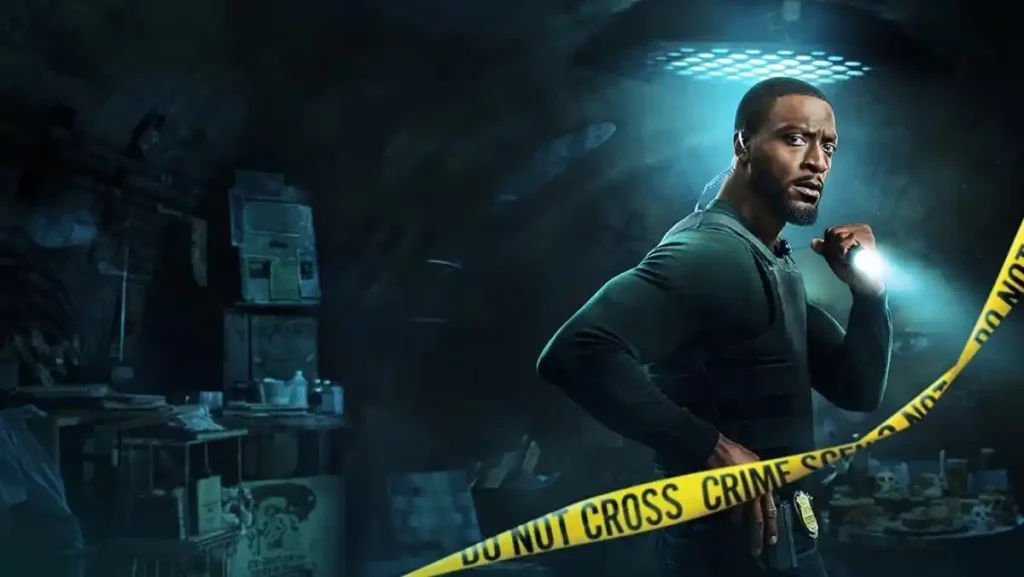
Aldis Hodge is the secret. He’s great in this; effortlessly cool, oddly sexy, believably tough, and clever. Another secret is the adjacency to real-world hot-button issues; a BLM protestor here, Covid-19 namechecks there. That kind of thing can be awful if it’s handled incorrectly, but Cross is good at staying focused on the issue at hand – being an engaging thriller on its own terms – and knows to keep the hand-wringing minimal. Real-world context is only deployed in ways that make sense and underscore the plot and its ideas, instead of the plot itself being configured to push a particular viewpoint.
Again, this was true before and remains true now. The specifics of this season are where things start to differ. There’s a new case, with a beautiful, enigmatic assassin, Luz (Jeanine Mason), working her way through a hitlist of flamboyant American billionaires, for reasons that aren’t explained initially but shouldn’t come as much of a surprise. The case lands on the desk of FBI Agent Kayla Craig (Alona Tal), and the Bureau’s director insists she work it with Alex Cross (Hodge), since that went so well last time. Before long, Kayla and Cross’s efforts to protect wealthy philanthropist Lance Durand (Matthew Lillard) have crossed over with Luz’s vendetta, and we have a collision course on our hands.
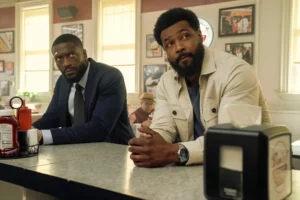
Meanwhile, Cross’s best friend and Metro PD partner, John Sampson (Isaiah Mustafa), finds himself embroiled in a murder case that becomes personal for reasons I’d be better off not spoiling. He gets an expanded focus in this season, though, and that’s very welcome, since the temptation is always to heavily focus on Cross himself, sometimes to the detriment of those around him.
Cross does get plenty to do in Season 2, though. He’s still reeling from the guilt and paranoia over the first season’s events, which have fundamentally changed his relationship with Elle (Samantha Walkes), and that means his relationship with Kayla evolves, too. Kayla’s dealing with her own personal subplot, and again, the less said about that, the better, but it gives the season overall a bit more texture. Her character is largely interesting because she’s a genderbent version of Kyle Craig from the books, but it remains to be seen, at least for now, how closely this depiction will hew to that original version.
Cross remains pretty topical – accidentally or otherwise – on the strength of an A-plot revolving around immigration and human trafficking, but there are nods to the pandemic and other real-world issues as well that help to contextualise the investigation. Through this angle, Luz becomes a more interesting “villain” since she’s inarguably bonkers but also kind of has a point, which is nice, since all the best villains are the heroes of their own stories, after all.
The trade-off is less focus on Sampson and Cross’s relationship, with the former’s personal plot keeping him quite detached from the main arc. This is also the case with Elle, whose complex relationship with Cross seems like it’s going to form a crucial part of the episodes, but then mostly falls by the wayside as she babysits his kids while he’s out of state.
These are just minor nitpicks, though, highlighting changes in logistics rather than quality. Cross works because it’s very dependable entertainment that the actors are taking seriously enough to elevate it beyond the most basic genre fare. It isn’t going to change anyone’s life or win any awards, and it’s important to understand that, just as it’s important to give credit where it’s due for all the stuff it continues to do well. Enter with the right expectations, and you’ll have exactly as good a time as you think you will.
RELATED: