
Summary
While imperfect as ever, Star Trek: Starfleet Academy delivers a respectable ending, with a good balance between action and character.
Much ado has been made about Star Trek: Starfleet Academy, a reception that I’ve discussed briefly before. More so than ever, the finale solidifies my belief that the truth of whether this show works or not – whether it’s worthy of the Star Trek brand or is a performatively cosmopolitan imposter – is somewhere in the middle, halfway between the polar extremes of its most ardent fans and frenzied detractors. I didn’t love the penultimate episode, and I think the ending in Episode 10 suffers from some of the same problems. But I also thought “Rubincon” – yes, it’s a deliberate misspelling of “Rubicon” – was engaging and had strong character moments, laying the groundwork for a virtually inevitable second season. So, what can you do?
What we can do in the meantime is break down everything that happened, why it worked or didn’t, and look at how things were left ahead of a potential follow-up. So, let’s do that, shall we?
An Explosive Predicament
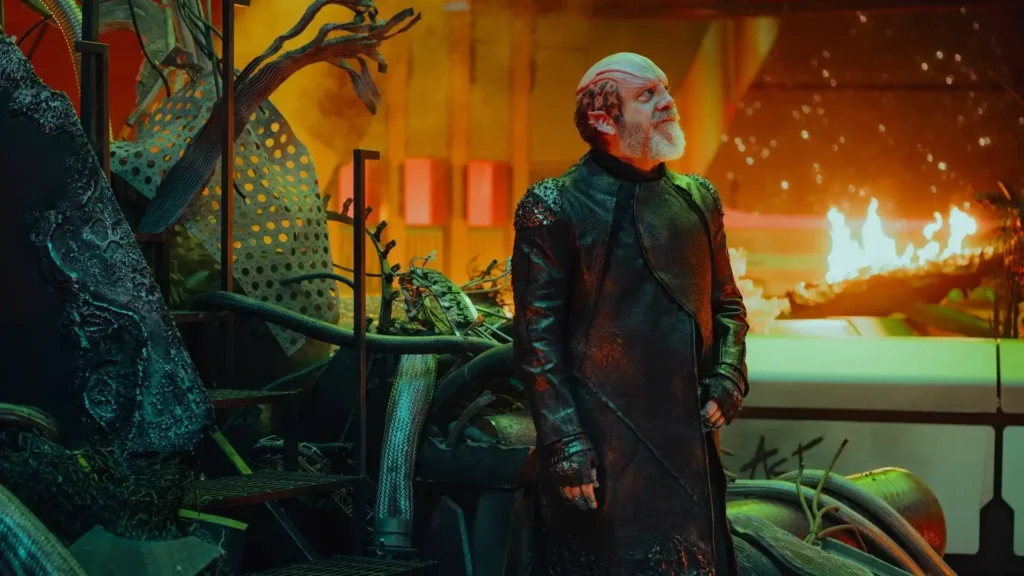
As set up in the previous episode, here’s the general idea of the crisis facing Nahla and a handful of freshman Starfleet Academy cadets in the finale. Nus Braka has used Omega-47, a highly unstable synthetic variant of the Omega molecule that the Federation had designed as a potential power source, to ring Federation territory with mines, thus preventing any Starfleet vessels from moving freely and keeping the USS Athena trapped outside of the minefield.
Nus’s large-scale plan is to unite a bunch of non-Federation worlds, angry for various reasons, in a loose alliance that will nonetheless be powerful enough to take the fight to the Federation. It’s a bit like how the Confederacy of Independent Systems worked in Star Wars, just without any paperwork. The mines are also protected from interference by a jamming signal, which gives the finale its split attention.
On the one hand, you’ve got the cadets, led by Reno and Doctor, working together to solve a few different crises and resolve their character arcs, while on the other, you’ve got Nahla being put on trial by Nus Braka for the Federation’s various crimes against the galaxy, with Caleb’s mother, Anisha, roped in as a star witness.
Trick of the Light
Thanks to a subtle signal from Nahla, Doctor is able to interpret that she’s tipping him off about Nus destroying the ship, so the Doctor is able to create a hologram of the Athena that Nus can unknowingly blow up instead. Doing so requires him to download himself into the ship’s mainframe, though, and after he pops out, he starts spouting complete gobbledygook, which isn’t exactly helpful in a crisis.
This is all about paying off the relationship between Doctor and SAM, since he’s her father now, and between SAM and Genesis, who haven’t had quite the same dynamic since the latter’s reboot. It’s a fairly nice moment of togetherness that allows Jay-Den to realise that Doctor’s “glitching” is really him trying to communicate in a language they don’t understand. Approached from that angle, they’re able to get Doctor’s point, which is basically tipping them off about how to render the mines harmless remotely.
The Trial
Nus Braka thinks that putting Nahla on trial in front of his new alliance will sell his point, since Nahla has some skeletons in her closet that don’t sound great second-hand. One of them is obviously sentencing Anisha for theft, which completely disrupted her life and left Caleb adrift, with his only options being prison or Starfleet Academy. It’s easy to see how that would look like a strong-arm tactic.
Anisha hates Nahla, so she is initially on Nus’s side, but the entire point of this sequence is to show how even a person’s most trenchant beliefs are open to interpretation. Anisha’s predicament was grim, sure, and she was manipulated by Nus, but she also could have done more to save the pilot who was killed during their raid. A pilot Nahla knew. From her perspective, Nahla has just as much reason to hate Anisha as the other way around, but she doesn’t, which is intended to be a learning experience.
Eventually, Caleb arrives after finally allowing Tarima into his mind so she can locate his mother, and he offers an alternate viewpoint on Starfleet that punctures some of Anisha’s misconceptions. He also teams up with Nahla to poke holes in Nus’s tragic backstory, which he has framed as the Federation indiscriminately bombing his mining colony, but turns out to be his idiot dad having barbecued the planet’s atmosphere with an unstable weapon he built. Needless to say, this doesn’t do a great deal for Nus’s sales pitch.
All’s Well That Ends Well
Starfleet Academy Episode 10 has a happy ending, of course. The relationship between all of the cadets is better and stronger than ever, with Caleb’s ringing speech about Starfleet having helped to patch things up between him, Genesis, and Darem. Caleb and Tarima confess their love for one another, Genesis and SAM get on the same page, and Caleb gets to have the best of both worlds – a relationship with his biological mother and his surrogate. He’ll be holidaying with Anisha during the summer, but returning to Starfleet Academy for the next semester.
Thanks to the combined might and intellect of everyone, Nus is arrested, and his budding confederacy is disbanded. He even gets a couple of smacks in the face for good measure. Paul Giamatti played this role as big as possible, and this finale was a great showcase for him, even if we don’t see him again.
Will we, though? I think the odds are better than even that we will.