Summary
The Madison succumbs to some florid writing and repetitive messaging in “Let the Land Hold Me”, but it does reach a key turning point in the narrative.
Episode 2 of The Madison is a little weaker than the pilot, if you ask me. Not by a big stretch, granted, but there has to be a trade-off to less Kurt Russell, even though he keeps showing up in flashbacks, and here it’s a little forward momentum. Sure, the hook of the show is that Stacy wants to make languishing in Montana a full-time thing, but that doesn’t mean the show needs to languish with her, reiterating the same points about her privileged kids and grandkids.
Some of the writing’s a bit florid, too. There’s an opening flashback sequence in which Stacy and Preston discuss the differences between a beach horizon and a mountainous one that is straining for profundity but leans closer to nonsense territory, but it’s reiterating a point we’re already pretty familiar with. Preston loved Montana. Stacy didn’t, or at least assumed she wouldn’t.
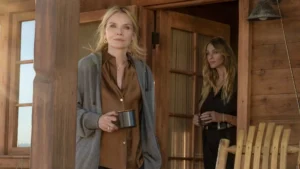
As far as the kids and grandkids are concerned, this assumption proves correct and then some. There’s a slapstick vibe to some of “Let the Land Hold Me”, with hornets in the outhouse and that sort of thing, but there’s also a nastier undercurrent that makes it really difficult to care about Stacy’s bratty family. They’re rude, obnoxious big city archetypes, which is obviously the point, but it doesn’t make it any easier to root for them. Stacy feels the same way. She’s still weighing up the pros and cons of burying Preston and Paul somewhere close, but the obstacle she keeps coming up against is that nobody will want to travel from New York to visit. The kids are already thinking about selling the land, which would leave the burial site at the mercy of someone else. Stacy is dismayed that nobody else has even considered remaining there to steward that land and keep it in the family.
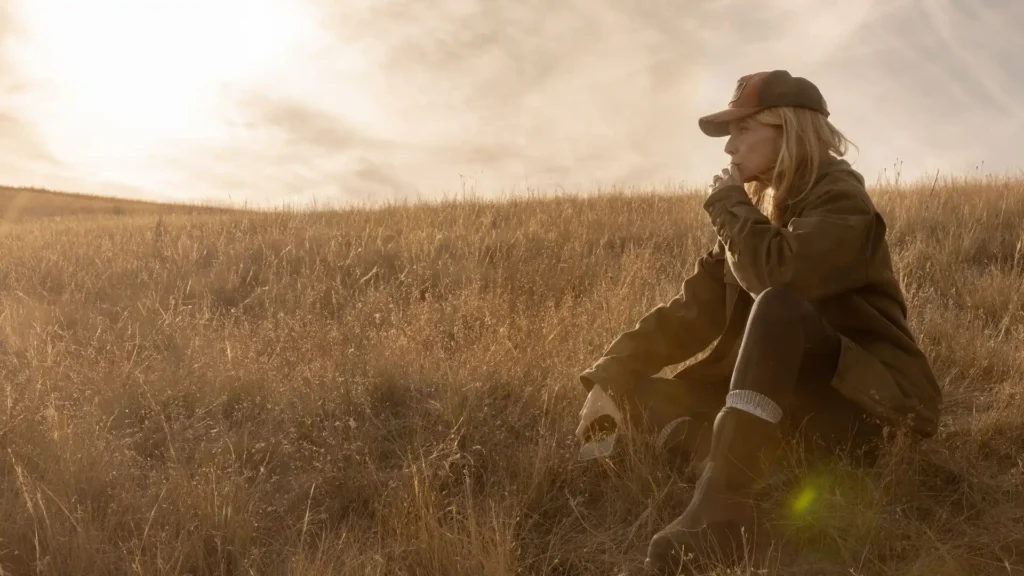
That’s the arc of this episode, then. It’s about the calcification of that idea in Stacy’s mind, the sequence of events that leads her to decide, unequivocally, that Montana won’t just be the place where she lives for a while – it’ll be the place she dies in, too, to be buried right next to her husband. In not sharing with this ideal in Preston’s life, she denied him something in his final moments, preventing him from being with her at the end. That’s why her grief is so profound, and it begins to create separation between her, her kids, and her grandkids, as she can see in suddenly stark relief how incapable they are of putting their own preferences aside for Preston’s sake.
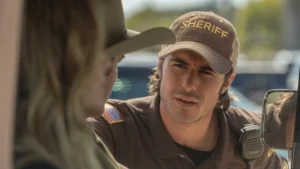
I can’t help but feel this sometimes manifests in too-obvious ways in The Madison Episode 2. Cade, a friendly neighbour, arrives at the ranch with a care package of food that is met with complete derision. Macy corrects him about calling tacos made by Native Americans “Indian tacos”, claiming Cade is racist, and it’s just such a ridiculous comment coming from a pampered young New Yorker that it could only exist in a Taylor Sheridan show. And what’s more is that Macy is righteous about it afterward, with a shrugging “someone had to tell him” attitude, like she’s a civil rights campaigner and not someone too young and sheltered to know any better.
There’s another bit where Cade advises Russell about what to do with the hornet sting on his face, and Russell just wants to ignore the advice and go to the hospital anyway, even though the closest one is two miles away and all they’d advise is the same thing Cade just did. There’s the distinct whiff of the coloniser about all this, these city folks unsubtly implying they know more, and are more enlightened, and it’s deeply uncomfortable. It doesn’t go unnoticed by Stacy, either, who berates her family for being selfish, ungrateful, spoiled twerps, and it’s a crowd-pleasing moment.
It also surely greases the wheels of Stacy’s big decision, which is to move to Montana full-time and ensure the security of the ranch long after she herself has passed on, selling her New York townhouse and setting up a trust for the land’s maintenance in perpetuity, which none of the kids, especially Abigail, who is in debt up to her eyeballs, will be able to access. It’s perceived – by the kids, at least – to be a deeply selfish decision, but it’s certainly easier than the rigmarole that would have been required parcelling up a piece of the land to use as a cemetery and hoping nobody else messes with it. Plus, these kids deserve a harsh lesson or two, and this is certainly going to accomplish that. Let’s see who’s really in mourning and who isn’t.
RELATED: