Summary
Imperfect Women definitely requires some patience to get through its off-putting early episodes, but the reward is a truly enthralling, psychologically complex, and genuinely unpredictable thriller.
Here’s a fair warning about Apple TV’s psychological thriller Imperfect Women: It doesn’t put its best foot forward. Its earliest episodes, which frontload deeply unpleasant characters in a narrative that seems to be a facile and cynical portrait of empty materialism, are not reflective of the show overall. You have to be patient. You have to stick around until at least the back half, which is where things take a serious turn. The story that emerges in those later episodes is striking in its depth and complexity, efficient in its surprises, and award-worthy in its performances. It just takes a while to get there.
Based on Araminta Hall’s same-named novel, this has all the hallmarks of a domestic thriller about three dysfunctional long-time friends whose secrets – about themselves and each other – begin to be exposed. There’s a murder at the centre of it, but it doesn’t feel like a murder-mystery initially. It seems instead like the death is merely an inciting incident that brings the worst out of everyone, including – perhaps especially – those who were supposed to have loved the victim the most.
This remains true, in a sense, but Imperfect Women is very much a proper murder-mystery, and as it starts to build a laundry list of potential suspects, it continuously pulls the rug from beneath the feet of its characters and audience, recasting familiar figures in a new light and recontextualising previous details that seemed unimportant at the time. Every victim could conceivably be a suspect, and vice versa, and some of its turns are genuinely surprising, especially considering the characterisation. It’s the best of both worlds; the skeleton of a thriller wearing the layered flesh of a prestige drama.
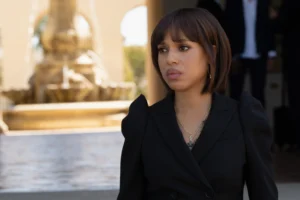
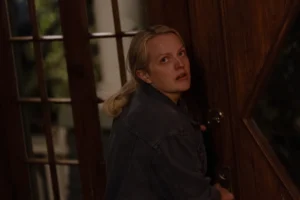
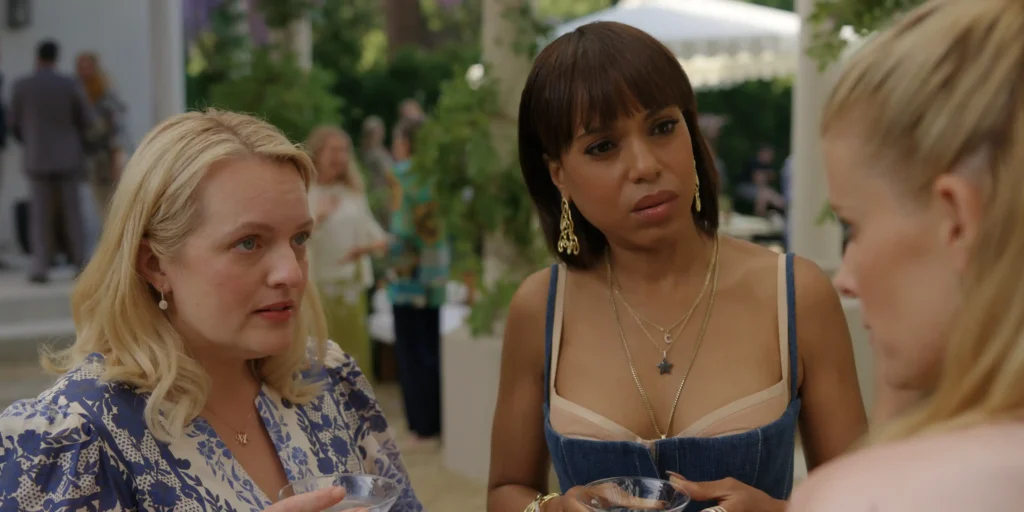
But we’re getting ahead of ourselves. The plot revolves around the dysfunctional relationship between friends Nancy (Kate Mara, Class of ’09), Eleanor (Kerry Washington, Wake Up Dead Man), and Mary (Elisabeth Moss, The Handmaid’s Tale, The Testaments). A brief primer on each, if you please: Nancy is the trophy wife of her wealthy husband, Robert (Joel Kinnaman, The Suicide Squad), the scion of a controlling old-money family, but comes from a background of extreme abuse and poverty; Eleanor comes from money and spends her time running a non-profit and unsubtly lusting after Robert, with whom she has a longstanding connection; and Mary has no money at all, scrabbling by in envy of her rich friends with a rebellious son, Marcus (Jackson Kelly, The Pitt), and a chronically underemployed academic husband, Howard (Corey Stoll, Rebel Moon).
In the series premiere, Nancy is found dead, having been clubbed to death, presumably by a mysterious man she was having an affair with. The investigating detective, Bethany Ganz (Ana Ortiz, Love, Victor), begins to suspect everyone, starting with Robert, while digging into the longstanding relationship between the three women at the show’s core. Incredibly damning personal secrets are promptly revealed, and continue to be revealed throughout, as each woman takes on narration duties and shares their side of the story.
Ganz’s presence is barely felt; Imperfect Women isn’t a procedural crime show, so the process of discovering and piecing together new clues happens from the perspectives of Nancy, Eleanor, and Mary, who each dominate an episode or two as the timeline pings back and forth to fill in their backstories, private motivations, and the gaps between events we’re already privy to. Only the audience can see the big picture, the full timeline, which is filled in gradually as each episode ticks by and reveals new information. It’s a satisfying process for the audience, who keep having what we think we know totally upended by the latest developments.
What makes these developments sing is the performances, which are great across the board and occasionally remarkable, especially those of Elisabeth Moss and Corey Stoll. The grounding of the mystery in complex human emotion makes everything more difficult to predict and satisfying to discover, each new twist in the tale not feeling like an ass-pull for shock value but instead an outgrowth of very considered traumas, anxieties, and closely guarded personal flaws. There are no heroes here – virtually everyone is detestable in one way or another – but there very much are villains, including one of the most truly dreadful in recent TV memory, though giving away who would be telling.
Imperfect Women is, truly, an outstanding television show, but it does undeniably require a bit of patience to get to the point where it all comes together and starts to fire on all cylinders. You have to accept that it’s about people who are, for the most part, deeply unlikeable, even if they’re uncomfortably relatable in their neuroses. Only rarely does a show come along, though, that so generously pays off that early investment, and the sheer quality of the final hours is well worth the price of admission.