Summary
Widow’s Bay rather masterfully blends comedy and horror in its two-part premiere, setting the scene very nicely for the remainder of the season.
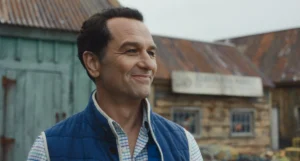
If one thing is obvious about Widow’s Bay – the remote New England fishing town and not the very funny and surprisingly scary Apple TV show – it’s that it’s definitely, 100% haunted. While we’re on the subject, this is also the show’s best joke, since the extent to which it’s haunted is so obvious that the fervent denial of its mayor, Tom Loftis, builds an exaggerated sense of slapstick around the two-part premiere. By the end of Episode 1, “Welcome to Widow’s Bay!”, Tom is only starting to believe; by the conclusion of Episode 2, “Lodging”, he’s pretty convinced, but still not willing to actually do anything about it.
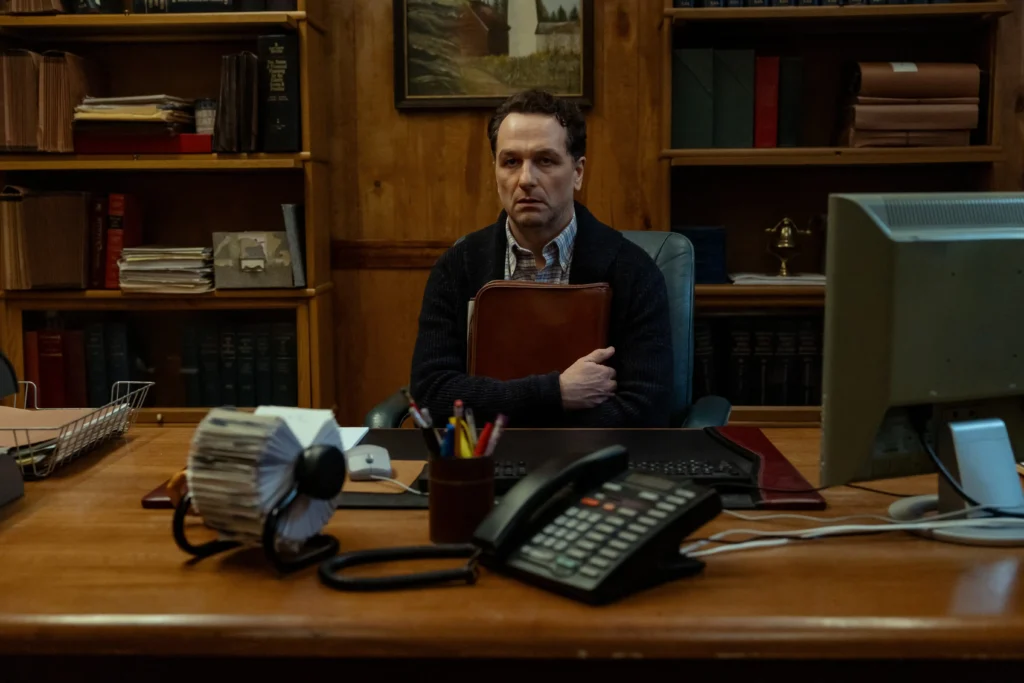
Tom, you see, is determined to turn the titular town into a tourist haven. Everything and everyone is against him, though. The place is so remote that it doesn’t even have Wi-Fi – it isn’t even immediately obvious that the show’s set in the present day – and the locals are all wildly superstitious, adamant about dangerous fogs and clown killers and a curse that prohibits anyone born there from ever leaving under pain of death. Tom, an ardent sceptic, thinks it’s all nonsense, but that doesn’t make it any easier to schmooze a New York travel writer, Arthur Lloyd, whom Tom has invited to town in the hopes of increasing the failing island’s profile.
It becomes very obvious very soon into Episode 1 that Arthur won’t be leaving Widow’s Bay with many positive experiences, and that’s if he leaves at all. A local shipman named Shep is missing, supposedly taken by the fog; the power keeps going out, the only decent restaurant is overrated, the only hotel is haunted, and there was an earthquake the night before that the local conspiracy theorist, Wyck, insists is simply the beginning of the forthcoming terror.
The show is tiptoeing a very fine line with Tom. He has to be in denial, since that’s where all the humour lives, especially given how obviously off-kilter everything is. But he has to have at least the ghost of a point, or his arc wouldn’t make sense. This is probably why Arthur acknowledges how charming the place is, similarly unmoved by all the stories of its apparent evil underpinnings. The gallows humour works because the horror elements are so obvious that it’s funny every time someone refuses to acknowledge they’re there. I think there’s probably an argument to be made that some potential ambiguity is left on the table because of this, since it might have been nice to keep everyone guessing a bit longer – and to be fair, perhaps the show will – but the value of the comedy shouldn’t be understated. Widow’s Bay is very funny.
But it’s also kind of legitimately scary when it wants to be. What really works about this premiere is how well it enmeshes the two. Since Tom simply refuses to acknowledge even the potential of hauntings or curses, he keeps walking headlong into supernaturalism, leading the comedy right up to the horror. There’s a bit of this in “Welcome to Widow’s Bay!”, especially towards the end, but it’s really turned up in Episode 2, since that’s where Tom is lured into staying at the local hotel to prove it isn’t haunted by ticking off a checklist of urban legends.
Widow’s Bay is really smart with how it handles this. Most of the very obvious horror-movie things don’t cause anything to happen; the supernaturalism and mystery are baked into the hotel itself, lurking in its board games – one is called Teeth, and is simply a box with a pair of pliers in it – and welcome videos. Repeating a name several times in the mirror doesn’t summon a demon, but the only ally Tom believes he has in the place, a fellow guest named William, turns out to be the ghost of the clown killer everyone keeps mentioning, which pays off in a nifty sequence where he charges Tom in a crawlspace.
Even after that moment, though, Tom wakes up as if from a dream. There’s even a convenient black mould explanation floated for why he might have experienced what he did, which is enough for him to order the place to be opened for tourist season, even if he isn’t entirely convinced. Tom isn’t a selfish guy; he seems to love Widow’s Bay and has genuine hopes for its touristy future. But there’s something lurking beneath his fondness for the place that speaks to the lingering issues with the unpleasant dad he used to visit there during the summers, and the fact that he reflexively called Wyck a “dumb hick” out of anger. That kind of resentment is perhaps what makes him so disbelieving of the stories, even when he’s in them. But it might also get more than a few people killed.
RELATED: