Summary
Grim and unconventional in how it approaches its central mystery, Colors of Evil: Black is a sequel that expands on the ideas of its predecessor to often chilling effect.
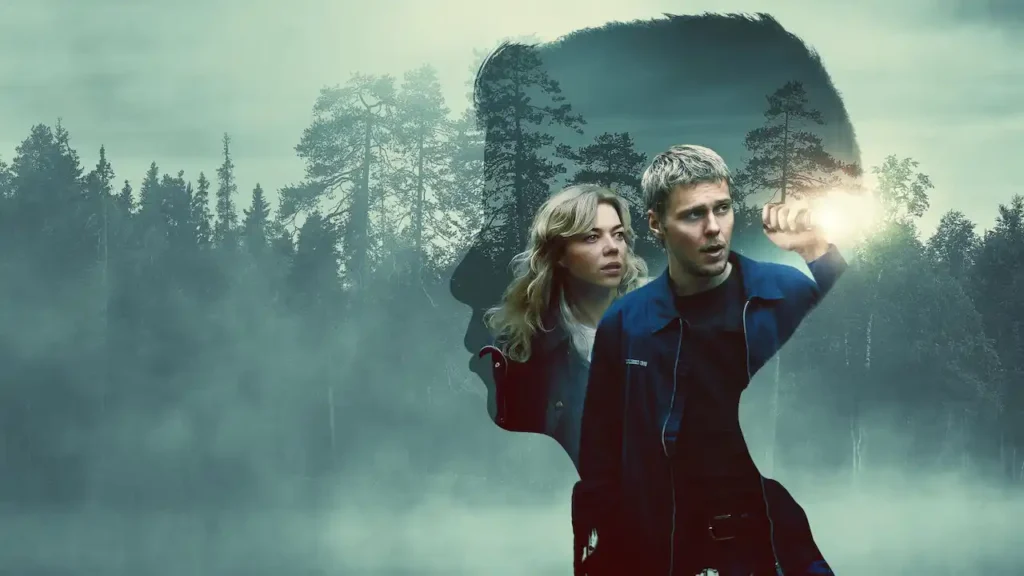
Continuing a long and effective tradition of thrillers set in provincial towns with dirty secrets buried in their foundations, Colors of Evil: Black is nothing new. You’ve seen towns like Kartuzy, the Kashubian hollow where prosecutor Leopold Bilski (Jakub Gierszal) is sent in this sequel to 2024’s Netflix thriller Colors of Evil: Red, before. Everyone knows everyone. There is uniform agreement about which subjects can be spoken about, and which can’t. Bad things happen, and people know it, but they’re contentedly facing the other way when they do. Bilski, an outsider with a still-functioning moral compass, kick-starts the plot simply by paying attention and asking the obvious questions.
What’s unusual about this movie, which, like the first, was written and directed by Adrian Panek and adapted from the novel trilogy by Malgorzata Oliwia Sobczak, is the sheer cynicism with which it approaches the formula. It presents Bilski with a mystery – the disappearance of a young boy that may relate to the disappearance of another years prior – and then reveals it to be a town-wide cover-up. It doesn’t give him anything to solve. None of this is a spoiler; on the contrary, it’s essential to the story’s texture. This isn’t a whodunit, but a whoknewit, an examination of complicity, cowardice, and corruption that resists the notions of truth and justice at every turn, by consensus.
The effect is eerie. This movie’s predecessor was also grim, but it kept Bilski contained to the coast and felt distractingly fake in its interior spaces. The sequel shifts him to a more insular community with a more naturalistic approach; it often feels hyperreal, so intimate in its social fabric that you start to get a sense of its internal geography, start to judge characters by their décor and demeanour. In most thrillers, everyone would be a suspect, but in Colors of Evil: Black, everyone is already guilty of one thing or another. The deeper Bilski digs, the more bones he uncovers, and they’re not always the ones he’s looking for.
Bilski is a literal outsider; his opposite lead, Julia Sarman (Marianna Zydek), is a local but feels separated because one of her own has slipped into the town’s secretive machinery. It’s easy to pretend something isn’t happening until it’s happening to you. The abduction of Julia’s son, Piotrus, gives her and Bilski a thread to latch onto, and their relentless tugging eventually unravels an entire system of abuse and silence, threaded with exaggerated local folklore to obscure the banality of garden-variety human evil.
This is wildly different from the coastal setting of the first movie, the mystery of which had a recognisably urban shape. The sequel disappears into the forests of Kashubia and revels in the insularity of the local culture, the climate of complicity that underpins the heinous crimes of the most powerful. It’s curious about the ways these cycles are perpetuated; through fear, through social ostracization, through habit, and through mythologising. Its twists and turns are, in a way, quite obvious, but they take us on the scenic route through a neighbourhood built on inaction, and how such a place responds to sudden action, turning over the stones of its firmament and seeing what’s underneath.
While all this makes Colors of Evil: Black compelling, it risks denying it an appropriate resolution. The most obvious villains can – and indeed are – apprehended, brought to some measure of justice, but nothing is really done to address the agreement that the worst of the town’s secrets would never be acknowledged. This might have been a tacit agreement, but it was made nonetheless, and everyone who turned their backs on the truth allowed the rot to fester and trickle down from the top. The movie doesn’t – can’t, really – address how the town itself can ever hope to move forward and heal, and hopes that resolution in the case will stand in appropriately for resolution in the culture. Mileage may vary.
Either way, Netflix returning to the well with Bilski as a recognisable protagonist is a natty bit of franchise-building, giving some continuity to what are usually standalone provincial thrillers designed to disappear into the endless thumbnails of regional offerings. With the source novels providing at least one more case for Bilski to get embroiled in, the first movie being enough of an unexpected hit to spawn a sequel, and the evolutions of that sequel expanding Bilski’s worldview and the function of his investigations as metaphors for more complex societal maladies, odds are good for a third movie to round out the trilogy. I’m certain that one won’t be much fun either. But it’ll probably be worth watching.
RELATED: