Summary
Star City doesn’t produce many big moments in “Dark Forest”, but it does build compelling texture in its alt-history setting as several characters find themselves at a meaningful crossroads.
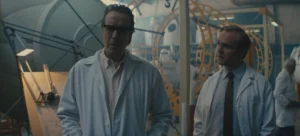
If the previous episode of Star City was about disaster, with the Soviets’ efforts to root out an American mole resulting in the death of a cosmonaut, then Episode 4 is about the wider context of that disaster; what led to it, what stems from it, and the implications of both. “Dark Forest” isn’t the most exciting hour, by design, but it is a vital one, especially for the fans of For All Mankind who really bought into its early-season alt-history premise. It’s about texture, first and foremost, and that’s one of the most important things when you’re trying to build a convincing world.
And that world has consequences for everyone. Nobody is immune, which the Chief Designer reminds Lyudmilla of when he reiterates that it was her rash decision-making, against his advice, that cost a cosmonaut their life. The authority of her position gave her too much confidence in being protected, but sometimes, it’s best to defer to the experts. The Chief Designer warned that a full reset would imperil the mission and wasn’t worth the risk for the sake of killing a transmitter. The problem still remains, and a life was lost.
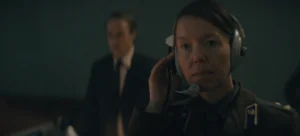
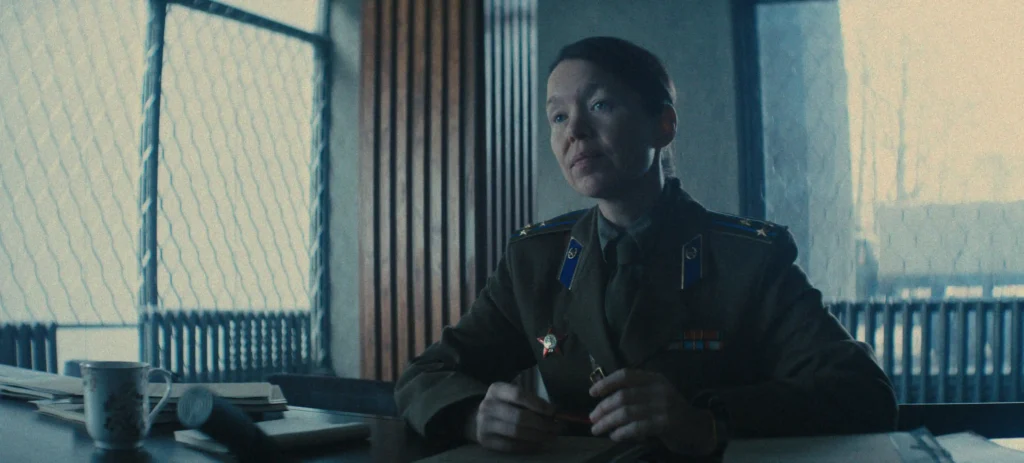
The seriousness of her error is communicated to Lyudmilla pretty much immediately. Everyone is answerable to someone else. There are always eager new deputies willing to step in and take control. In these kinds of ruthlessly authoritarian hierarchies, everyone is expendable. Lyudmilla’s power is localised; it only goes so far. Despite her claims to the contrary, she doesn’t have the situation under control, and her only means of getting it in hand is to exert more influence, jeopardising more freedoms, and creating more risk. In Irina, she has a willing lapdog ready to go above and beyond for the sake of her own career advancement, but her approach is brute force. Arresting Sergei for his choice of reading material is a stopgap attempt to buy time and leverage until a more concrete solution presents itself.
Star City has an interesting approach to the idea of contraband. One’s media interests are used on both sides of the Iron Curtain. Much like Sergei is easily deemed a dissident through his reading material, Tanya was initially targeted by the U.S. as a potential double-agent on account of her fondness for Western music. Anyone who is willing to break the rules to pursue their own interests, even aesthetic ones, is definitionally a risk to the state or a potential ally to its enemies.
Of course, as we learned last week, Tanya isn’t the mole – Valya is. But Valya only became the mole because he fell in love with Tanya. Her previous dissident activities gave the Americans something they could leverage against her, and thus against him, which allowed them to turn a promising young pilot in the space program to their cause. Valya’s the mole, but his loyalties to the Russian state were never really in question. His mistake was being human enough to care about his wife.
Star City foregrounds these kinds of consequences in Episode 4. To care is to be vulnerable, and to be vulnerable is to be manipulated. Valya knows this better than most, which is why his support of Sasha, who is still wracked with guilt about the lunar mission, rings true. But it doesn’t help Sasha a great deal. He and Pavel are grounded indefinitely, so he, like Anastasia, feels adrift and purposeless. For Sasha and Pavel, the Chief Designer provides a lifeline, since he requires pilots who won’t be missed to man his secret Venus mission. But Anastasia has to try and find other ways to blow off steam.
The sham marriage between Sasha and Anastasia starts to become much more real here in “Dark Forest”, kind of under their own noses, but it was bound to happen given the similarities of their respective circumstances. In many ways it’s a reflection of a similar dynamic between Tanya and Valya; the idea that, even in the most rigorously prohibitive circumstances, real human connection will always win out.
And this, while we’re on the subject, is what makes Irina’s predicament so fascinating, and her ill-advised relationship with Tanya so compelling. As predicted, she now stands at a crossroads between furthering her career and betraying a friend. The closer she gets to Tanya, the more she inadvertently learns about Valya potentially betraying the state. What will she put first? In many ways, this is Star City in microcosm, and it’s why it continues to impress as a paranoid thriller way more than a spin-off of a different show.
RELATED: