
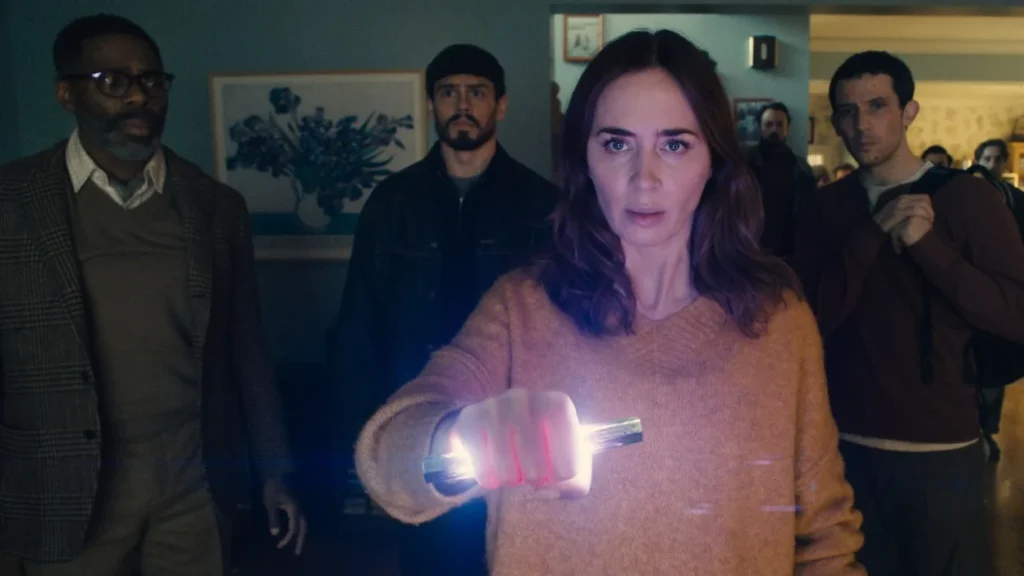
The marketing for Disclosure Day did its utmost to offer slivers of mystery to build excitement. It focused on “the truth” and a sense that the film was going to be smarter than just a standard extraterrestrial, UFO storyline. The trailers were especially compelling, ensuring they did not give too much away to viewers. It was marked as Spielberg’s return to the sci-fi alien genre – we were ready for a Close Encounters-style masterpiece or even E.T. Well, it seems that some audience members who paid good money to watch Disclosure Day at the cinema are feeling aggrieved, misled, and ripped off by the price of admission.
As one commenter on our review explained:
“With all the hype, my husband and I decided to see Disclosure Day – and frankly found it overdone, too long in its storytelling, and it left me saying numerous times, ‘this would never have happened that way.’”
But even outside of the hype and the general storytelling, some cinemagoers have expressed a few other takeaways, especially within a recent Reddit thread.
The main grievance is that the title implies a grand, global narrative about humanity grappling with the sudden revelation of alien life. In reality, “Disclosure Day” does not arrive until the very end of the movie – and then the credits roll. This observation is entirely correct; the title is a “bait-and-switch.” If anything, the film is actually about preventing “Disclosure Day” from happening.
“You’d think this movie is about the world coming to grips with the revelation that we are not alone. But that’s not what the movie is about at all. Yes, the ending of the movie is technically Disclosure Day, but the movie itself is like a supernatural version of Enemy of the State.”
And this leads to another salient point about the film: if the title is misleading, then what does the film actually do? Well, rather than exploring the philosophical or societal weight of alien disclosure, some felt the film regresses into a generic plot where people are simply on the run. Essentially, it’s an action thriller, not a sci-fi epic. This complaint resonates with me. The movie felt like a repetitive cycle of transitioning from “people on the run” to heavy dialogue, and back to “people on the run” until the very end.
If the film had been marketed as an action thriller, there’d be an argument that it’s at least decent. But with the misleading marketing, it simply comes across as lazy writing. The film was written by legendary writer David Koepp, who was behind Jurassic Park and War of the Worlds. This is not the return that I, and many other viewers, had in my mind.
“Magic crystals that do whatever you want them to do? This is just lazy writing. Want to project consciousness? Crystal. Want to be invisible? Crystal. Need emergency phantom electricity? Crystal. Lazy.”
But what I found more amusing about these observations from paying cinema audiences is the sheer illogic of many plot points – things even I missed at the time, probably because I was solely focused on hoping the film would become what the trailers promised.
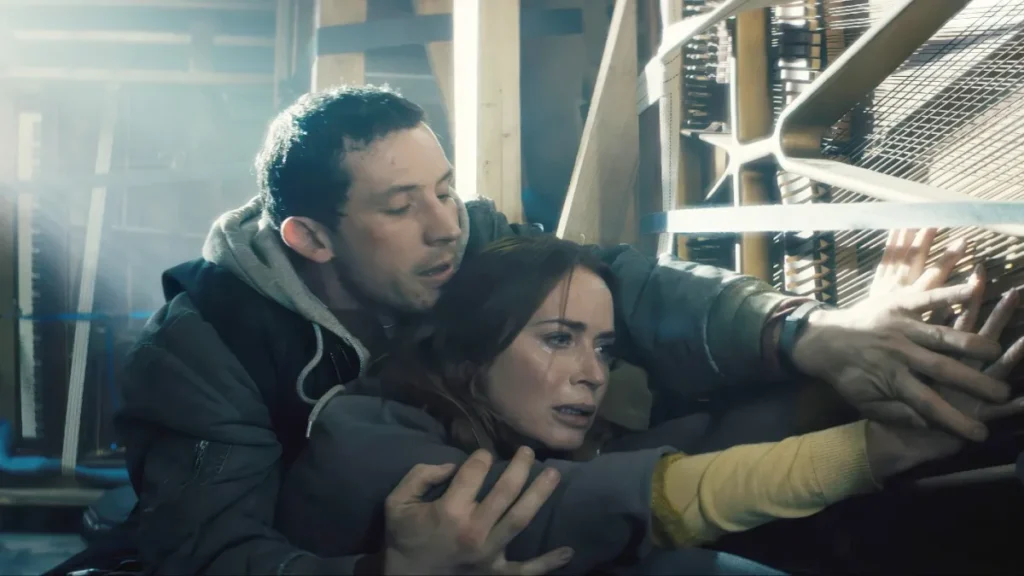
Daniel (Josh O’Connor) and Margaret (Emily Blunt) in Steven Spielberg’s ‘Disclosure Day’. (Photo: Universal Pictures)
Many observations pointed out several glaring issues:
- The main story is basically just a generic chase movie about people running from a mind reader, and the villains give up way too easily at the end.
- Characters make totally bizarre decisions, like the boyfriend casually letting Margaret walk out after she randomly starts speaking Russian.
- Margaret blindly obeys a random voice on the phone telling her to destroy her cell phone without asking a single question.
- Margaret’s powers are completely inconsistent – very similar to the movie Lucy – where she can brainwash an entire room without her crystal in one scene, but is totally powerless against a guy ramming her car in another.
- It relies on lazy plot conveniences, like Jane easily slipping out of being tied to a bed (also, why was she not blindfolded if Nolan relied on seeing what she saw?), while she and Daniel safely hide from a military squad behind a tiny rock and a see-through barbed-wire fence.
- A ridiculous action sequence occurs where a guy has time to drive completely through a house, throw a girl in the backseat, and drive out the other side without the villains ever catching up.
- The geopolitical logic totally falls apart with North Korean soldiers on active deployment to start World War III casually browsing American internet feeds on their cell phones once “Disclosure Day” begins.
Of course, a few of these are nitpicky, but it’s a death by a thousand paper cuts. All the illogical plot points add up, especially when coupled with bad CGI, a lack of practical effects or animatronics, and an excessive use of lens flare.
The fact is, despite the “Spielberg magic” present in the film, the story was sold as a high-concept feature about the aftermath of alien contact. Instead, audiences felt like they got a flawed chase film that disregarded its own premise until the final few minutes, resulting in an ineffective ending. Unfortunately, I have to agree. I felt massively underwhelmed and disappointed, and the logic gaps only made it worse. It’s no wonder that paying customers felt misled:
“I had been looking forward to this for months! I just got home from seeing it… and I just feel utterly and completely let down by what I just saw. Probably one of the most anticlimactic endings I’ve ever seen. So many weird little things in the film that just didn’t make sense either… Blunt does a good job, so I commend her for that. But overall… I’m just so disappointed.”
Read More: How Disclosure Day 2 Can Fix the First Film’s Writing