
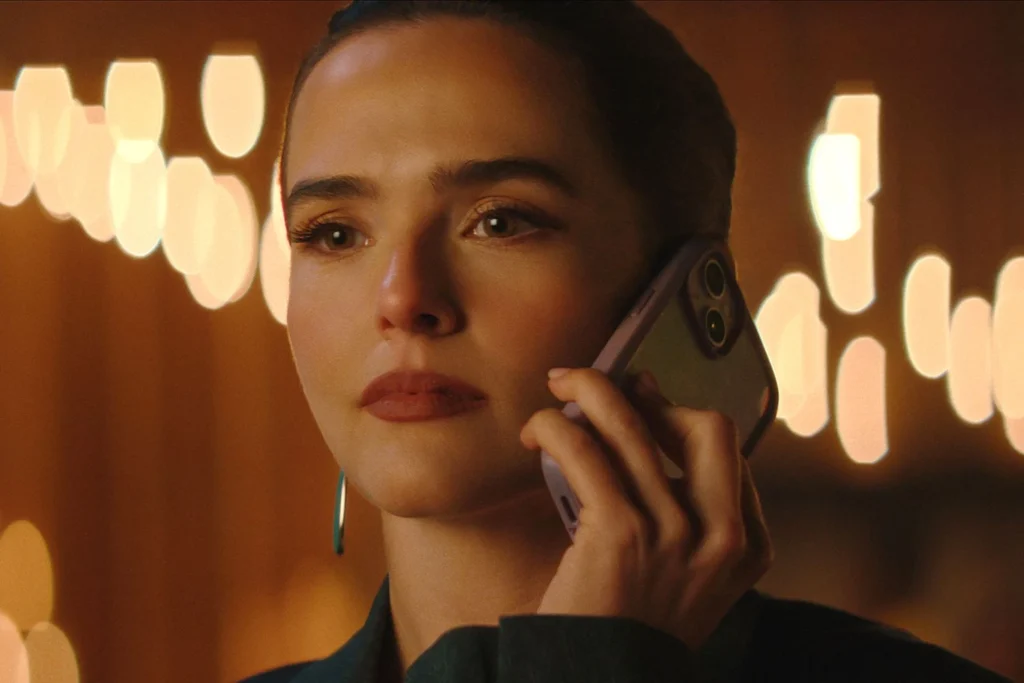
As I watched Voicemails for Isabelle, I had a strong feeling that this film would be widely loved. Even so, I wondered if I was exaggerating just how good it was. Seeing the online reaction from multiple viewers sharing the same sentiment – with some calling it the “best rom-com in years” – made me feel completely justified, assuring me that my review wasn’t just raving madness. Whether it truly is the “best” remains to be seen, but it is certainly a fantastic film, and one that has taken many by surprise.
“Best modern rom-com I’ve ever seen. hands down. Thought they didn’t make good rom-coms anymore.”
The balance of emotion and humour works
In a recent online thread, I noticed a wave of viewers bonding over just how hard the movie made them cry. What immediately struck me about the film is how perfectly the story balances the lightheartedness of a rom-com with intense, emotional moments right from the jump. The first twenty minutes are heartbreaking [spoiler incoming], with Jill (Zoey Deutch) losing her sister Isabelle (Ciara Bravo) to cancer. I was actually taken aback by the severity of the story so early on, but this has proven to be a well-woven hook for viewers, with many admitting to sobbing within the first 5 to 15 minutes.
The writing achieves a brilliant balance between grief and humor, which is likely why the story’s emotional core resonates so deeply.
“So I thought – I’ll just watch the first twenty minutes of this movie while I drink my coffee before work. Now I need to take a cold shower to depuff my sob-stained face before any of my virtual meetings for the day! What a beginning!”
The sisterhood angle is powerful
Unsurprisingly, the profound sense of sisterhood in Voicemails for Isabelle is a major talking point. While I couldn’t relate to it personally, I can see how a story about the unbreakable bond between sisters, cut short by a critical illness, brings a deep sense of realism to the screen. Crucially, the film does not treat the illness as a mere plot device. Instead, it captures the mundane reality of living a normal life alongside the elephant in the room – showing the sisters talking about crushes and joking around as much as possible. Despite her early passing, you never feel like Isabelle truly leaves the story, which is a testament to the excellent writing.
“My little sister died from a critical illness last September. She was also the love of my life/best friend. I’ve never seen our relationship depicted on screen before. Most movies about illness focus on the sick person, but this captured what it was actually like being sisters… talking about crushes, joking around, and just living normal life while medical equipment and procedures were part of the background. When she died, I started filling up a jar with handwritten notes anytime I wanted to share part of my life with her. I don’t think I’ve ever cried this hard during a movie because for the first time, it felt like I was watching us.”
A return to form for the rom-com genre
Perhaps the biggest praise for Voicemails for Isabelle – and one I entirely agree with – is that the film is “saving” or “reviving” the modern romantic comedy, a genre that has felt incredibly stale over the last few years. This is especially surprising given that it premiered on Netflix. I went in half-expecting an algorithmically driven, paint-by-numbers rom-com, but what I got instead was an earnest story. Fans are unanimously agreeing that “they just don’t make rom-coms like this anymore,” drawing favorable comparisons to hits like Set It Up and The Idea of You.
“What a glorious movie. After ages, AGES, I see cinematic glory coming back to the screen. It feels beautiful to feel sappy, yearning, and innocent romance taking centre stage. Absolute delight, happy tears, sad tears, made me feel every single thing. I wish we see more such comfy & cozy movies in the future.”
The ending, the leads, the rewatchability factor – it has everything!
It also helps immensely that the two leads fully buy into the script – an element that has not gone unnoticed. Viewers have been captivated by Nick Robinson’s performance as Wes, particularly his ability to portray a “sad, yearning boy” with perfect puppy-dog eyes. Nick clearly understood the assignment and delivered beautifully.
At the same time, we can’t ignore Zoey Deutch’s star turn. Her acting in this film is superb, and I’m thrilled to see viewers recognizing her standout performance. She sells her character’s emotional depth remarkably well.
The final piece of the jigsaw explaining why Voicemails for Isabelle has landed so well is its ending, which feels genuinely meaningful and purposeful. It connects Isabelle, Jill, and Wes perfectly, offering closure while beautifully kicking off a new chapter.
Because the ending hits so well, the film has a surprisingly high rewatchability factor. Modern streaming rom-coms are usually “one-and-done” affairs, but viewers are already hitting replay and demanding a sequel or even a TV series. While those are incredibly high demands, who knows? Netflix loves a trend. Though, if a sequel does happen, you just have to hope they don’t ruin a good thing.