Summary
Visually and narratively old-school, Prime Video’s The Ghost in the Shell reboot throws viewers in at the deep end with a fast-moving premiere that doesn’t have much time for explanation.
Prime Video’s new The Ghost in the Shell is the kind of reboot designed around pleasing existing fans instead of compelling new ones. That seems to be the case in Episode 1, anyway, which throws viewers in at the deep end and doesn’t bother to explain any of this universe’s most essential concepts, themes, or technologies. There’s something to be said for immersion and organic storytelling, I’ll grant you, but there’s also something to be said for making assumptions, too.
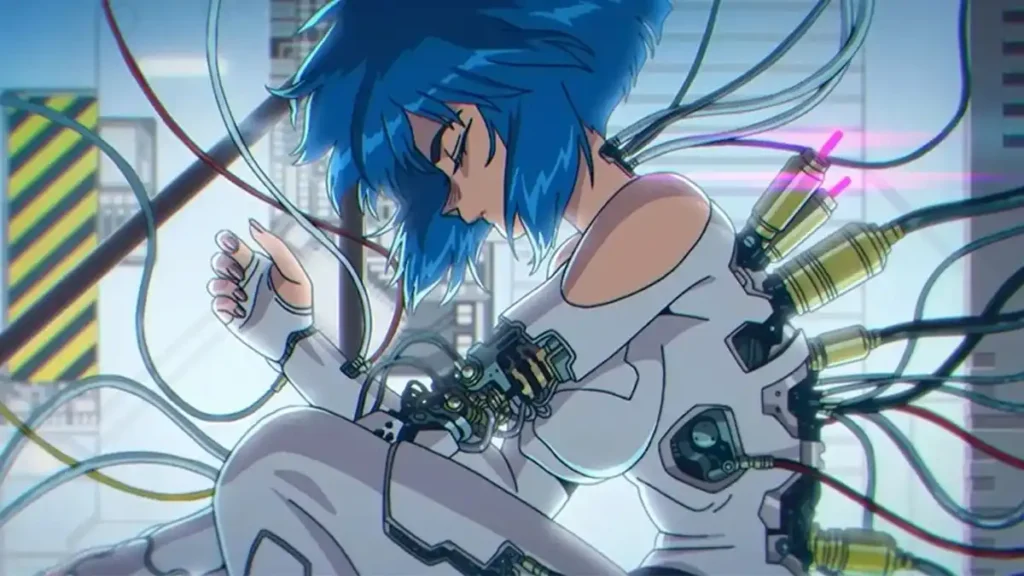
It’s too early to tell whether the lack of clarity is presumptuous or not, since subsequent episodes might well slow down a touch and flesh out some concepts. As things stand, though, the premiere is mostly a little confusing, but a lot reassuring, especially given its pleasingly old-school approach to animation and unfussy forward-facing storytelling. One of the icons of cyberpunk anime is back, back in familiar early-’90s style, but boasting a contemporary fluidity that brings it all to new life.
It’s about introductions, then, even if they’re happening so fast you get the impression you should have already met these people. Primarily, the opening few minutes introduce Motoko Kusanagi, assassinating the Far East Trade Representative when he’s about to slip through a bureaucratic loophole. There’s important context here if you’re looking for it. Niihama City of 2029 is technologically advanced – Motoko is invisible for a good chunk of this – but politically and jurisdictionally stilted.
This is why the setting cries out for what Motoko ultimately proposes to the Minister of Internal Affairs – a special unit, handled by the police chief, Aramaki, designed to do the things that are institutionally impossible otherwise. This is sped through at such a clip that you might not even get a sense of what’s happening.
Motoko’s new unit is immediately given a task by an Operator, which involves investigating the Sacred Citizen Relief Centre, an orphanage of sorts being used as a front for brainwashing. Again, worldbuilding details are implicit here but not explained. Motoko and co.’s surveillance of the operation gives a quick sense of the conditions inside, shows how the unit operates, and lays out the general terms, but then it gets a bit bonkers with the concepts of Ghosts and Ghost Controllers – essential elements of the fiction, totally unexplained here – that are sure to throw any newcomers to the material for a loop.
This is the primary knock against The Ghost in the Shell Episode 1, since the action itself is solid. The design and visuals are very cool, and Motoko’s depiction fits the harshness of the setting really well. There’s everything here for anime fans – and sci-fi fans in general – to really like, but the chaotic approach to the storytelling can’t help but seem like a question mark when first impressions are so important.
Still, we have to be charitable and assume that this reboot will drip-feed a lot of context as it cycles through what seems like it’s going to be a case-of-the-week format. It needs to, as at present it’s almost actively alienating, but then again, it’s also pitched squarely at existing fans who’ll feel comfortable being back in the setting anyway. Early impressions are mostly positive for everyone, though, which is reassuring. Hopefully it continues.
RELATED: