Summary
A Toxic Love Story explores a disturbing cyberstalking case where a newly married couple and an ex-fiancée become entangled in a web of escalating, intimate threats. As the authorities investigate, a sudden and shocking shift in suspicion turns the entire story on its head. Just be careful of the forced political narrative that circles this true crime story.
Netflix continues to be the biggest platform for true crime documentaries, as they are popping them out left, right, and centre – in 2026, from Worst Neighbor Ever and Maternal Instinct to A Toxic Love Story, this is shaping up to be a year of shocking stories. Admittedly, after watching A Toxic Love Story, I needed to take a walk to decompress from the rollercoaster ride it took me on, and the anger it left in my heart.
An important note is that one of the first lines of this documentary is: “I have two wishes. My first wish is I wish none of this happened. And my second wish is… I wish that everyone would just tell the truth.” So why is this important? This true crime story has clearly been produced in such a way that it leaves the viewers doubting what’s true.
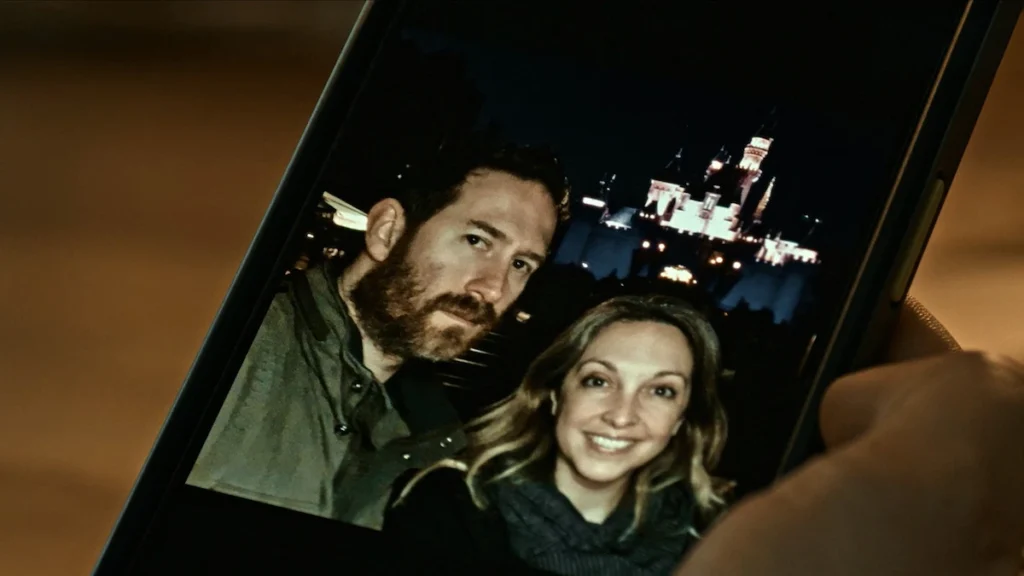
A Toxic Love Story is clearly a complicated case – perhaps too complicated for me to write down succinctly. The documentary is focused primarily on three central figures: Ian Diaz, Angela Diaz (Ian’s wife), and Michelle Hadley (Ian’s ex-wife). In the beginning, we see Angela being met with an abundant amount of threatening emails, which then progress to more severe, intimate threats. And so Angela and Ian begin to build up a case with the Anaheim police department against Michelle.
But suddenly the tables turn, and suspicion begins to be thrown onto Angela individually, and then onto Angela and Ian together. And that was, in of itself, the most disturbing aspect: the unnerving feeling of not knowing who is telling the truth and, admittedly, never truly knowing what happened.
Where the documentary fell short was in the production and direction. It was perfectly fine, but it wasn’t anything different. There was a mixture of bodycam footage, interviews, and stock-type videos. I can’t imagine what can be done differently with true crime documentaries; I guess we’re there for the story and not the production of the story.
However, another criticism I have is the attack Michelle takes upon men. Michelle makes the statement: “I think the media gleefully grabbed ahold of this narrative of the crazy woman, the jealous woman. And if they couldn’t paint me as that, then they were just gonna paint Angela as that, but they don’t want to talk about the man involved. Nobody wanted to talk about that.” – this suggests that she doesn’t believe Angela to be involved (though earlier in the documentary we see Angela as someone who lied in her previous relationship about having cancer; but still it’s all the men’s fault, just saying.)
And to connect this further, the worst part of this documentary is how they handle its closing message. In the conclusion, Michelle states how Ian AND Angela cast her as Lilith (a mythological female demon). She quotes: “Lilith basically escaped the Garden of Eden, disobeyed everyone, Adam, God, the whole group. She’s the quintessential revolutionary. In retrospect, I’m not mad that they picked a character for me who is a disobedient female who stands up to male authority figures. It kind of fits.”
Why this documentary chose to summarize Michelle’s ordeal as “standing up to male authorities” is beyond me. First, Angela – a woman – was heavily involved in orchestrating the harassment against her. Second, Michelle Hadley said, “I wanted someone to listen to me.” And who listened? Jason Higley, a (male) DOJ Special Agent who pushed forward Michelle’s case and helped exonerate her. But does she, in this documentary, give him credit? No.
Forcing a misplaced political narrative onto the resolution felt entirely unearned given the facts presented.
As viewers, we get to experience these twists and turns from the perspective of entertainment, but the grim reality is that people’s lives were affected and are affected by cyber abuse. The internet can be the most harmful and dangerous place to be. Therefore, the documentary leaves an uncomfortable aftertaste.
If psychological true crime documentaries are your thing, this one is one you will want to add to your list. It’s definitely been one of the more intriguing ones I’ve seen recently (minus the deeply ridiculous political messaging)