Summary
Letters from the Past is a well-intentioned story of relationships filtered through two distinct time periods, but it’s missing a certain something to help it stand out in a crowded genre.
You’ll have to forgive me, because I can’t quite articulate what makes Letters from the Past a bit less effective than it would like to be. This happens with shows sometimes; they have a nebulous quality that is difficult to pin down and describe, but it’s there, lurking in the margins of an otherwise well-intentioned work. In this way, it’s fitting, perhaps, that the Turkish Netflix series revolves around the passage of time. There’s something of that theme in its very nature, an essential component lost in the margins, like a hazy half-forgotten memory or a secret buried deep in the past.
Needlessly flowery opening aside, I should say that I liked this show, which was created and written by Rana Denizer. I found it to be heartfelt and engaging, if not necessarily memorable, especially given a third act slide into cliché and predictability. You may enjoy it more than me – especially if you’re Turkish, I think, since there’s a feeling of nostalgia for the nation’s culture and tradition threaded all throughout – and you may well like it less. But I can’t explain precisely why. So, sorry about that.
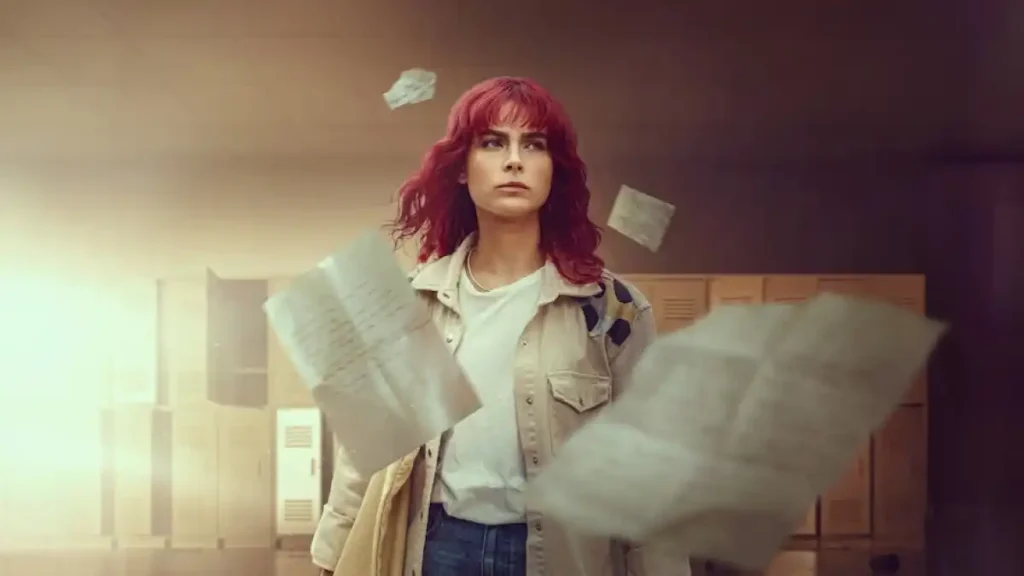
What I can explain, though, is the general idea. The plot is kick-started when a young woman named Elif (Günes Sensoy) discovers a trove of letters written by the students in her mother’s Literature Club. In 2003, Fatma (Ipek Türktan) was a teacher at a private high school who tasked her students with writing letters to their future selves, intended for delivery in 2023. Their contents upend Elif’s life, sending her on a quest of personal discovery to understand her own parentage.
To this end, Letters from the Past employs a dual timeline structure, with the Literature Club students back in the day and with Elif in the present, often meeting several of those former classmates whose lives rarely correlate with the visions of them committed to print. The letter gimmick is a useful dramatic tool, since it lends structure to the eight-episode season, allowing perspectives to shift to different characters, and bombshells to be deployed with careful timing. The ping-ponging between eras can sometimes get a bit wearing, but for the most part it works well.
The quality of individual storylines is more mixed, but here the value of the almost anthological letter setup shows itself again. This isn’t a show that lingers on one character or idea for too long. It’s all connected, of course, and some of the most bountiful revelations in the letters involve multiple characters at once, but even though it’s framed in Elif’s perspective primarily, it’s very much an ensemble with multiple parallel storylines playing out at once.
The key human quality to the plot is the idea of life never quite turning out how you expected, a deeply relatable theme put through the wringer here. Sure, most people’s lives aren’t quite as dramatic as this, but they’re certainly unpredictable. People are flawed, memory is faulty, and nobody is ever quite totally honest, with other people or themselves, and these ideas, beyond any other consideration, are what give Letters from the Past real texture. It’s half character-driven journey of self-discovery and half salacious teenage high-school drama, but it doesn’t have the frivolous sensationalism of, say, Elite.
Speaking of Elite, though, what this show lacks is, I think, something like that one’s gimmick of a student having been murdered every season. The commitment to fairly edgeless human drama is admirable and intermittently very effective, but it sometimes lacks the urgency and excitement of something more made-for-TV, like a murder mystery. As its best, Letters from the Past feels better for not relying on the too-familiar staples of streaming shows, but at its worst, it can feel a bit sluggish and drawn out.
For those in the market for its specific brand of complex human drama, though, this will likely be a winner, bolstered by fine cinematography and music. Those eight episodes slip by easily enough thanks to runtimes nearer to 30 minutes than an hour, and there will certainly be something here that most people can relate to, perhaps on a profound level. Turkish television continues to be an interesting proposition and a clear upside in Netflix’s vast international library, and while it’s unlikely to really ignite interest in the same way as, say, The Tailor, it’s a very respectable addition to the streamer’s regional offerings.
RELATED: