
Summary
Boasting solid action and interesting character drama, Butterfly is a family drama masquerading as a spy thriller, but both elements work.
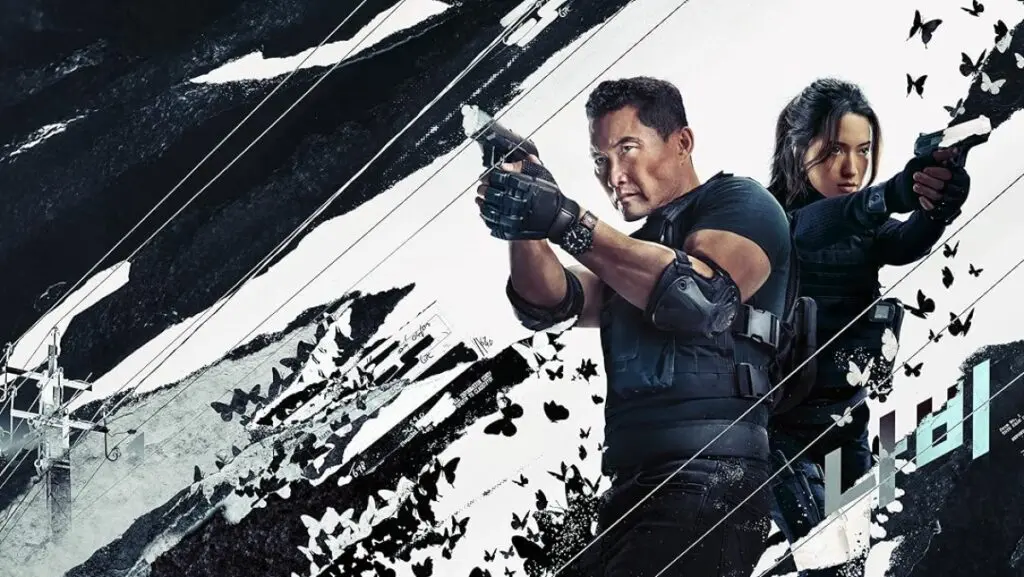
First appearances can be deceiving. What Butterfly looks like, on the surface, is a pretty generic espionage thriller, not meaningfully different in Prime Video’s oeuvre from Citadel or that upcoming spin-off of The Terminal List. But, fittingly, it’s a sneakier show than it seems to be. What Butterfly is much more interested in being is a character-driven drama about a father’s fractured relationship with his daughter. It’s about reconnection and the fickle idea of trust, albeit against the backdrop of a global conspiracy where nobody can be trusted, which has been part of the problem for David (Daniel Dae Kim, Stowaway, Pantheon, Avatar: The Last Airbender) and Rebecca Jung (Reina Hardesty) from the beginning.
The general idea is that David is a former agent of Caddis Private Intelligence, an organisation he co-founded but has, in recent years, been reshaped in the severe image of his former partner, Juno (Piper Perabo, Angel Has Fallen, Yellowstone), a villain of arch, cartoonish proportions that almost single-handedly gives away Butterfly’s origins as a same-titled graphic novel series created by Arash Amel. For the usual international spycraft reasons, David was forced to fake his death and disappear, leaving his daughter to be moulded by Juno into a nigh-sociopathic assassin.
For further reasons of the usual espionage variety, David reveals himself to Rebecca, sending both of them reluctantly on the run, pursued by Juno and her organisation through various parts of South Korea (each episode of the six total is named after the location they find themselves in). Co-creators Ken Woodruff and Steph Cha pace the adventure very well, inserting all of the obligatory shoot-outs, fistfights, explosions, and narrow escapes, but consistently finding time for affecting character drama as David and Rebecca feel their way around old emotions and a new relationship.
The key to Butterfly is that both halves work. It can be a taut spy thriller when it wants to, with solid action and suspense-building across a variety of locations and formats, but the family drama doesn’t feel tacked on and tokenistic. There’s a pleasant symbiosis between the two, which simultaneously lightens what might be a dour conspiracy plot while adding welcome danger and stakes to the character drama. You couldn’t have one without the other.
You’ve got Kim and Hardesty to thank for this, since their characters aren’t simple to play. Both are professional liars, or at least have been at various points in their lives, and the family business in many ways is murder, so being open and honest about their feelings doesn’t come naturally to either. Hardesty’s Rebecca, in particular, is still young enough to be totally unable to process the emotions surrounding her father’s “death” and unexpected resurrection, but has aged way beyond her years thanks to Juno and Caddis moulding her into a hyper-competent assassin. This fraught emotional middle-ground frequently leads her to express herself like a maniac, with bouts of Joker-like laughter giving way to hysterical sobbing fits, or vice versa. It’s a testament to Butterfly’s solid handling of tone that any of this works at all, let alone as well as it often does.
What lets the show down, I think, is a general sense of predictability in its thriller arc, with Caddis itself and Juno specifically being rather generic genre fixtures that sometimes give away plot turns way in advance. The Rebecca character is so much more interesting and developed than some of the villainous turns that it sometimes feels like they’re products of two entirely different shows, one much better – or at least more familiar – than the other. But Butterfly largely recognises that the relationship between David and Rebecca is the most interesting thing about it and gives that angle appropriate time and focus.
That word, “focus”, is integral to why Butterfly works overall. Even Juno’s soapy villainy is folded into the main plot and informs the core relationship. Everything else that’s introduced, from unexpected relatives to eccentric hired assassins, is a function of the only storyline that the show has any interest in, and the refusal to go off the beaten track to deliver needless supporting character backstories or red herring subplots is admirable in a streaming climate that seems to make a point of every show running an episode or two too long. Butterfly has a specific mission in mind, accomplishes it capably, and then hurries to an extraction point without overstaying its welcome. For that, if nothing else, it’s worth a look.
RELATED: