
Summary
In a surprising twist, Fatal Seduction Season 2 improves on its predecessor in just about every area. It still has some bad habits, but there’s a clear effort to tell a coherent story first and foremost.
The first season of Fatal Seduction, which was unashamedly an almost shot-for-shot remake of Netflix’s Mexican telenovela Dark Desire, had its fans. I don’t know what they liked about it, but they existed nonetheless, and evidently in large enough numbers to secure Season 2 of the saucy South African sex thriller, which returns with ten mostly coherent episodes that, surprisingly, actually resemble a proper TV show. Who’d have thought it?
Let’s not get carried away. It won’t be winning any awards. But a key question of balance has been addressed. The first season revolved almost entirely around its softcore shenanigans, with only the faintest hint of a plot to create a veneer of acceptability. The second season, though, rockets out of the gate as a thriller and remains one throughout. Sure, it bends over backwards to incorporate lurid sex dreams, since the story has mandated that most of the characters who might want to sleep together are living separate lives, but I can live with that.
It’s also a complete season. Netflix, in its infinite wisdom, decided to split the first season into two seven-episode volumes, which was far too much. If you cut the sex scenes out, it would have been over in three hours. Season 2 has ten episodes, which seems alarming, but they’re all only 35-ish minutes each, so it rockets along. And you’ll probably be quite captivated by it, since the story, following directly from Nandi’s wrongful imprisonment, is decently engaging.
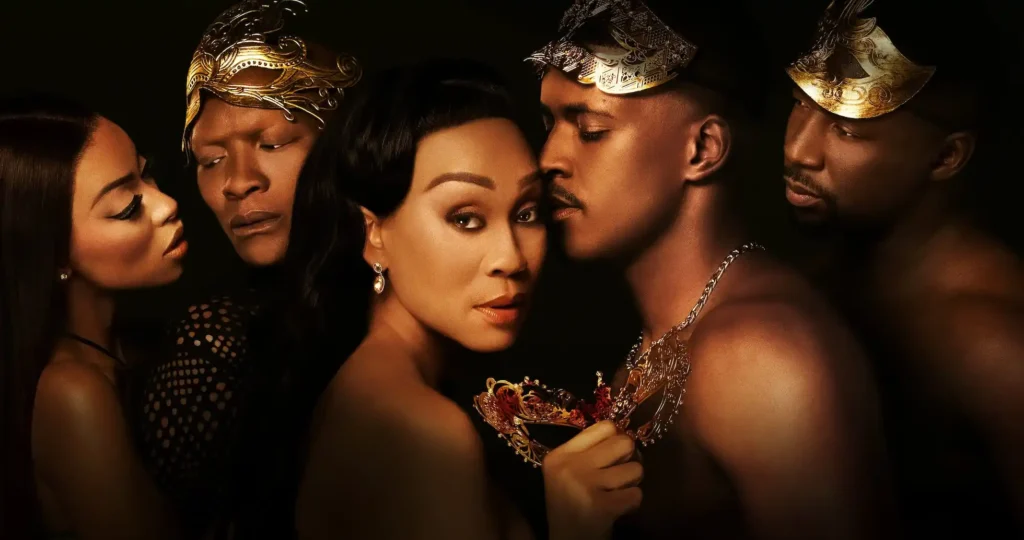
Little in the broad strokes has changed. Nandi knows that Vuyo set her up, and Vuyo knows that Zinhle is his daughter, but Zinhle knows neither of these things. This means that they both have to form a kind of uneasy alliance to protect her when Minister Vilakazi and Precious set their sights on her. Vilakazi is on the cusp of a major political coup and would like all the skeletons in his closet to stop rattling – even though he has no issues regularly attending an underground masquerade sex club, but whatever – which means preventing Vuyo from continuing to dig into his affairs. That means threatening Zinhle, who is very much in that “idiot teenage TV character” phase where she’s genetically predisposed to make the worst decision possible at any given moment.
Fatal Seduction was never a show about good decision-making, to be fair, and still isn’t in Season 2. That’s part of the package. Seeing Nandi and Vuyo try to adapt to Zinhle’s rebelliousness without giving too much away about how much danger she’s in, all while Jacob continues to sneak around and maintain some sort of relevance to the plot, has a curious appeal that relies on stupidity to make it work. I could certainly do without every character continuously fantasising about another character – it happens so frequently in the first few episodes that it genuinely comes across like a meta gag of some sort – but I suppose the hardcore fans would complain if that kind of thing weren’t here.
There’s an escalated sense of danger, too, I’d argue. There’s less mystery, since we begin the season knowing who everyone is and what their particular agendas are, so it’s straight into the action, more or less. There’s an immediacy to the threats that wasn’t there in the first season, and it mercifully leaves less time for elongated romantic scenes and the gradual teasing-out of personal motivations. The more even footing benefits the show, with the cast similarly understanding their assignments. Going to extreme lengths to protect your daughter is a much more compelling motivation than having a tit-for-tat affair just for the sake of it. Part of the reason why the first two volumes never meshed properly is that they felt like two different shows. Season 2 of Fatal Seduction incorporates elements of both to a much more acceptable degree.
Truth be told, it’s still largely about unlikeable people making very stupid decisions. It still woefully mishandles important themes and subplots such as abuse, grooming, questionable proclivities, outright sexual violence, and more besides. It still has a self-indulgent streak a mile wide and frequently seeks to be salacious more than make sense. All these things considered, though, I do think there’s a genuine effort to tell a proper story here, one that’s improved in just about every way over its predecessor. I’m as surprised as you are.
RELATED: