Summary
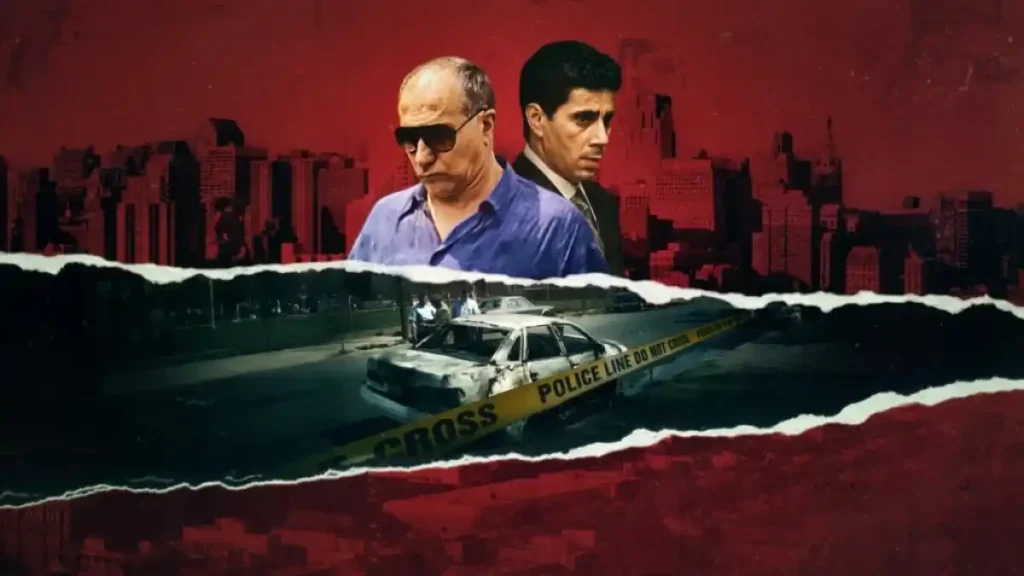
Mob War: Philadelphia vs. the Mafia certainly looks the part, and has the usual Netflix seal of baseline documentary quality, but it also seems oddly unwilling to really lean into it key selling point.
At first blush, Mob War: Philadelphia vs. The Mafia is a fairly run-of-the-mill Netflix docuseries. It’s littered with talking heads, packed with detail and important context, and leans against the usual fixtures of the true-crime genre – archival footage, light dramatic re-enactments, and so on, and so forth. But it has a secret weapon. Unfortunately, it’s one that it only uses very sparingly.
One of the key distinguishing characteristics of the violent war between mob factions that broke out in the ‘90s for control of Philadelphia after the incarceration of psychotic local boss Nicky Scarfo is that most of it was caught on tape. Thanks to an expansive FBI wiretapping operation, various alarming conversations were overheard by authorities. Several of these are deployed in the three-part docu-series, and it’s a great hook. We’ve seen only recently how much emotional power can be generated through horse’s-mouth documentary filmmaking, with The Perfect Neighbor using police bodycam footage to create one of the year’s very best movies.
But Mob War doesn’t lean on the wiretaps anywhere near enough. It’s a strange decision, since Netflix has already proven time and time again that there’s something uniquely compelling about hearing from the villains first-hand. The Conversations with a Killer series has made a lavish banquet out of the overly familiar crimes of Ted Bundy, John Wayne Gacy, Jeffrey Dahmer, and the Son of Sam, so the rubric was there. But Mob War ends up being much more conventional in its broad strokes, using the actual recordings as embellishments to wider points being made enthusiastically but routinely by the relevant talking heads.
This having been said, there’s a good story here, albeit a bloody one. Scarfo’s conviction on charges of extortion, racketeering, and murder resulted in a power vacuum in Philadelphia that two factions fought to fill. One was led by John Stanfa, a Sicilian-born traditionalist, and the other by Joey Merlino, a younger, hipper, more modern mafioso who had decided the city was his birthright. Merlino was never convicted of mob violence, which is one of the more implausible truths stemming from this series, which features him being intimately involved in mob violence for its entire duration.
The pacing is brisk, and the aesthetic is designed to evoke mob movies almost to a fault. The litany of contributors, ranging from former Feds and judges to mafia “associates” – my favourite was the guy who kept describing deranged killers as “nice guys” – and ruthless triggermen, are all recognisable “types” presented in a very recognisable way, all in service of blurring the lines between documentary and drama. It certainly looks the part, and is full of great lines that wouldn’t be out of place in Goodfellas or some such.
But the surprising level on which Mob War: Philadelphia vs. The Mafia works best is as an unintentional comedy. One of the subjects, former hitman John Veasey, is an absurd individual. After killing a man and burning him in a car registered to the associate he carried out the drive-by with, Veasey badly burned his hand. To alleviate suspicion so that he could get the injury treated at a hospital, he set his hand on fire again in front of his neighbours to create the illusion of a barbecue fire. When asked about it, he revealed he had an electric barbecue and couldn’t explain why he was pouring fuel all over it. Say what you want about this guy, but I don’t think he’s going to be splitting the atom.
In another major moment, Merlino associates attempt to take out Stanfa on the Schuylkill Expressway by firing automatic weapons through the sides of a panel van. The guns were fired through holes cut into the vehicle, but similar ones weren’t made for the would-be assassins to look through, so the bullets went everywhere, failed to kill Stanfa, and ended up causing so many near-misses in residential areas that the FBI started paying much more attention.
This stuff isn’t funny, per se, but it creates a vibe of exaggerated ridiculousness that works quite well at underscoring the essential pettiness of this kind of conflict, even though its consequences are very real and brutal. Ultimately, this is a story about the old ways being forced to make way for the new; about the mythologising of gang culture as traditionalism, on one hand, and a hip lifestyle choice on the other. But it could have been a more intimate portrait of that mythology if it had leaned more into its key selling point. As it stands, it ends up being another very engaging but fairly familiar Netflix docuseries.