Summary
Typhoon Family has a predictably happy and largely perfunctory ending, settling on worthwhile themes over raw plot resolution.
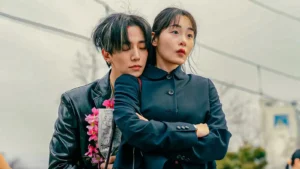
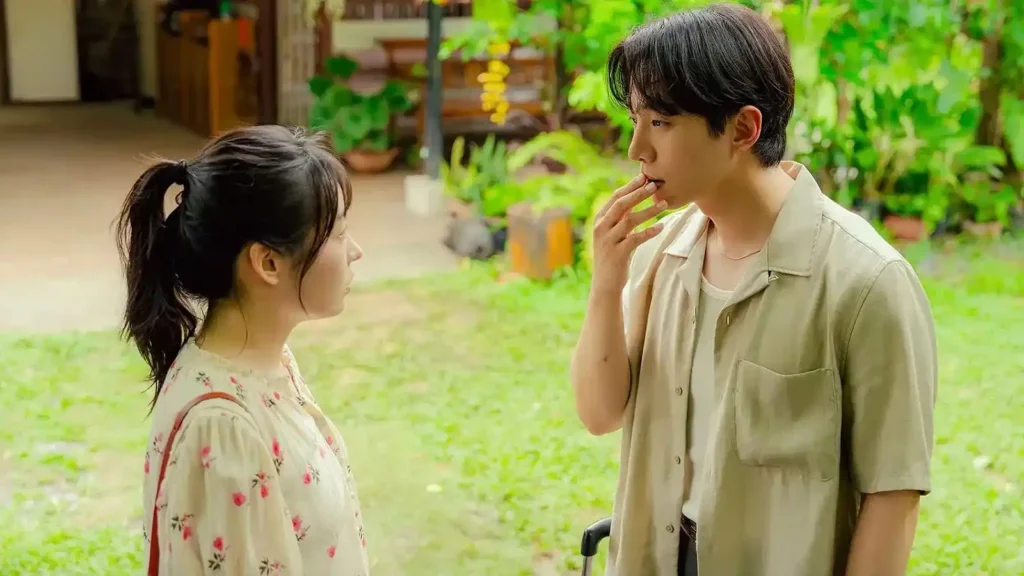
Typhoon Family was always going to struggle with its ending. It isn’t so much a case of it being “happy” or not. It isn’t even a question of whether there’s ultimately any payoff, since the show hasn’t had a great deal of narrative momentum with a ton of competing subplots and character arcs. When you really boil it down, the only two matters of any real concern are the financial future of Typhoon Trading and the romantic future of Tae-poong and Mi-seon, both of which seemed like foregone conclusions long before Episode 16 rolled around.
At the risk of repeating myself, the length and structure are the biggest issues. The former is obvious – there just wasn’t enough meat on the bones here to support 16 episodes. The latter is a bit more insidious. The repetitive, almost recursive approach to the storytelling, with every pair of episodes introducing a new crisis, then a new solution, then a new crisis, and on and on, means that the finale doesn’t feel meaningfully distinct from the rest of the season in anything it does.
Turning the Tables
After the discovery of the promissory note, there’s little surprise in the fate of Typhoon Trading, but we have to go through these motions either way. Everyone rallies around to brainstorm an idea to prevent Hyun-jun’s international client, Mark, from securing the patent to the camera fan being sold by Song-jung’s father’s company. They accomplish this by doing away with the patent itself and trusting in the product to be successful anyway, giving Mark no incentive to go after the factory.
Works a treat. The deal is a bust, leaving Hyun-jun in the lurch. Thanks to his overconfidence, he put his building up as collateral, so now he has lost that, too. It isn’t exactly illuminating that the greedy, mean-spirited trader ends up being undone by his own hubris, but it is pretty fitting. I’d still argue that the idea of having a “villain” in a show like this, backdropped by a real financial crisis, is probably a bit ill-advised in the grand scheme of things, but whatever.
Tae-poong manages to find Mr. Pyo in his container and give him the promissory note, but it’s less a spiteful gesture and more just an agreement for everyone to just get along and be respectful, with Hyun-jun serving as a cautionary tale for what can happen when one gets carried away. Pyo doesn’t quite let the happy clappy vibe extend to Hyun-jun, though, who is arrested for malpractice and embezzlement.
The Flower Metaphor
It takes an effort to remember this now, but Tae-poong is really into flowers. It hasn’t been the most consistent visual metaphor, but if you can recall him nurturing his plants way back at the beginning of the show, you can get a measure of what the show is trying to say thematically.
Tae-poong has an urge to care for things, to nurse them to their full potential. But he focused on flowers because he didn’t have an appropriate alternative outlet – didn’t think he did, anyway. But what he has learned throughout the season is that you need to treat relationships the same way. You need to water them and help them grow. The conditions won’t always be favourable, but the hard work pays off.
Tae-poong didn’t manage to realise this while his father was still alive, but that’s okay, since he has paid the lessons forward by ensuring Typhoon Trading’s success, but also rebuilding the team as its own little found family. The staff have become his garden, and now he’s dedicated to maintaining it. It’s a nice idea, if nothing else.
Typhoon Trading Are A Success
The ending of Typhoon Family combines both the metaphor of a nurtured family and the “defeat” of Hyun-jun to power its grand climax, which is to have the company not only survive the IMF crisis but go on to become deeply successful long-term, making TV appearances and giving donations to struggling businesses.
Given that Typhoon Trading only really survived on account of Tae-poong being a K-drama protagonist whose harebrained schemes consistently worked out okay for him despite all the odds, I’m not sure what he can necessarily impart in terms of meaningful business advice. But that’s quite clearly not the point, so I’m not going to worry about it too much.
The point is about sticking together through the hard times, leaning on your friends, family, and colleagues, treating people with respect and empathy, and being in it for the long haul. These are undeniably worthwhile ideas, and perhaps more importantly, they’re the best possible takeaways from a too-long season that ultimately didn’t offer a great deal beyond its ceaseless energy and charisma. It might not be a viable real-world business model, but it’ll do.