Summary
Pluribus is wonderfully haunting in Episode 7, exploring the true, lonely cost of Carol’s resistance as Manousos makes his way gradually, and dangerously, to her side.
For a while, the hook of Pluribus was that Carol was completely alone. This quickly turned out to be an exaggeration. She was introduced to other English-speaking survivors almost immediately, and even made friends, sort of, with the Others themselves. It isn’t until here in Episode 7, “The Gap”, that the idea of complete and total solitude becomes a reality, and, predictably, Carol isn’t a fan. In fact, it sends her slightly mad (not that she was necessarily even-keeled to begin with).
In a nice structural flourish – Vince Gilligan’s good at this sort of thing – Carol’s extreme, soul-destroying isolation is paralleled with Manousos’s lonely road trip to Albuquerque, which he set out on at the end of the previous episode. You get the idea. We’re supposed to be rooting for the two of them to finally meet up; two staunch rebels uniting in their resistance. But Manousos’s journey is fraught with roadblocks, and Carol’s loneliness forms a kind of ticking-clock device. Can he reach her before she gives in and agrees to be assimilated?
I like how this connects back to the revelations of “HDP”. Outside of the pesky “eating humans” business, that episode also revealed that the Others couldn’t assimilate any of the immune without their say-so, since it’d mean rewriting the virus itself based on their stem cells, which can only be harvested via an invasive procedure that requires consent. With this knowledge looming in the background, we know in the back of our minds that Carol’s spiral is threatening to bottom out in this direction. Writer Jenn Carroll and director Adam Bernstein do a good job at selling why the idea might, at least to Carol, have begun to sound compelling.
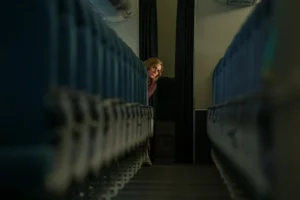
These days, it’s impossible to be alone. Even if Carol felt isolated before, at least inasmuch as she was the only person who hadn’t been subsumed by an alien intelligence, she didn’t have to look far to see a smiley neighbour, or a personalised public address, or John Cena. But the Others’ insistence on maintaining their space from her is driving Carol to distraction as she schleps back from her trip to Vegas. The Gatorade she thirsts for is delivered – by impersonal drone again – but it isn’t ice-cold as she requested. She has to fill the quiet with hummed tunes and play golf alone. Upgrading the police car feels hollow, relaxing in the hot springs feels pointless, and every effort, including a swanky dinner at the restaurant she and Helen once spent an anniversary at, feels like a hollow imitation of the real thing.
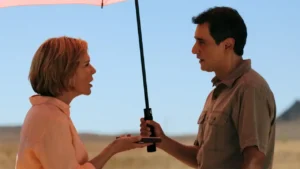
You wouldn’t know any of this was getting to Carol if you asked her. Just like other episodes of Pluribus have been soundly carried by Rhea Seehorn, she’s doing a lot of heavy lifting in “The Gap”. A lot of the small indications in Episode 7 loop back cleverly to devices or small plot points introduced in previous instalments, like the ticking-clock interstitials emphasising just how long Carol has been alone, and the fireworks she swiped from the Red Rocks gas station becoming, potentially, a way for her to end her isolation once and for all. At her lowest ebb, Carol does the only thing she can think to do – she daubs a reluctant message on the street, imploring the Others to come back. And they do. By the time Zosia is pulling up in the driveway, Carol’s even more relieved to see her than we are.
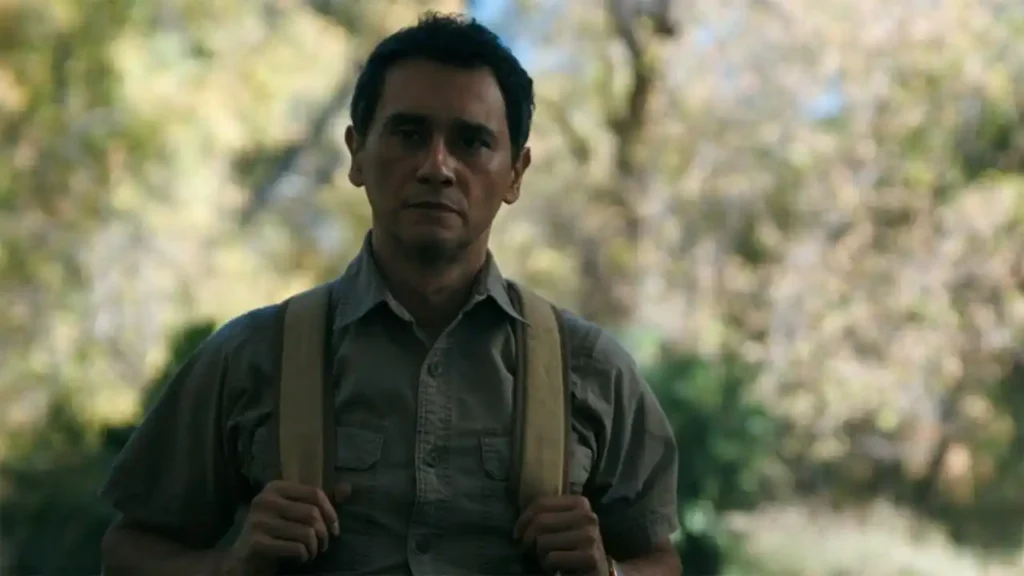
Manousos’s journey has some obvious parallels with Carol’s, though his is very much a physical, geographical traipse rather than a psychological one. He is still utterly steadfast in his refusal to engage with the Others, even when it would be to his benefit. He’s single-minded, having built up Carol in his head as a beacon of resistance in a capitulating world. He refuses water at the risk of dehydration, tries to learn English from tapes, and proceeds through a national park on foot, despite the dangers, because accepting help would mean admitting the Others were anything more than thieving imposters. In small ways, like his leaving behind money for gas despite it no longer being of any benefit to anyone, shows how determined Manousos is to try and preserve the old world.
The Others’ trying to talk Manousos out of his journey has that pleasing sense of ambiguity that characterised earlier episodes of Pluribus, since it isn’t immediately obvious whether they’re earnestly concerned for his safety or worried that he might make it and team up with Carol. There are two ironies here. The first is that he could have used the help the Others would have provided, since he promptly finds himself skewered on a spiky tree branch and in desperate need of medical attention; he eventually succumbs to infection, and the last thing he sees before passing out is the Others coming to his rescue. The second is that Carol might not be the last chance for hope that he’s clinging to. It’d be a shame for all this effort to be wasted. But maybe admitting defeat is better than being totally, utterly alone.
RELATED: