Summary
Taylor Tomlinson’s take on religion in Prodigal Daughter can feel derivative, but illuminating personal insights and her well-honed stage presence help to shape the hour into a solid if unremarkable special.
Among all the low-hanging comedic fruits, religion sits somewhere near the top. And you can understand why. So many people take religion so seriously — like, live their entire lives according to its doctrines seriously — that any even lightly skeptical discussion is automatically subversive and edgy. That kind of material is the comedian’s stock in trade, after all. It’s easy to imagine that there isn’t a single interesting or funny thing to be said about religion that hasn’t already featured in a comedy special, which seems like bad news for Taylor Tomlinson, since her fourth Netflix hour, Prodigal Daughter — others include Quarter-Life Crisis and Look At You — is about the subject almost entirely.
But not so fast. Sure, some of the special is derivative and not particularly illuminating, but the payoff in the final third works pretty well. A surface-level breakdown of some of religion’s most morally questionable fables and inherently hypocritical teachings feels old hat, but there’s a personal quality to the gradual unfurling of religious trauma and how that relates to matters like being a professional comedian and coming out as bisexual that lends a newer, more specific tint to the subject. And Tomlinson’s finely-honed stage persona is enough to carry audiences through to the good stuff.
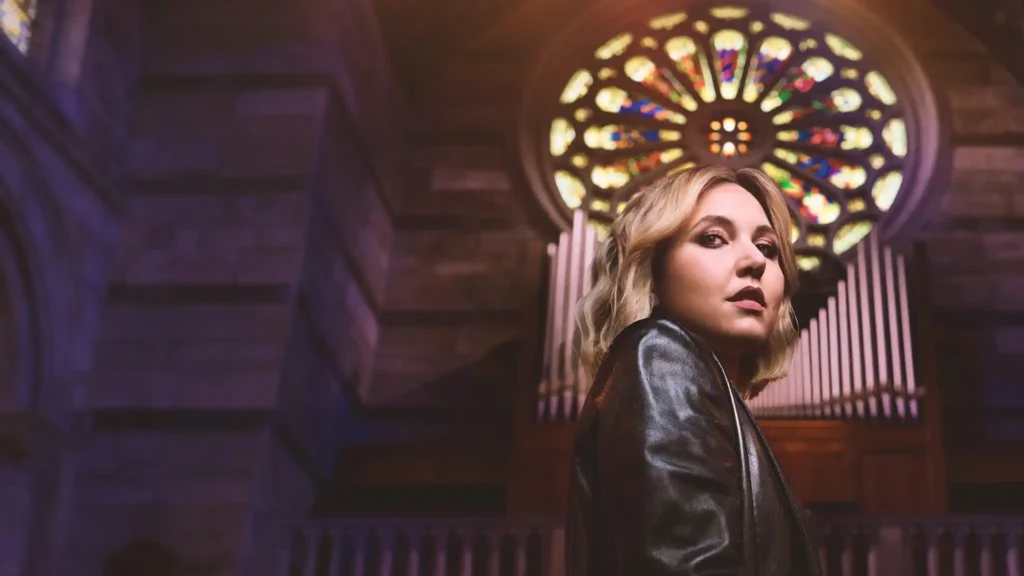
Filmed in a literal church in Grand Rapids last November, Prodigal Daughter begins not with religion, but the new go-to talking point of the contemporary comedian — AI and robots. The irony of this coming up during a Netflix special — especially one from a performer locked into a multi-year deal — provides the typical frisson of hypocrisy, but it doesn’t go unacknowledged. In fact, Tomlinson is smart enough to realise it’s the point.
But the religion topic is unavoidable, at least after an obligatory I-was-a-nightmare-to-date-in-my-twenties bit (whether it’s more acceptable to continue to date your partner after finding out they’re your cousin or a robot knits the opening subjects together pretty nicely). Tomlinson grew up religious and has her share of trauma as a result. In previous specials, that lingering resentment has led to funny but low-effort potshots, but here the approach is more measured and thoughtful, with a pretty reasonable take on agnosticism and an open acknowledgement that previous aspersions cast on Christianity specifically and religion in general were mostly just a coping mechanism.
A middle stretch making fun of religious stories is pretty weak, though. He has badly fallen off now, but Ricky Gervais did this years ago, in largely the same way, even building to the same “God is gay” punchline. Gervais was more steadfast in his position, and it was coming from a more mocking, mean-spirited place, but he was also older, even then. Tomlinson, barely touching 30, is filtering her take on religion through the lens of growing up in its midst and now growing old enough to look back on her experiences more rationally. But the outcome is the same.
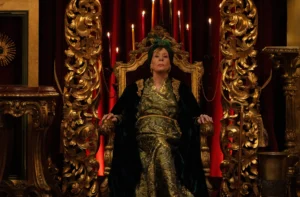
It’s in the back half of Prodigal Daughter that Taylor Tomlinson really gets going, discussing how she came out as bisexual — there’s a good joke about being dumped by a polyamorous person — and her early career as a church-circuit comedian, learning how to work clean and perform on stage in front of thousands of eager congregants. You can make a good living doing that, but the fact that Taylor chose the secular route leads to a quick-change grand finale where she visualises her potential return to religious comedy if she gets cancelled. It’s a great payoff for the special overall and clear growth in Tomlinson’s material. I wouldn’t quite call this hour the sermon it’s jokingly presented as, but there are lessons to be learned.