Summary
Scream 7 isn’t as bad as you’ve probably been led to believe, but it isn’t especially good either. Some gnarly kills and effective bits of nostalgia aside, it’s still a sequel that mostly works to remind everyone that the franchise has run out of road.
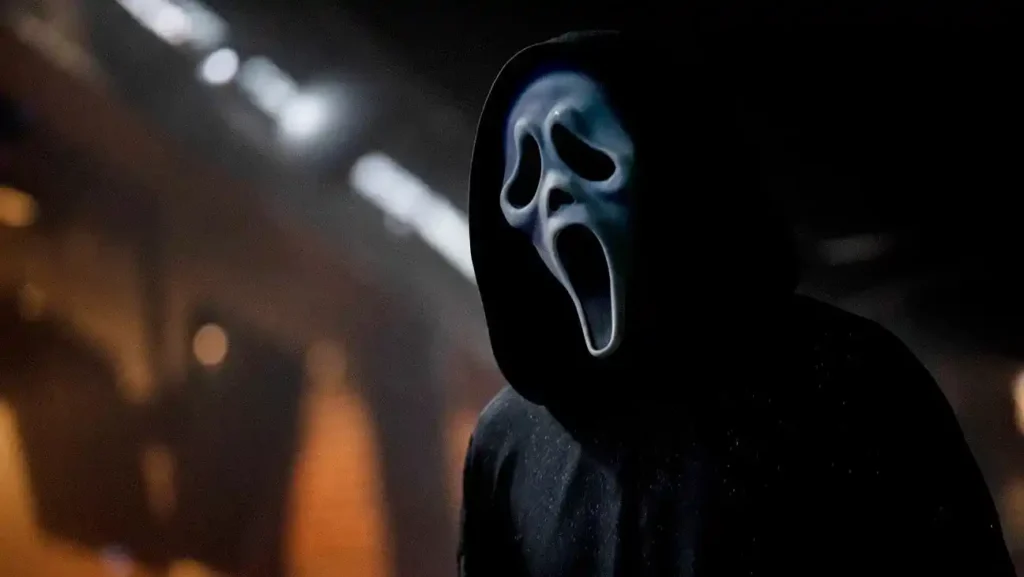
It is basically inarguable at this point that the circumstances surrounding the production of Scream 7 have coloured its critical reception to a not-insignificant degree. And it’s equally inarguable that an extreme reaction to that already performative response has muddied the waters even further, with a lot of equally disingenuous claims being made about the movie at the opposite end of the spectrum. The truth of it, then, is somewhere in the middle, as it almost always is. This is a flawed nostalgia-baiting sequel with an off-putting tinge of smugness to it, but it also has a couple of gnarly kills, feels committed to the franchise’s mandate of exploring advances in technology and how they inform the ways we consume and engage with content, and basically feels, for better and worse, like any Scream movie other than the first one, which will always be a significant cut – aha! – above the others.
For what it’s worth, that first movie is the one that Scream 7 most closely and determinedly evokes, but it never really gets near on a technical level. Director Kevin Williamson is not Wes Craven, after all, and the first movie didn’t mine nostalgia so much as deconstruct the form (the first three were about, if you recall, slasher movies, sequels to slasher movies, and slasher movie trilogies.) The franchise has now gone on long enough that it’s looping around to deconstruct itself, which isn’t the same thing, and Guy Busick’s screenplay never escapes that paradox. It mostly feels like a cover-band take on the classic hits, even though most of the original band is back together.
That’s the selling point, obviously. Whichever reports you choose to believe, Melissa Barrera’s firing on account of being vocally against the genocide in Gaza caused calamitous ripple effects throughout the entire production, mandating multiple reshoots and forced reinventions of the underpinning ideas, which one imagines were to continue the character arcs from Scream (2022) and Scream 6 instead of, as here, constantly apologising for the fact those movies ever happened. The coup in all this, though, was the return of Neve Campbell (The Lincoln Lawyer) as iconic final girl Sidney Prescott. But this proves far from the only way in which Scream 7 attempts to leverage nostalgia for the original movie.
For one thing, a now much older and married Sidney is being haunted by, apparently, Stu Macher (Matthew Lillard, Cross), one of the two Ghostfaces from the original. He’s going after Sidney’s daughter, Tatum (Isabel May, 1886), who is named after another character from that movie. After a while, Courteney Cox’s Gale Weathers turns up to complete the OG set, with the twins from the last two movies, Mindy (Jasmin Savoy Brown, Yellowjackets) and Chad (Mason Gooding, Love, Victor), in tow as the only real reminder of those movies existing beyond the multiple times that characters openly apologise to Sidney for her not being in the last one. The opening scene even takes place in the Macher house, with Stab superfan Scott (Jimmy Tatro) dragging his disinterested girlfriend Madison (Michelle Randolph, Landman) around what has become a murder museum, though it’s probably telling that this opening doesn’t have a single thing to do with any of the events that follow it.
There’s even a new cast of potential suspects and victims that is clearly intended to evoke the original gang, including Tatum’s boyfriend, Ben (Sam Rechner, Heartbreak High), her friends Chloe (Celeste O’Connor) and Hannah (McKenna Grace, The Handmaid’s Tale), and obligatory movie buff, Lucas (Asa Germann, Gen V), whose job is to occasionally explain which rules of horror movie-making are being violated or adhered to. But as mentioned at the top, Scream 7 isn’t really about movies in general as it is about Scream movies specifically, so none of this really takes, and the main question is whether or not Stu is really back from the dead or if his manic video messages are AI deepfakes – and, if they are, who might be creating them.
Most of this works just fine. Campbell is a dependable presence and she does a decent job of selling how her experiences have informed her parenting style; there’s a theme of generational trauma that has kind of a cool payoff, and Sidney’s complex interactions with Gale, who is both technically her only friend but someone who has consistently seen every misfortune that has befallen her as a career opportunity, add some necessary texture that justifies them both being back on-screen together. There are also some fun kills, including one in particular that is way up there with the franchise’s best.
But it isn’t all successful. The final killer reveal – which is always a pleasure in these movies – is extremely lame, easily the worst in the franchise, and the seams where this new version has been stitched to various parts of older ones are sometimes distractingly apparent. I’d also possibly argue that this franchise has now exhausted its own mythology to the point that there’s really no way it can continue without feeling so contrived that it starts to undermine and pollute its legacy. It certainly doesn’t offer enough on a technical filmmaking level to carry the action if there’s no longer any looping association to past movies to be leveraged. Sometimes things really do run their course.