Summary
Boston Blue continues to make things complicated for Lena in “Personal Foul”, which also boasts the strongest Jonah subplot of the season.
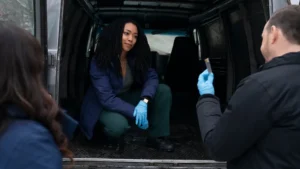
You know how it goes in procedurals. One of the main characters has a major personal revelation, they refuse to talk to the people they actually need to talk to about it, and then they trip and fall into a case of the week that forces them to confront the issues they’re dealing with more directly. Such is the case for Lena in Episode 18 of Boston Blue, and her messy personal problems are still providing a compelling character-driven thread.
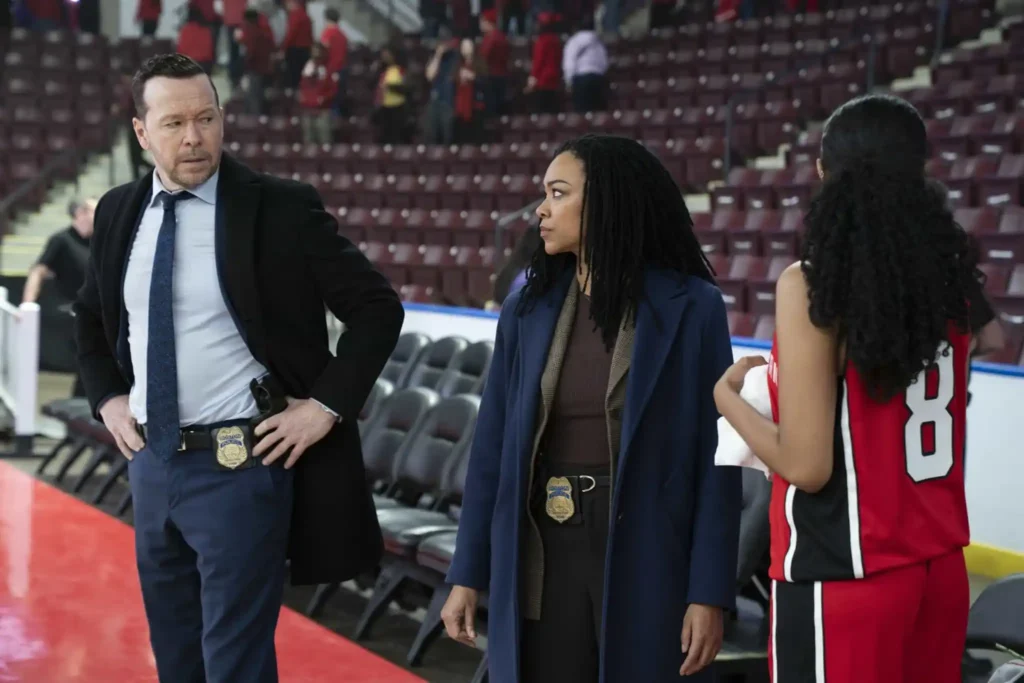
Naturally, everything in Lena’s life begins pointing in the same direction to reflect her headspace, even the stuff that doesn’t seem like it has anything to do with it at first blush. This includes the investigation into a college basketball star and her stalker, which gradually evolves into a match-fixing scam involving the player’s all-star father, who is in debt to the Triads following some “bad investments”. This is a clear case of a father making mistakes and doing everything he can to rectify them, but his daughter being left to pick up the pieces and wonder how she can reconcile this version of the man with the one in her mind.
Doesn’t that sound familiar?
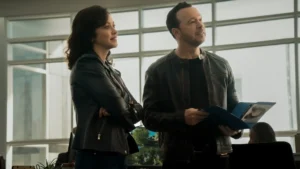
Lest she split at the seams, Lena has to tell someone, and since he’s nearest, she turns to Danny. Throughout his time on Blue Bloods, Danny worked through his share of personal problems and has become a bottomless font of sage wisdom on the subject of managing one’s emotions, especially in the workplace, but Lena’s loose lips cause a bit of a ruck with Brian, because she didn’t tell him first. That sounds pettier written down than it is in context; once she has unburdened herself the first time, she doesn’t really have time to do it again until later. Brian was just unlucky with the timing.
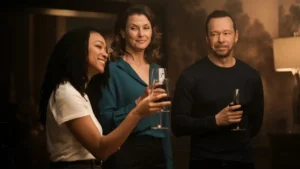
If we’re being open here, I don’t love anything to do with Brian. He’s not a bad character by any means; he just doesn’t have a great deal of function, since he’s largely surplus to requirements. Lena and Danny have a lot of emotional openness without the ambiguity of any romantic connotations (like, say, Mickey and Boone over on Sheriff Country). What this means in practice is that Brian’s only job is to provide a romantic angle, and the episodes are so busy that there’s barely any time for it.
Brian does have a sort of subplot in “Personal Foul”, to be fair, but it’s mostly an excuse to remain in Mae and Lena’s orbit professionally. Lena’s predicament, through the stalking case, is very much what’s driving the plot here. And it’s only a so-so case. Its developments are designed exclusively to allow Lena to realise a sentiment that she later expresses to Soraya, the basketball player with a questionable father: Two things can be true at once. Sure, Soraya’s dad made bad decisions, but he still loved her deeply and tried to do right by her.
This isn’t quite what Lena is going through, since based on her dad’s conversation with Mae in the previous episode, he wasn’t immediately aware that Lena even existed, and when he was, it was Mae who rejected his efforts to have a relationship with her. This has allowed Lena’s resentments to fester, even though they might not be entirely accurate. We’ll definitely be getting to the bottom of it down the line, though, since Asher arrives at the very end of Boston Blue Episode 18 to reveal that he now knows who Lena is, what her relationship to his wife is, and feels like he needs to tell her about the small matter of having a sister she has never met. This problem isn’t going away, despite Lena having resigned herself to the fact that she doesn’t need to know her birth father to know who she is.
“Personal Foul” can at least make a unique claim for itself: The Sean and Jonah subplot is pretty good. To be honest, it’s good enough that I wish we got a bit more of it, which isn’t something I ever thought I’d say. But Jonah arresting a Black kid who turns out to be innocent of any wrongdoing throws him for an interesting loop, and relates to his backstory, seeing how a white cop harshly treated his grandfather, in a compelling way. He’s terrified of shaping a young kid’s idea of what the police are, in the way his own views were shaped, especially since he became a cop having resolved never to do that.
I do think this might be the best use of Sean and Jonah – to shine a light on policing generationally. But I’m sure they’ll be back to having slapstick chases sooner rather than later.
RELATED: