
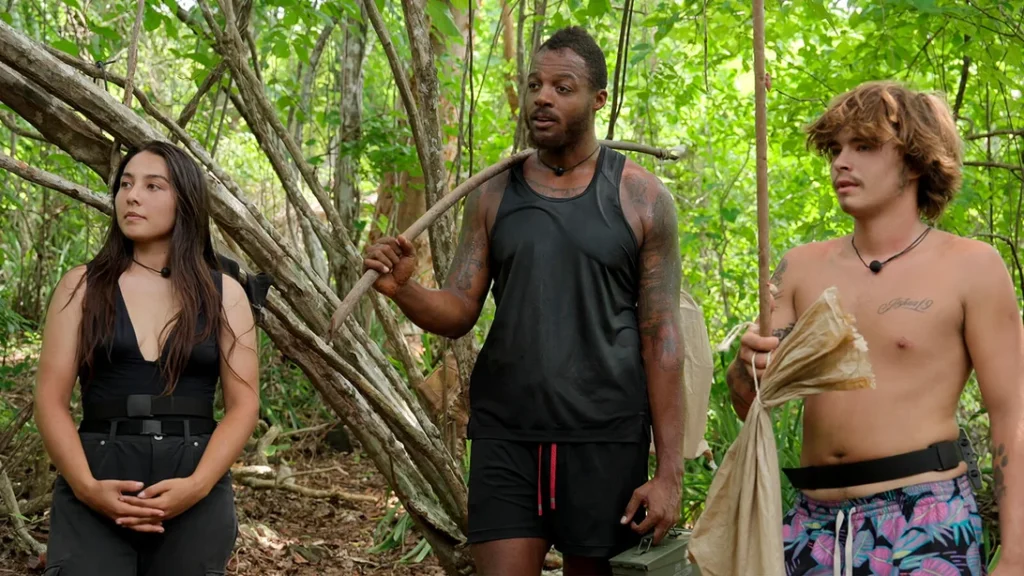
Outlast has a knack for frustrating viewers. Some audiences do not enjoy the lines being blurred between morals and the framework of a survival reality show. The Netflix series undoubtedly, and purposefully, keeps that line blurred. However, in Outlast: The Jungle (basically Season 3), a question arises over whether Team Charlie should have remained on the show at all, or if Netflix should have kicked them off.
While most of the frustrations have been aimed at Wes Saunders, who shocked viewers with his behaviour, the entirety of Team Charlie seems to have hit a nerve, with many viewers noting how toxic the camp was as a whole. I’ve seen comments in our coverage labeling them as psychopaths, bullies, childish, gaslighters, and even misogynistic. The treatment of Sarah Awad and Leiya Pillitteri did not help the case of Wes, Braxton Fish, and Brett Johnson, as they seemingly put all their efforts into pushing only the women out of their camp.
But should Netflix have intervened? That’s the ultimate question, and I’ve decided to look at both sides of the argument.
The Case for Netflix Stepping In
Outlast is, without question, a reality survival game show – a show that depends on survival elements where contestants fight for $1 million. The production team is wholly responsible for the well-being of each contestant, and even though I suspect they sign waivers for physical injuries, there still need to be medical teams ready to support them if the situation arises. That’s a Netflix responsibility – one they insure against and rely on from a legal perspective.
And so, what about mental health? While survival elements and team cohesiveness are personal challenges, should any contestant expect to be targeted and bullied unnecessarily from day one?
In the past, shows like Love Island have faced huge controversies regarding the tragic deaths of reality stars, sparking calls for production teams to understand that the pressure of being on television – and ultimately being in the spotlight – requires a higher level of safeguarding. Most reality TV productions are not dealing with fame-ready individuals; they are filming everyday people thrust into the limelight.
Outlast can package itself as a survival reality show where there are “no rules,” but that should really be an on-the-surface selling point rather than a matter of absolute fact. Surely, in the case of Leiya Pillitteri, Netflix could have intervened when they realised that Wes and his merry men were taking things too far. Intervening when Sarah was clashing with Wes may not have been justified, as an argument could be made that it was initially just a personality clash.
Either way, the argument here is that safeguarding should be at play. Many viewers feel that Netflix has taken the concept too far – a little like the Skyscraper Live event, which was as horrific to watch as it was exciting. When does entertainment for the sake of attention and viewership cross the line?
The Case for Letting the Game Play Out
There’s a flip side to this, of course. Outlast is a survival game show, and Netflix has prided itself on making it as realistic as possible. The production team stays away from the contestants as much as they can, only stepping in to record and let the situations play out. A “real-life Hunger Games,” if you will.
There is also no requirement for sportsmanship. The objective is to survive and win the game, with one camp taking home the money at the end by any means necessary. The game is clearly not designed around morals, which arguably makes the concept more appealing to its audience.
Team Charlie may be toxic, and they may have made viewers uncomfortable – but feeling uncomfortable is not a reason to change how the game is won. Throughout Outlast: The Jungle, other teams did things that were questionable from a moral standpoint. Team Charlie was simply less polite about their actions, but no one was ever in “real danger.”
An argument could also be made that Netflix would only have to intervene if they genuinely believed someone’s mental or physical health was at a breaking point.
I imagine the defense following this controversy is that Team Charlie was simply filtering out the weak. In their eyes, there was no time for friendships; they only had the end goal in sight, which was winning the prize money.
The fact is, only certain types of people do well in survival reality games, and Outlast clearly casts contestants based on a wide range of personalities and resilience levels. However, if you are not that type of person, then I wouldn’t recommend signing up for this kind of show, no matter the money.
It’s similar to shows that rely on lies and deceit, like The Traitors and Million Dollar Secret – should networks intervene when the lies get too manipulative? Or is the entire purpose of the show for contestants to gauge exactly how far they can take their deceptions?
There is a valid argument for both sides regarding Team Charlie, and while I believe the backlash has been somewhat overblown, it has certainly made for interesting reading and lively debates online.