
Summary
Toy Story 5 turns a kid’s tablet into the villain, making for a relevant but slightly uncomfortable wake-up call about modern childhood. It might leave you totally torn on whether the franchise should keep going, but it’s a must-watch for the message alone.
When it comes to Toy Story, people tend to sit in one of two camps: either the franchise should have finished after the third film, or there is no problem with it continuing to where it is today. I sit in the latter camp. I haven’t thought about it too deeply for what is essentially a fun universe. I was excited for Toy Story 5, especially given its premise, and my curiosity wandered to how it would deal with the world we live in today. I have to say, the film manages a couple of ideologies rather well.
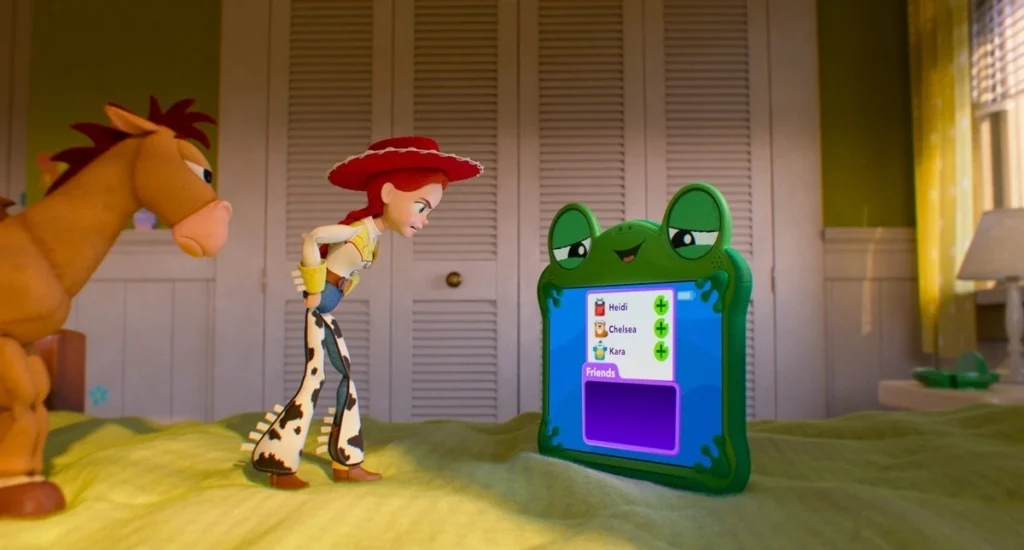
The fifth installment, which will arguably not be deemed the best one, feels like the most important in terms of story. Jessie, Bullseye, Buzz Lightyear and friends are Bonnie’s toys; the young girl still has a sprightly imagination and loves playing with them, much to the delight of the crew. However, Bonnie (Scarlett Spears) struggles to make friends. Meanwhile, many children now have tablet devices, navigating group chats and online gaming. To the horror of the toys, Bonnie’s parents buy her a Lilypad (Greta Lee, Past Lives) – a tablet device they believe will help their child engage with other children. Lilypad is the assigned villain in Toy Story 5, a threat that sparks Woody’s (Tom Hanks) return to help his friends.
The film does one particular thing exceptionally well: it portrays the world of technology forced onto our children in a horrifying way. Once Bonnie is consumed by the Lilypad and it dawns on the toys that the world has changed, it makes for slightly uncomfortable viewing. Cameras pan out to see household windows glowing with glaring screens in each bedroom – children turned into zombies. It feels sad.
I was tempted to look around the screening at other parents. How will Toy Story 5 make them feel about what we’ve done to our kids? Will they care, or are they equally distracted? The main theme that lunges out in this fifth film is that we’ve destroyed what childhood was meant to be; that technology is treated as a quick fix rather than a long-term positive outcome.
The film utilizes Bonnie considerably well from an emotional perspective. Seeing her go from a sprightly young girl with a blistering imagination to an even more anxiety-riddled child attached to a screen in the hopes of making friends is awful. The film makes her look drained and confused as she tries to understand her own feelings – giving up her toys and compromising her character just to fit in.
But I did ask myself halfway through: what’s the point of these messages? Is it too late? How could we even reverse course? It feels like the film is telling adults that we had the chance to stop technology from influencing our children so heavily, but we used it for the convenience of parenting instead. And here we are, left with soulless, unimaginative children.
But of course, this is a Toy Story film. Outside of making the audience understand where the world is today, the narrative delivers exactly what you’d expect from the toys. There’s adventure, peril, and plenty of quippy jokes as Jessie, Woody, and Buzz do everything they can to help Bonnie make friends and disconnect her from the determined Lilypad. Jessie (Joan Cusack, Snatched) also feels like the central toy this time around. She has to relive her past once more, but a few twists intrinsically link her back to her first kid as the film moves into the second act, which I thought was particularly wholesome.
It’s everything you would expect from Toy Story 5, so it really does depend on which camp you sit in. You’ll either walk away thinking this franchise needs to end, or you’ll be happy that it happened.
This time, I walked away in both camps. The film makes such a salient point about toys versus tech that I did wonder: how could a Toy Story 6 address anything further? We’ve already had Woody, Buzz, and Jessie’s story arcs alongside Andy and Bonnie’s. At the end of the day, kids have to grow up. The only difference is that Toy Story 5 indicates the era of playing with toys is ending much sooner. Seeing a sixth film where Bonnie heads off to college would complete the story, but I’m not sure it would be fruitful. I’d still be there to watch it, though, as I enjoy the story.
It also feels oddly weird as a full-grown adult to be contemplating whether I want to see more films about toys that secretly come to life when adults aren’t looking. I feel like the franchise has existed for most of my life – and then it dawned on me – it has. Maybe Toy Story 5 proves a final point for 30-somethings like me: in some ways, we always still have that kid, that younger version of ourselves, inside of us.
Read More: Toy Story 5 Ending Explained