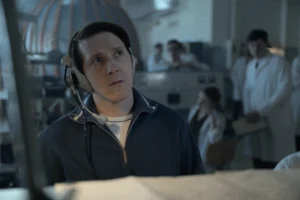
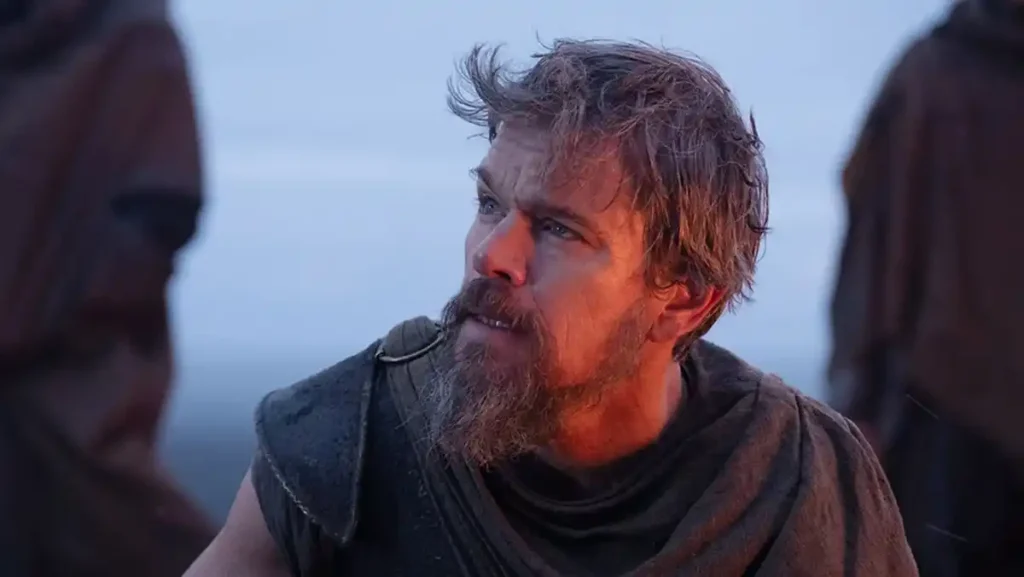
At the time of writing, after its gargantuan opening weekend, Christopher Nolan’s The Odyssey has walked away with a gigantic box office haul. The epic made $264.1 million globally for Universal, which is a remarkable debut for an R-rated three-hour non-franchise movie. With the superb critical and audience reception, the movie is, by any measure, an unequivocal success, which makes it all the funnier that my various social media feeds remain awash with people somehow trying to paint it as a failure.
This is unsurprising. Before anyone had even seen a single IMAX frame, a two-minute teaser trailer sent the internet into uproar, with self-appointed cultural auditors declaring that, sadly, Nolan had gone woke. How else would you explain, for instance, the casting of a trans man in the role of Achilles, or Helen of Troy suddenly being a Black woman? The Odyssey’s failure became a mission for outrage merchants whose entire existence depends on X revenue and hate clicks. But they chose the wrong target, and it should have been obvious all along.
The Anatomy Of A Performative Backlash
Let’s be as clear as humanly possible here: The problem that everyone had with The Odyssey was that Elliot Page is trans and Lupita Nyong’o is Black. However, even today, when naked bigotry is very much in vogue, those are still largely untenable positions for people who want to be taken seriously, so the target of the outrage gradually morphed to something more nebulous and performative.
The subject became about historical exactness. The problem, people claimed, was that the diverse casting wasn’t an accurate representation of Bronze Age demographics, and that Nolan had a responsibility to preserve Greek culture by depicting the text as accurately as possible. Even on its face, this idea doesn’t hold much water. The Odyssey is a mythological text, not a historical accounting, and it was passed down through oral tradition, meaning that it was constantly adapted and remixed as a spoken-word poem until Homer eventually set it down.
In other words, there’s no real accuracy to preserve, and no fixed original text to sanctify. It’s a work of amorphous, evolving fiction; foundational literature, to be certain, and integral to the way we think about storytelling even today, but fundamentally a story.
Outrage sells. Pre-emptively declaring something an abject failure, and attaching that failure to the success of a counter-cultural movement, not only whips up short-term profits from the negativity economy, but also gives the detractors a sense of self-worth, as if they’re seismically shifting the very culture with their weepy theatrics. The only problem with this is that it requires the subject to be the failure they desire. And The Odyssey wasn’t.
Moving the Goalposts
The internet has been an absolutely hysterical string of wins for The Odyssey and cope for its detractors over the last few days, with every declared certainty turning out to be false and having to be justified or excused on the fly.
First, it would supposedly fail with critics. It currently holds a 95% rating on the Tomatometer, and an 89 on Metacritic. “Those are paid reviews,” they said. “Wait for the audience scores.”
The audience scores came. 97% on Rotten Tomatoes, which mandates that only people who can prove their ticket purchases are able to post reviews, 8.4/10 on IMDb, and 4.4/5 on Letterboxd. The only outlier is a 5.1 Metacritic user score – the only site which still allows users to post without having seen the film. Some of the reviews still contain the AI prompt that was used to write them.
These reviews were, of course, written off as “paid”, or at the very least curated by sites like Rotten Tomatoes. “It’ll fail at the Box Office,” they said. “Nobody wants to see this movie.”
People saw it in droves. It’s the biggest live-action opening of the year, the biggest opening of Nolan’s career – albeit before adjusting for inflation – and had the third-biggest R-rated opening day ever. “Wait for the second week,” they said. “It’ll fall off a cliff.”
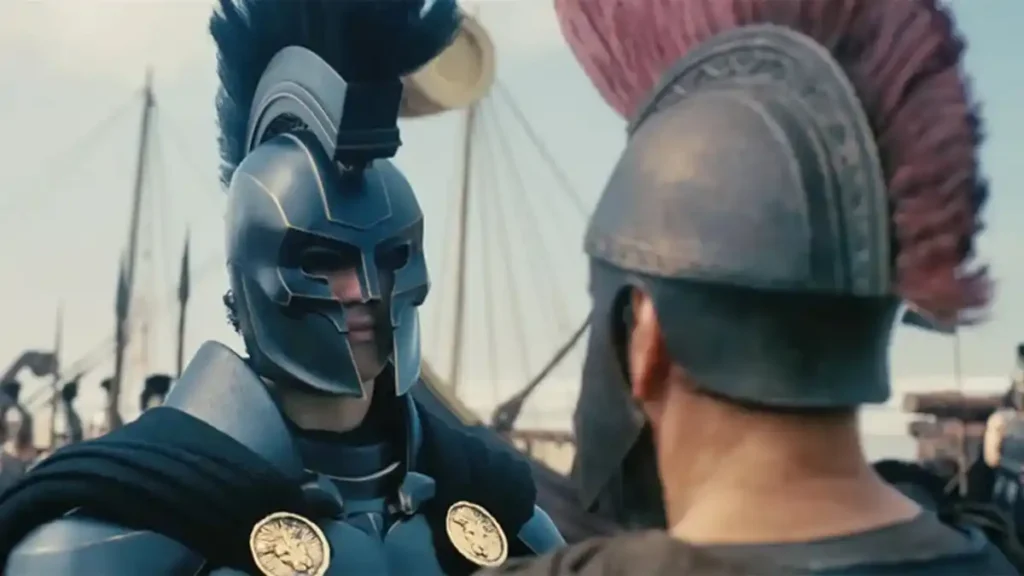
Benny Safdie in The Odyssey | Image via Universal Pictures
The Odyssey’s Success Is Assured
One of the funniest things about grifters hitching their wagons to industries they know virtually nothing about is that they make themselves look like idiots. Nowhere is this more evident than in the absurd gymnastics being done to imply that despite its record-breaking opening, The Odyssey remains, somehow, a financial failure.
It’s true that when you factor in its sizeable budget and P&A (print and advertising), the movie needs to make around $750 million at the Box Office to break even. But it’s also true that it has recouped its production costs in its opening weekend, all without even having opened in some crucial markets, including China. It’ll sail past $1 billion, and anyone with even a cursory knowledge of the industry can say this with certainty.
Those clinging to the idea of a substantial second-week drop-off and Spider-Man: Brand New Day stealing its thunder are bound to be disappointed again. There are still a couple of weeks between now and the latest MCU blockbuster, with virtually no big movies in between. With extremely positive word-of-mouth, the drop-off is unlikely to be all that substantial. More to the point, Brand New Day isn’t opening in IMAX, which is the preferred format for The Odyssey, so it’ll remain relatively uncontested there. It’ll continue to earn money all throughout the summer.
And there’s also the fact that movies don’t just wink out of existence when they leave theatres. The ancillary windows on this thing – PVOD and VOD (private video-on-demand and video-on-demand), physical (a waning market, but still a substantial one for Nolan), SVOD (streaming video-on-demand), and long-tail global IP merchandising will ensure that The Odyssey lines the pockets of Universal for years to come. It can’t be a failure, since it’s already a gargantuan success.
The Wrong Target
It should have been obvious that banking on one of the most well-regarded and consistently profitable living filmmakers to make a movie that nobody liked or saw was a terrible idea. It was never going to happen. But the upside is that we now have people insisting that Troy (2004) is some kind of masterpiece, despite the fact that nobody liked it a great deal even at the time.
This kind of reflexive, defensive nonsense exposes how flimsy the underpinning arguments are. That movie didn’t have a Greek cast either. Achilles was played by Brad Pitt, who’s American, and Helen of Troy was played by Diane Kruger, who’s German. But nobody minded. The problem isn’t that Lupita Nyong’o isn’t Greek – the problem is that she’s Black. The problem isn’t that Elliot Page doesn’t look like a famed Greek warrior, since Elliot Page plays Sinon, not Achilles, and the entire point of the character is that they’re not a famed Greek warrior. But the problem is that Elliot Page is trans.
Don’t let anybody tell you any different. Don’t let anybody tell you it’s about preservation of Greek culture and heritage when The Odyssey broke all of that nation’s pre-sale records. Don’t let them tell you it’s about the sanctity of the original text, which wasn’t even text originally, and which pretends that artistic license is a trendy new thing and hasn’t been a foundational part of moviemaking since its inception. It isn’t about those things. It’s about bigotry and feeding the negativity economy. That’s all.
But be reassured. Quality will always trump agenda in the end, and those basement-dwelling trolls who think they’re terraforming the cultural landscape with their endless bleating exist only online, away from the real world where a movie can just be a movie, and being entertained isn’t a crime.
RELATED: Why Christopher Nolan Proved His Doubters Wrong With ‘The Odyssey’