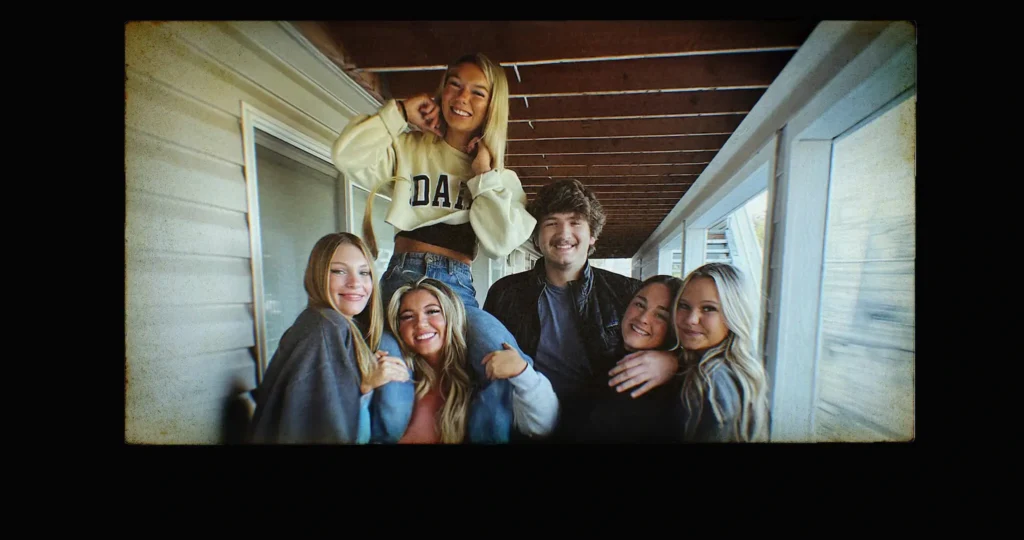
The Idaho Murders: College Nightmare is well-detailed and meticulously arranged and offers a lot of humanity when covering the 2022 quadruple murder of four college students in Moscow, Idaho. But when observing viewers’ reactions, there’s an understandable mix of grief, anger, outrage, speculation, and even a critique of the documentary’s editing.
Of course, the main sentiment in a community thread is that Bryan Kohberger is clearly a psychopath. There’s deep disgust towards Kohberger that’s justifiable, mainly because the interpretation is that there’s a lack of a clear motive – the authorities, the judicial system, and the families have no answer as to why he did it. Some agree that Kohberger acted out of a desire to see if he could commit a high-profile murder and get away with it, viewing the victims as random targets for his violent fantasies.
It’s difficult to comprehend such violence without explanation, especially in the modern day where we exist within civilized, systematic structures designed to stop us from murdering each other. To understand why someone commits this senseless violence is almost impossible unless you look at the science behind it, which made Mindhunter famous. There’s a relief in the community that the botched mistakes (such as leaving the knife sheath behind) led to his arrest.
“Kohberger is such a psychopath”
“He wanted to know what it was like to commit a crime of this magnitude. The girls were likely picked randomly on one of his scouting missions… he saw them as a means to an end.”
“Honestly, if he hadn’t left the knife sheath behind, I doubt he’d have ever been caught. He made one careless mistake in what was otherwise a well executed murder.”
But what’s more surprising is how many viewers are pondering why the surviving roommates (particularly Dylan and Bethany) did not immediately call 911 after seeing the masked figure. Was it confusion, panic, anxiety, or something more sinister at play? Of course, there’s plenty of evidence at this juncture not to point fingers, and in defense, some do not want this to resort to the same level that Amanda Knox went through for apparent “odd behavior.” Context is key; for example, factors could be:
- High levels of alcohol consumption late at night causing confusion or disbelief.
- The house being known as a “party house” with people coming and going regularly.
- The psychological shock and freezing up when confronted with a strange situation.
The fact is, no one knows how they will act until they are in the same situation themselves. Amanda Knox did not know how to react to being planted center into a murder investigation in a foreign country. The surviving roommates, who were likely in the midst of college euphoria and living their best lives, were likely as confused by their experiences. Like all true crime documentaries, armchair investigators tend to have a plethora of theories, and The Idaho Murders: College Nightmare has attracted many.
“Urgh, the trouble with new documentaries is that each one brings a fresh wave of people demanding to know why Dylan and Bethany didn’t call the police. It’s so incredibly tedious. And ignorant. Like, pause for one second and think about a) their age b) their alcohol intake and c)..big one here…funnily enough they weren’t aware of all the facts of what was happening so didn’t immediately assume that their closest friends were being brutally stabbed to death.”
“When Dylan heard Xana scream “somebody’s here” and was running down the stairs, why tf wouldn’t she call the police at that point? It’s so fucking weird.”
“I’ve seen some comments here stating that they were intoxicated and confused. I’m sorry, but that’s just not an excuse. Hearing that shit would sober you right up.”
But it does not help that the documentary had omissions, which have caused frustration amongst viewers, especially with further context on the 911 call. For example, the documentary misses out on how a friend went into the house first, found the victims, and instructed the surviving roommates to step outside and call 911 to protect them from the horrifying nature of the scene.
Like Making a Murderer, Netflix has chosen sensationalism over facts; the streaming service allowed room for viewer confusion and speculation, which police reports and investigative timelines had already clarified. I have wondered plenty of times how Netflix gets away with this – surely, one day, they’ll get sued for misrepresenting the facts, unless they do it in a way that just edges towards the acceptable line. Either way, there’s an ethics problem at play, and with Netflix seemingly letting anything happen on their platform lately (like Skyscraper Live and the uncomfortable Outlast: The Jungle), maybe they’ve reached a point where they abuse their power.
The story of Bryan Kohberger continues – with the murderer wanting to reverse his guilty plea, the suite of commentators and documentaries likely continues, but hopefully, this time, there are some answers for the families.
Read More: One Night in Idaho: The College Murders Review