Summary
House of the Dragon provides all the giant battles, shocking betrayals, and final season setup you could ever want in a finale. Not all of it works as well as it should, but it delivers where it counts.
You can’t have an ending to House of the Dragon without some controversy, and Season 3, as good as it has been at its best, has already divided fans with its occasionally plodding episodes and fairly radical changes from the source material. You can say many things about Episode 8, “The Treasons at Tumbleton”, but you definitely can’t say that it’s plodding. Hardcore book fans might be less pleased, but in its broad strokes, this finale includes everything you’d want from a finale, including betrayals, massive battles, multiple major character deaths, and a clear setup for the fourth and final season.
With all this going on, there’s also a lot to break down, explain, theorise about, and predict. These things have many moving parts, and not all of them have been appropriately oiled, so the narrative machinery can clank and grind in a couple of areas that needed more time and space, despite the near feature-length runtime. So, let’s round everything up, shall we?
The Tragic Death of Helaena Targaryen
We’ll start at the very end. In the closing moments of the Season 3 finale, Helaena Targaryen throws herself from the window of her chambers in the Red Keep, having earlier been force-fed gruel by Rhaenyra’s Queensguard in a lame attempt to keep her going. She left behind nothing but a cross-stitched tapestry depicting a bloody end to Rhaenyra’s reign, proving her soothsayer bona fides at the eleventh hour.
“The Treasons at Tumbleton” is a little cagey about this, so it isn’t immediately clear what has happened. But Helaena’s tragic end has been teased for weeks, especially given her unexpected pregnancy, which didn’t end up having much of a bearing on anything, and all of her weird, climactic dreams. The final straw is Mysaria, having been essentially fired from the Red Keep, giving Helaena a departing message that Rhaenyra would never release her, and her son would never be safe.
This is one area where I think Fire & Blood probably does a better job of fleshing out the details. Helaena has largely been neglected in her portrayal, and the grief she has felt over the whole Blood and Cheese incident – a significant factor in her crippling grief – hasn’t been given too much attention. Needless to say, she’d had quite enough of King’s Landing.
The Prince That Was Promised
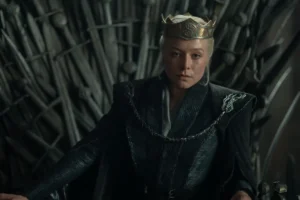
While the bulk of the episode takes place away at Tumbleton, Rhaenyra is left to storm the halls of the Red Keep, trying to hold on to legitimacy in the face of so many challengers to the Iron Throne. With news that Aegon and Sunfyre are on the warpath, she needs to solidify her rule, and that means being anointed by the High Septon.
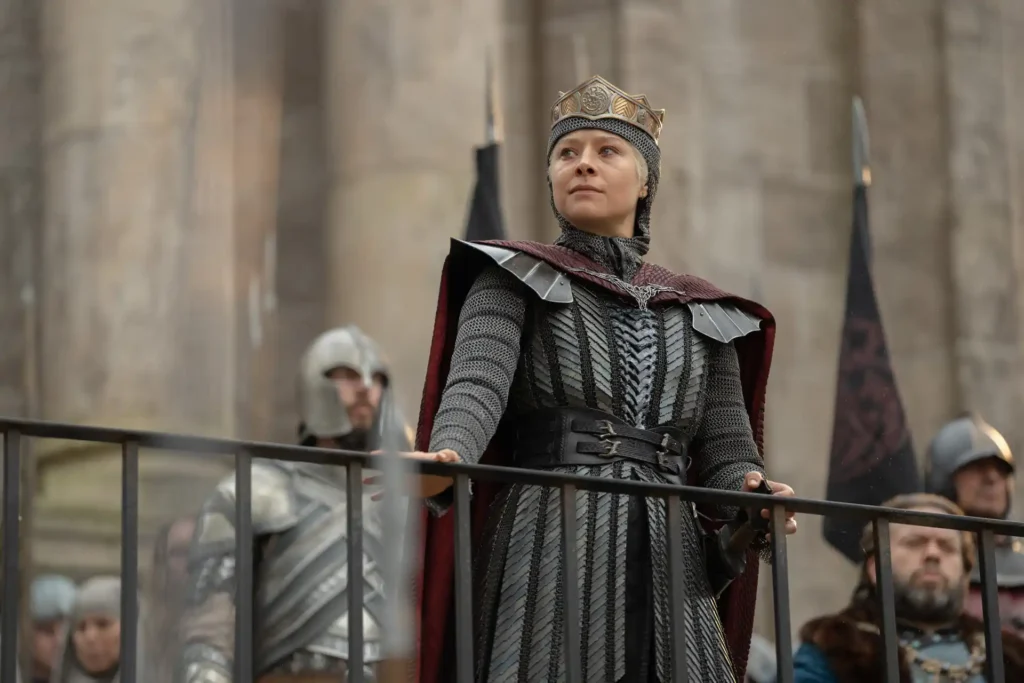
Unfortunately for Rhaenyra, the High Septon and his pious followers have gotten wind of Aegon’s return and are framing it as a Christ-like “resurrection”, so the chances of Rhaenyra being anointed are even less than they were before. Before, though, she had some smallfolk to impress. That ship has long-since sailed, so Rhaenyra orders Alyn to kill him and his followers while she gives a speech to the assembled smallfolk.
This is Rhaenyra’s major bad guy turning point. After having dismissed Mysaria immediately after bedding her, presumably because she knows she has been conspiring behind her back, and then ordering the death of the High Septon, Rhaenyra is consolidating what power she has. The mercy she showed Mysaria may come back to bite her, of course, but in the meantime, she’s the prophesied queen, the “Prince That Was Promised”, so to speak, and she’s not afraid to say so.
Daemon Doesn’t Do Peace
Before the Battle of Tumbleton kicks off good and proper, Daeron sends Ser Gwayne out onto the field, in possession of Lord Corlys, to negotiate for peace. The idea is that Daeron be allowed to rule from Oldtown, splitting the Seven Kingdoms up, but forming a sort of coalition government that could keep any rabble-rousers in check.
Even Corlys is a proponent of this idea, although he suggests that Daeron would only have a Warden title, and that his power would be nominal while Rhaenyra ruled from the Iron Throne. It’s a savvy play, and when you really think about it, it’s probably the most politically feasible approach. It’s certainly the one that’ll result in the least bloodshed. But Daemon, as ever, isn’t inclined to peace. He wants war. And war is what he gets.
The Battle of Tumbleton
Tumbleton is chaos thanks to a few key reasons, including the wildcard that is Ulf the White. It should have been a pretty handy victory for the Blacks given all their dragons, but the Greens resorted to some scummy tactics by lining children up on the battlements, meaning that Daemon’s original plan of just barbecuing the place couldn’t happen. Instead, he sends Ser Roderick Dustin, aka Roddy the Ruin, over the walls to open the gate from within, trying to keep Rhaenyra’s moral virtue intact by not butchering the kids.
This comes off nicely enough, but then there’s Ulf. The dragonseed was supposed to be the secret weapon of Lord Ormund, but he bottled it before the battle by getting drunk and hiding out in a latrine. Once Ormund discovered him, though, instead of asking him nicely, he beat him savagely in the street just like Daemon did, so Ulf decided enough was enough and took to the skies with no particular allegiance – a bit like Sheepstealer back in the Battle of the Gullet.
The Death of Lord Ormund Hightower
A brief note for the hilariously ignoble end of Ormund Hightower. I, for one, was shocked to see him take to the field personally, and even more shocked to see him hold his own against Roddy the Ruin, even managing to cut off his arm as they duelled on the battlements.
However, it was Roddy who got the last laugh. With his good arm, he shoved a knife where the sun doesn’t shine, calling it a “proper f*cking from the North”, and then Ulf, sick of everyone telling him what to do, flies overhead and rains dragonfire on the pair of them. Roddy considers that a noble enough fate to welcome it. Ormund seems to still be focused on the knife up his back passage.
Oh, Brother
Away from the chaos of Tumbleton, Aegon, newly reunited with Sunfyre, flies straight to Harrenhal to deal with Aemond. He initially intends to kill him, but decides against it, seeing the pitiable state that Aemond is in under the care of Alys, who obviously has her own plans for him.
But Aegon has a kind of inverse arc to Rhaenyra. The ending of House of the Dragon Season 3 is about both of them resolving themselves to their new paths. For Rhaenyra, that means ruling with an iron fist, since trying to be nice and even-handed clearly hasn’t cut it. But for Aegon, that means abandoning his childish notions of vengeance and entitlement and instead embracing some tactical consideration.
Two brothers, with two dragons, are much more likely to be able to retake King’s Landing. We’ll see you in Season 4.