Summary
Dexter: Resurrection immediately justifies its existence in a two-part premiere that keeps this franchise fresh and interesting.
Depending on who you ask, contemporary entertainment’s sheer unwillingness to let go of a recognisable IP may or may not be killing the film, TV, and video game industries all at the same time. It’s worth thinking about. If the scope of viable projects is shrunk to such a tiny aperture that the only thing visible through it is a lock of Daryl Dixon’s hair, how will exciting new stuff ever be made? Table these concerns for a moment, though. Dexter: Resurrection would like a word.
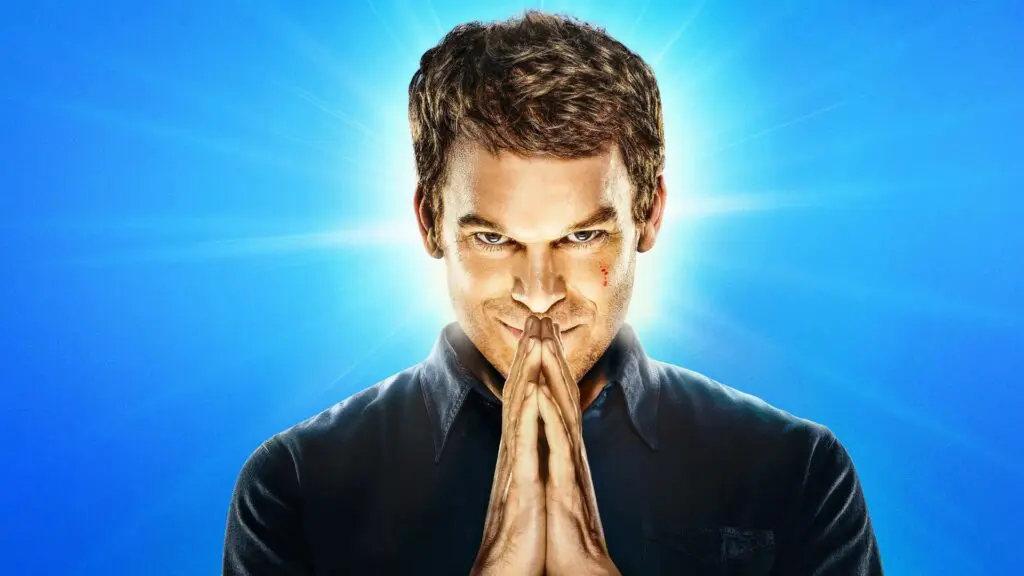
Premiering on Paramount+ with two episodes that immediately show enormous promise for the third spin-off season about Dexter Morgan, Resurrection hits all the right notes. Michael C. Hall returns in fine form, as does David Zayas as Angel Batista, but the focus is on new characters and ideas, most of them growing out of the events of New Blood like weeds through the cracks in a bloodstained street. Unusually for a spin-off, connections to the original series and the wider continuity – which, lest we forget, involves a prequel, Original Sin – feel organic and justified instead of lazy and cynical. This is Dexter as you remember him, more or less, but the efforts to develop the character and expand his namesake show are immediately detectable.
For one thing, Dexter doesn’t kill anyone in Episodes 1 & 2 of Resurrection. That honour goes to his son, Harrison, who is working as a bellhop in a swanky New York hotel under the misapprehension that his father is dead after he shot him in the New Blood finale. He’s trying to get on with his life, but that’s difficult to do when you’re the progeny of a man who likes to cut bodies up into nine pieces and stuff them in trash bags for easy disposal. But the killing doesn’t seem to be the appeal for Harrison. Instead, he fancies himself as something of a vigilante, someone who can’t let injustice pass by without interference when he has the power and the know-how to stop it.
It’s an interesting idea. Dexter’s relationship with Harrison hasn’t traumatised him – although, let’s be clear, it must have done on some level – but oddly empowered him. So, when he sees a serial sexual assaulter dragging a drugged woman into his suite with obviously unsavoury intentions, Harrison batters him to death, hacks his body up, and sends his dismembered limbs on their way. He has enough inherited knowledge to get away with it initially, but the body parts are discovered by chance, the killing makes the news, and the NYPD assigns a genius but socially-inept detective, Claudette Wallace, to investigate.
When Dexter, who survived being shot thanks to the frigid temperatures of his surroundings but has nonetheless spent ten weeks in a coma, hears about this on the news, he immediately intuits that Harrison is to blame. Worrying that he doesn’t yet have the necessary skills to get away with it long-term, let alone manage what are increasingly seeming to be Dark Passenger-style murderous impulses, Dexter heads for New York City, switching the main location of the show to the Big Apple instead of the usual Miami and flash-frozen Iron Lake.
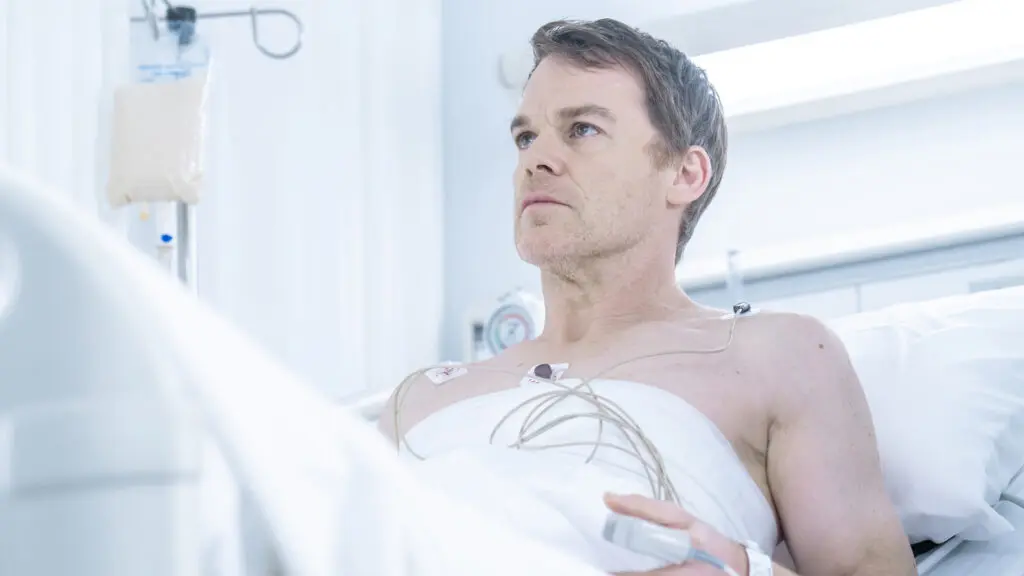
Michael C. Hall in Dexter: Resurrection | Image via Paramount+
This is perhaps the most major change in Dexter: Resurrection, at least in Episodes 1 & 2. The vintage elements, when they crop up, feel just-right, like ghostly flashes to Arthur Morgan, Miguel Prado, and even James Doakes, but they’re not overdone. Batista still fancies Dexter as the Bay Harbor Butcher, and has legally resurrected him presumably because of the legal reality that it’s impossible to prosecute a dead man, so Dexter has a logical cause to relocate even if Harrison wasn’t hacking up hotel patrons.
It takes a good chunk of the premiere for Dexter to get to Manhattan, but the second he does it kicks into another gear. Dexter has to surreptitiously investigate the murder and retrace Harrison’s steps, sometimes papers over his minor mistakes along the way, all while keeping his true identity and motives obscured. But this task is complicated by the introduction of another killer, dubbed by the media as “The Dark Passenger”, who looks like Dexter and is targeting ride-share drivers. Unable to ignore this, Dexter begins to blend into the ride-share community to coax out the man – presumably – who is violating his trademark.
Uma Thurman is also here – much more welcomely than in The Old Guard 2 – for as-yet mysterious reasons, further expanding Resurrection’s satisfyingly complex canvas. To recap, we have Harrison’s developing arc as a killer, Dexter’s attempts to find him, Dexter’s hunt for the Dark Passenger killer, whatever Uma Thurman is up to, Batista’s efforts to prove Dexter is the Bay Harbor Butcher, and all this still with several highly-publicised guest stars still to appear, presumably in major roles. That’s a lot to be getting on with, but Resurrection doesn’t feel overstuffed or unwieldy. Instead, it feels like a spin-off performing in precisely the way it needs to in order to justify its own existence and keep its parent franchise feeling fresh and necessary.
Perhaps contemporary culture isn’t as valueless as we think.
RELATED: