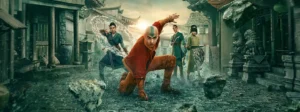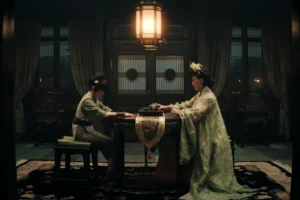
Fandoms really do suck, don’t they? They’re impossible to please at the best of times, especially when it comes to extremely beloved masterpiece properties like Avatar: The Last Airbender, and the die-hard purists are never going to accept a live-action adaptation of any quality, let alone an imperfect one. But there’s a very fine line between expecting – nay, demanding – fidelity to the source material and using notions of canonical accuracy to excuse nitpicky, nonsensical criticisms and, in a more damaging sense, to excuse toxic body shaming of real, often young actors and actresses.
Season 2 of the Netflix adaptation was, in many respects, a big improvement over its predecessor. Many of the core problems – including a reliance on artless exposition and some ropey visual effects – were addressed, leading to criticism online largely shifting focus. Sure, people have still picked pointless holes in what they perceive to be issues in logical consistency and basic aesthetics, but in lieu of obvious sticking points, focus has homed in on different perceived issues. And a few actors like Thalia Tran and Elizabeth Yu seem to be paying an exorbitant price for it.
Animation Aesthetics Aren’t Human
A lot of the problems are baked into the very nature of translating an animated series into live action. This was also the genesis of all the original issues with the VFX and bending, since things are easily possible in hand-drawn animation that would be impossible – or at the very least prohibitively expensive – to render in live action.
But when you apply this kind of logic to human biology, you start running into serious problems. Animated characters are often not designed to resemble real-life human counterparts. Their proportions don’t translate to healthy, real bodies. Stylistic choices, such as sharp, angular lines, which are particularly common ways to create vibes around bad guys, don’t translate. The same can be said of male characters being held to unrealistic standards; we’ve seen this in the Season 2 discourse with the actor playing The Boulder, an extremely minor character of zero consequence, being pilloried for not being jacked enough.
A Shift In Target
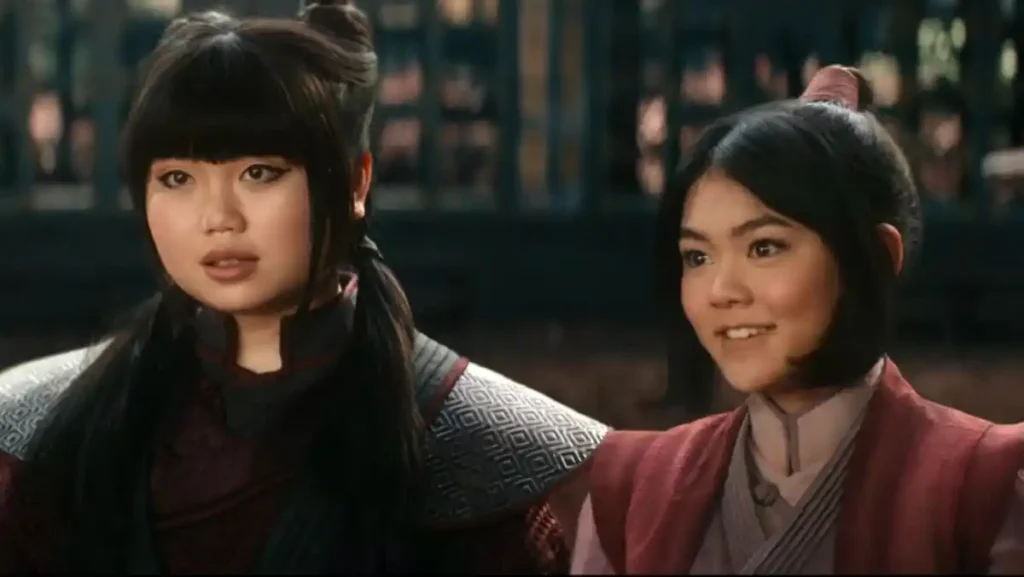
Thalia Tran, who plays Mai, and Elizabeth Yu, who plays Azula, have come in for particularly harsh punishment following the latest season. In both cases, criticism of their “faithfulness” to the original character designs has been used to mask pretty unambiguous weight-related insults, with both actors being shamed and harassed for their physical appearances.
In the cartoon, Azula cuts a razor-thin silhouette, while Mai has a sharp, pointed jawline, but you can’t cast based exclusively on those characters. Both Tran and Yu have a rounder face shape in general, which is a common enough physical trait for the idea of it being disqualifying to be a ridiculous limitation to casting.
The criticism directed at Yu has been going on since the first season. It often takes on a galling euphemistic quality as detractors beat around the bush by complaining that she looks “unathletic” or that the wardrobe department has made her look “frumpy”, a criticism I’ve never seen directed at a male star in my life.
This is not to say that none of the male stars receive criticism either – there was the aforementioned Boulder, and Gordon Cormier, who plays Aang, came under fire for looking too old to play Aang, on account of having naturally grown between seasons.
A Less-Than-Ideal World
Avatar is, at its core, a story about children. But children are rarely cast in long-term roles like this for multiple reasons, not least among them being sidestepping pesky child labour laws, but it’s also about avoiding the inevitable Stranger Things problem, which occurs when production cycles take longer than puberty does and your ostensibly 15-year-old cast all end up looking like they’re in their mid-30s.
Some casting concessions are therefore necessary. The actors playing these characters are largely in their 20s, but are generally younger-looking and are costumed that way too. It’s more sustainable than casting kids, which is why Cormier, who is younger than the rest of the cast by a margin, has come in for unique criticism about aging up between seasons.
In the same way, raw one-to-one visual accuracy isn’t a primary casting concern. Physical resemblance isn’t the only factor to consider. Actual acting ability has to factor in, applicants have to be a certain age but look another, and a thousand other boxes need to be ticked. Holding actors to asinine physical standards, let alone those based on hand-drawn animation, is an absurd stance.
Choose Your Battles
There are many legitimate criticisms of both seasons of Avatar: The Last Airbender, including pacing, writing, chemistry, choreography, and broad story construction. With so many real things to potentially be annoyed about, it’s extremely peculiar – and very, very telling – to hyper-fixate on publicly degrading the physical appearance of a young cast.
More to the point, it’s against the spirit of the property, which is about friendship and empathy and embracing differences to unite against a common enemy. There’s no place for attacking the physical attributes of young actors under the guise of policing the sanctity of a – *checks notes* – children’s cartoon.
Trust me, canon isn’t that important.