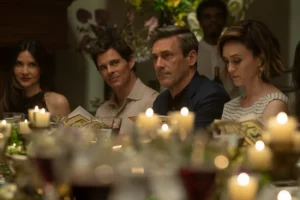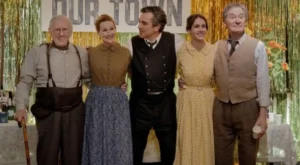
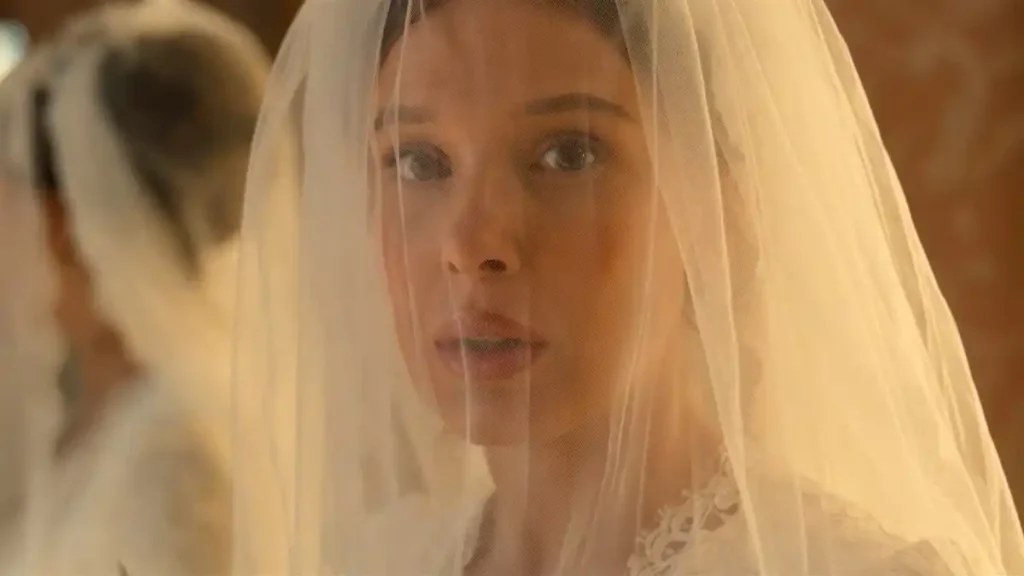
For a brief moment, the ending of Enola Holmes 3 feels like the ending of the entire franchise, which, based on this most recent effort, might not be a terrible thing. But all it takes is the camera panning down for a brief tease of yet another mystery to whet appetites again, although I’m not sure how many sequels the plot hook of “Oh, it’s Moriarty again” can really sustain.
I’m sure we’ll get an answer to that question in due course. In the meantime, though, let’s break down how this latest case allows Enola to answer some longstanding questions about herself and her legacy, add another item to the exceedingly long list of things for the British to feel guilty about, and try to explain what that closing shot might mean.
What’s In a Name?
For two prior movies, everyone involved in Enola Holmes has been exceptionally pleased with the idea that her first name is “alone” spelled backwards. However, Enola isn’t alone anymore, so here the focus shifts to the idea of her being a Holmes, especially in the context of potentially not being one for much longer, since she’s due to marry her beau, Tewkesbury, on the picturesque isle of Malta.
Marrying Tewkesbury means two things: One, becoming a high-society lady instead of a freewheeling maverick detective, and two, becoming a Tewkesbury, which is to say, stop being a Holmes. Since the family’s eccentricity, genius, and penchant for crime solving are pretty integral to the brand, the movie opens with her debating whether to officially give herself over to Tewkesbury, despite their obviously authentic connection, and it’s a predicament that she doesn’t make a proper decision on until the very end.
To make matters worse, Sherlock Holmes is dead against the wedding on the grounds that it will probably get in the way of her being who she really is. But that’s not advice that someone who has historically struggled with their identity is going to benefit from, so they bicker. Promptly, and to kick-start the threequel’s plot, Sherlock goes missing, giving Enola a convenient excuse to put off the wedding while she investigates. But the ideas discussed here are a large part of the climax when it eventually rolls around.
Of Course It’s Moriarty Again
After her future mother-in-law also goes missing, Enola gets into full-on sleuthing mode, following a trail of clues including a murder, arson, war medals, morse code fingerprints on a mirror, the word “wrath”, Afghanistan, some lace, and an underground sewage system, Enola finally figures out who is behind her misfortune – yes, it’s Moriarty again, posing as a woman named Professor Adeline Rathe.
In the cell where he’s being held, Sherlock is also putting the pieces together. He’s able to figure out that Moriarty manipulated Tewkesbury’s mother into having the wedding on Malta, where Tewkesbury’s late father served in the military. Even though Enola and Tewkesbury as legitimately in love, the pageantry around their nuptials has been gently steered by Moriarty for some as-yet mysterious purpose.
The British Are Kind of the Bad Guys In This
Eventually, Enola figures out that this is all connected to a British regiment that fought in the Anglo-Afghan War in the city of Khost, from which the British, led by Tewkesbury’s late father and with complicity from Brigadier Sampson, stole a horde of Afghan gold from a shrine. This was all a state-backed cost-cutting measure – or maybe “remunerative” would be more accurate – that Tewkesbury senior eventually had a crisis of conscience about.
To cover his own tracks, Tewkesbury senior sank his ship and claimed the gold went with it, while secretly hiding the stash for himself. He also blamed the Maltese crewmen and claimed the vessel was scuttled on account of a mutiny, so it’s grim exploitation from top to bottom, and the revelation rattles Tewkesbury junior, who always thought he came from a respectable family.
Lead the Way, Enola
Moriarty was obviously hired to expose the true source of the Tewkesbury family’s wealth and the true cost of amassing it. But she doesn’t know where the gold is, so her gentle manoeuvring of Enola throughout the movie has been her trying to coax Enola into showing her the way. Naturally, Enola has already figured it out thanks to Tewkesbury taking her for a scenic walk and pointing out a cave that his father always used to tell him was filled with treasure.
Enola draws Moriarty in, and she takes the bait, with a final standoff in the cell where Sherlock and brave Lady Tewkesbury are being held. When the good guys finally get the upper hand, there’s a brief moment where it seems like Sherlock might kill Moriarty, since he knows she’ll never stop trying to take revenge on them, but Enola talks him out of it. That isn’t, after all, who they are, and in figuring that out, her arc is more or less complete.
The same is true of Tewkesbury, too, who ensures that the gold is returned to Afghanistan and that all those who were responsible for the theft in the first place are exposed and brought to justice. This includes his godfather and the British governor. It also retroactively clears the names of the Maltese soldiers who were wrongly framed as mutineers.
Tying the Knot (And A Setup For A Sequel)
At the end of Enola Holmes 3, Enola and Tewkesbury finally tie the knot in a simple ceremony conducted by Enola’s mother, Eudoria. It’s a meaningful moment for them both, since it’s Enola coming to terms with the idea that she can still be a Holmes in spirit even without the surname, and Tewkesbury realising that he is more than the legacy of his father.
It’s a nice little service, and afterwards, Enola and Tewkesbury swim in the sea together. Enola splashes the camera in one of those familiar fourth-wall breaks, and accommodatingly, the camera sinks deep into the water beneath them, where it settles on the wreckage of The Wrath of Adeline, 1863. This was the vessel that Tewkesbury’s father sank, and given that Adeline Rathe was the name that Moriarty adopted as her cover, it’s probably safe to say that there’s a bit more to the story of this vessel than we initially realised.
A sequel, anyone?