Citizen Vigilante shouldn’t be successful if you think about it. It’s a deeply terrible movie on a technical level and a wildly irresponsible one morally, coming courtesy of a famously awful controversy-baiting filmmaker. But for all its obvious failings, it is undeniably successful, and its success is a colossal win for cult marketing, which has burned censorship for fuel – the movie was effectively banned in Germany – and reimagined X, formerly Twitter, as the key Culture War battleground and a feasible distribution hub for politically contentious work seeking to bypass mainstream commercial gatekeeping.
Sadly, though equally undeniably, all the controversy swirling around this picture has benefited it tremendously, stoking up the ire and indignation of a gullible audience crying out for counter-cultural rebellion. By lending their political views artistic weight, and by translating that weight into mainstream prominence, Uwe Boll – now, hilariously, being hailed as some kind of searing visionary – has created the illusion of virulent echo chamber politics being commonplace and acceptable.
The Streisand Effect
It’s called the Streisand Effect, the phenomenon whereby attempts to suppress and censor information result in the information becoming much more widely known and publicised. Named after a 2003 lawsuit filed by Barbara Streisand in an effort to purge a photo of her Malibu mansion from the internet, it’s a very well-known idea and suggests that Germany’s effective banning of the movie was the first major catalyst of its success.
But it’s far from the only one. A distinct lack of talent notwithstanding, Boll is a smart marketer, and he immediately set about reframing the FSK’s refusal to provide a rating, which, as per their own guidance, was a fairly defensible youth protection decision, as politically motivated censorship. And thus, the ball began rolling, shunted along by audiences already distrustful of perceived systemic regulation and governmental overreach being used to hide “the truth”.
X Marks the Spot
Next, Boll turned to X, formerly Twitter, and specifically its trillionaire owner, Elon Musk, continuing to frame his latest movie as the victim of tactical suppression. Under Musk’s ownership, X has become a perceived sanctuary for “free speech” (which is to say overt racism and bigotry, a lot of the time) and a powerful tool for division, especially when it comes to destabilising European nations gripped by concern – some legitimate and some not – over lax immigration policy and judicial failings.
Musk, predictably, took the bait, uploading the full 90-minute movie on his page so that his 240+ million followers could watch it for free for a limited 48-hour window. The artificial scarcity created a can’t-miss furore around the movie, with X being positioned as a champion of “banned” content that was too threatening to the establishment to exist elsewhere (Citizen Vigilante remained available to rent and purchase through typical channels for this entire time).
Culture Warmongering
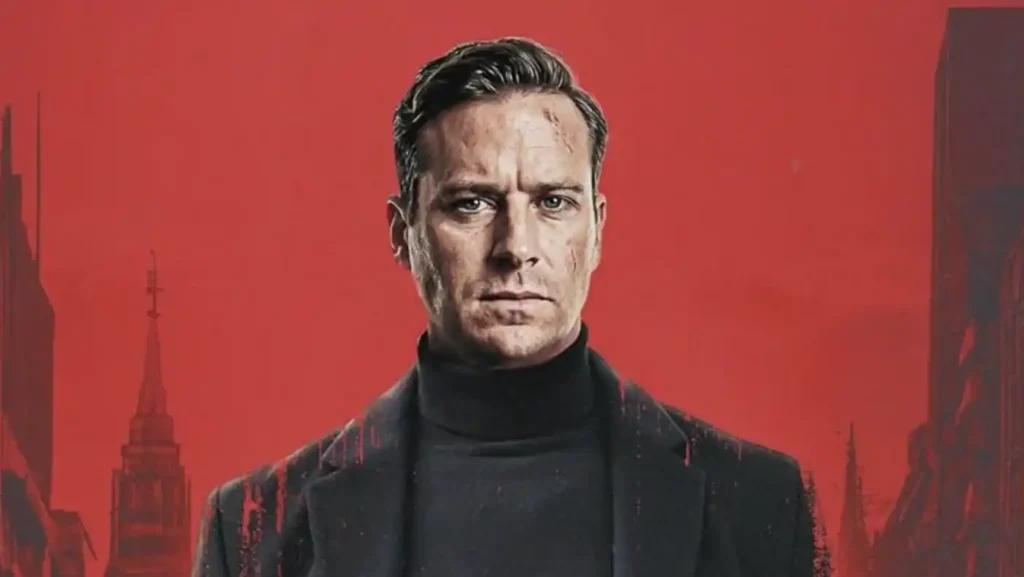
Citizen Vigilante was designed from the ground up to be incendiary, even in ways such as the lead role being given to Armie Hammer, who had been blacklisted from the Hollywood studio system following a string of sexual misconduct allegations. It was another feather in the cap of a proudly counter-cultural exploitation movie with its own built-in defence mechanisms.
Almost immediately, prominent right-wing commentators latched onto the movie, turning it into a broader political stance. Either you liked and supported it, and therefore liked and supported its politics, or you didn’t, and therefore supported child rape and beheadings. There was literally no in-between.
The few critics who dared to give the movie the kicking it deserved – including me – were quickly targeted and harassed. I’ve had hundreds of comments and emails over the last week or so, which is fine, but interestingly, almost all of them have been in opposition to points I never made, positions I don’t hold, or ethnicities and/or religions I don’t belong to. Since the movie is so overtly pro-violence, anti-immigrant, and anti-Islam, not liking the movie is perceived as support for all the things it rails against. Liking the movie is framed as a tribal imperative; disliking the movie – an Uwe Boll movie, lest we forget – is to be a race traitor actively pursuing the downfall of Western civilisation.
Call me crazy, but it feels a bit overblown.
The Future Is Here
There is undoubtedly an element of ridiculousness to the entire enterprise, and for anyone who has been following the illustrious career of Boll for a long time, droves of people shilling for his artistic prowess is undeniably funny. But the seismic shift that Citizen Vigilante has brought about for rogue independent – particularly conservative – cinema is equally undeniable, and it would be naïve to suggest otherwise.
This isn’t a flash in the pan. It’s the opening salvo of what I assume will be a torrent of similar political firebrand movies flanking traditional distribution and marketing channels to weaponize partisan politics. Attempting to suppress an obviously dangerous movie only made it more dangerous, raising difficult questions about how Musk’s X has created a viable hub for irresponsible moviemaking to bypass regulatory boards and even government entities, just so long as they have the “right” politics.
The worrying thing is that it’s Musk himself determining what’s right and wrong.