Summary
Mortal Kombat II hews closer to the games by doing away with almost all of the lame setup that justified the previous movie, but solid action choreography and faithful production design aren’t quite enough to carry the whole thing.
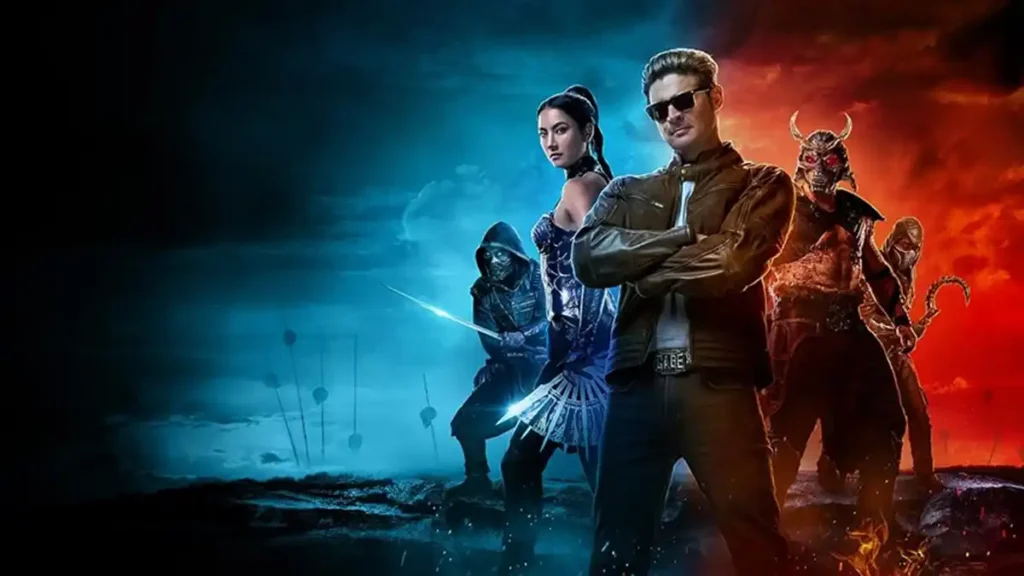
Thank goodness for Karl Urban, honestly. As someone satisfied with being a consistently great bit player in massive IP, he has one of the most thankless roles in Hollywood, but he always gives his all, and he’ll never get any recognition for it because he basically never plays a serious character in a serious movie. He still doesn’t in Mortal Kombat II, Simon McQuoid’s follow-up to the decent but flawed 2021 reboot, but his take on Johnny Cage gives the movie a vibe much more akin to the games it’s adapting, especially the recent ones. And given that the worst thing about its predecessor was all the ways in which it tried to be a movie instead of a video game, this can only be a good thing.
I’m a big supporter of artistic license being taken to help adapt a story from one medium to another, but Mortal Kombat was always straining to be more like the games, and the sequel allows it to be. It expands on some of the lore and surprisingly complicated internal mythology without explaining a great deal, secure in the belief that anyone watching it will probably know the particulars, and it sidelines the previous movie’s protagonist, Cole Young (Lewis Tan, Mike & Nick & Nick & Alice), in favour of the aforementioned Cage and Princess Kitana (Adeline Rudolph, Resident Evil), two stalwarts of the franchise. All of these are positive choices.
Through Kitana, the movie introduces Edenia, a slightly more complex realm than the two – Earthrealm and Outworld; in other words, our world and Hell – that framed the fighting tournament in the first movie. Edenia is a world that the tyrannical Shao Kahn (Martyn Ford, The Sandman) conquered in precisely the manner he wants to subsume Earthrealm, killing Kitana’s father, King Jerrod (Desmond Chiam), and imprisoning her and her mother, Queen Sindel (Ana Thu Nguyen). Kitana grew up alongside her bestie and sister figure, Jade (Tati Gabrielle, The Last of Us), as Shao Kahn’s adoptive daughter, but she’s really playing both sides and trying to sabotage his colonisation efforts from within.
This means playing double-agent for Earthrealm’s champions, still led by Lord Raiden (Tadanobu Asano, Shogun) but now featuring Cage, a washed-up 90s action star, alongside the usual suspects of Sonya Blade (Jessica McNamee, The Meg), Jax (Mehcad Brooks), Cole, and Liu Kang (Ludi Lin). With all pretence having been totally abandoned, the movie now regularly teleports each character into a closed-off arena, several based on recognisable stages from the games, so they can fight a familiar baddy to the death. It’s a refreshingly uncomplicated – but still pleasingly R-rated – framework supported by clean action choreography that combines goofy practical gore with game-accurate costuming and production design. VFX are mostly deployed to recreate each fighter’s iconic special moves, which I mostly got a kick out of as a long-time fan, silly as many of them may be.
The wildcard in all this is Kano (Josh Lawson, Cobra Kai), who was the most entertaining character in the first movie and remains so here, even though Kitana provides the emotional core and Urban does a reliably great job of playing Cage like a jaded star of yesteryear. There are recognisable villains, too, mostly in the form of Shang Tsung (Chin Han, Avatar: The Last Airbender) and the sorcerer Quan Chi (Damon Herriman, Run Rabbit Run), who busy themselves on a silly MacGuffin plot that Shao Khan is hoping to use to cheat his way to victory, which eventually pulls away from the tournament structure a bit too much.
The weirdest problem with Mortal Kombat II is that all of the things that make it better – doing away with the shoddy elements of its predecessor that were designed to ground non-gamers in the setting – end up putting a ceiling on how good it can potentially be, since there’s little care for a functional narrative with human stakes and internal conflict. The script tries to include a lot of MCU-style dysfunctional group patter to obscure this, but it doesn’t really take, mostly because that’s very much not the vibe of Mortal Kombat as fans know it. A recurring relationship between Cage and fearsome Tarkatan warrior Baraka (C.J. Bloomfield) is the worst offender in this regard, becoming a plot point and then a running gag within about half an hour.
Still, I’d be lying if I said I didn’t enjoy this movie for what it was, which is mostly just a key-jangling parade of fan-service with solid action and effects. If you want more from this franchise than that, then you’re going to be disappointed. But, frankly, why would you? Sometimes, what you see is what you get.